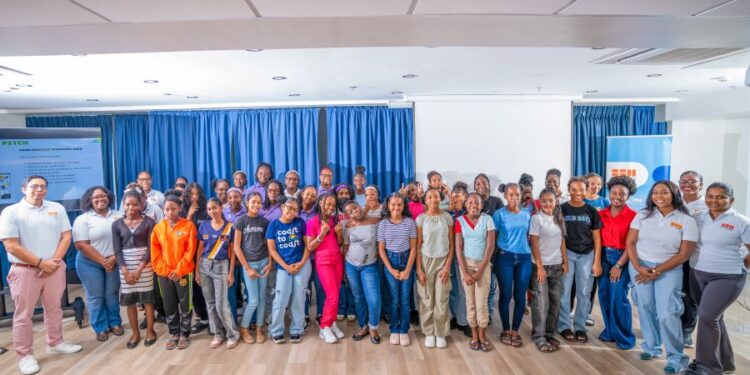
Despite Guyana’s unprecedented economic growth and rising oil wealth, many consumers continue to face high prices, uneven service, limited responsiveness and restricted opportunities because competition has not kept pace with the country’s transformation, according to educator and business analyst Dr. Karen Abrams.
In her June 7, column, When Growth Doesn’t Create Competition, Abrams argued that while Guyana’s economy has expanded dramatically since the advent of oil production, the structure of many markets remains concentrated in the hands of relatively few firms, reducing the competitive pressures that normally drive innovation, improve customer service and lower prices.
“The important question is not whether the economy is growing,” Abrams wrote. “The important question is whether enough firms are genuinely competing for the opportunities that growth creates.”
Abrams, Founder and Executive Director of STEMGuyana and co-founder of Pathway Online Academy, said two factors help explain the challenge facing the country: market shallowness and market concentration.
She explained that Guyana’s relatively small population limits the number of competitors that can sustainably operate in many sectors. Over time, this often leads to a handful of firms controlling large portions of supply.
“Smallness produces concentration. Concentration reduces competitive pressure. Competition is what normally pushes prices down, service quality up, wages higher, and innovation forward,” she stated.
The issue, Abrams argued, is visible across a range of industries, including banking, telecommunications, wholesale distribution, logistics, construction and media.
Using the banking sector as an example, she noted that financial institutions must absorb substantial costs related to technology, compliance, security, staffing and infrastructure. In larger economies, those costs are spread across millions of customers. In Guyana, they are spread across fewer than one million people.
Yet while economic activity has surged and banks have reported record profits, Abrams questioned why many consumers feel service standards have not improved at a comparable pace.
“Oil changed the economy rapidly. Institutions tend to change much more slowly,” she wrote.
According to Abrams, many businesses continue to make decisions based on assumptions developed during decades when Guyana’s economy was far smaller and resources were scarce. Under those conditions, cost control often took precedence over customer experience and consumers had limited alternatives.
Those habits, she suggested, have become embedded in organisational culture.
“The consequences are visible throughout daily life. Consumers face high prices. Service improvements arrive slowly. New entrants struggle to gain scale,” Abrams wrote.
Her analysis comes against the backdrop of Guyana’s remarkable economic expansion since commercial oil production began in December 2019.
Since then, Guyana has earned more than US$8 billion from its share of profit oil and royalties. The bulk of those revenues has been deposited into the Natural Resource Fund (NRF), which recently surpassed US$4 billion. Petroleum revenues have also fuelled a record-breaking national budget of G$1.558 trillion in 2026, making Guyana one of the fastest-growing economies in the world.
Despite those gains, Abrams argued that economic growth alone does not guarantee stronger competition or broader economic participation.
“Growth and competition are not the same thing,” she wrote. “An economy can expand while remaining highly concentrated if the largest opportunities continue to be captured by a relatively small number of firms.“
Abrams also linked the issue to the rise of artificial intelligence, arguing that AI is likely to reduce the cost of accessing many technical capabilities, including software development, marketing, customer communications and operational systems.
As a result, she said, businesses will increasingly compete on qualities that technology cannot easily replicate, such as trust, reputation, customer service, responsiveness and relationships.
However, concentrated markets often weaken incentives for firms to invest in those very areas.
“If customers have few alternatives, firms face less pressure to improve,” Abrams observed. “Service standards that would be unacceptable in highly competitive markets can persist for years.“
At the same time, she sees opportunities emerging for entrepreneurs. According to Abrams, artificial intelligence is lowering many traditional barriers to entry, allowing smaller businesses to build products, automate operations and reach customers with fewer resources than previous generations required.
“The entrepreneur who genuinely commits to quality and customer satisfaction may find themselves competing in territory that incumbents have never fully occupied,” she wrote.
Beyond technological change, Abrams argued that policy interventions are also necessary.
She pointed to deeper CARICOM integration as one way to overcome the limitations of Guyana’s small domestic market. Access to a regional market of approximately 17 million consumers, she said, would create greater competition while opening new opportunities for Guyanese businesses.
“For Guyana, regional integration is not merely a diplomatic project. It is an economic strategy,” Abrams stated.
She also highlighted the role of the Competition and Consumer Affairs Commission, arguing that effective competition enforcement is critical in a small economy where concentration naturally emerges.
“In a small economy, competition policy is not a luxury. It is one of the few tools available to offset the concentration that naturally emerges from market size,” she wrote.
Abrams concluded by warning that Guyana’s rapidly growing wealth could remain concentrated unless policymakers, regulators and business leaders deliberately encourage competition and challenge outdated assumptions about how markets should function.
“The reservoir of wealth in Guyana is filling rapidly,” she wrote. “The question is whether the benefits will circulate broadly through the economy or continue to pool in a relatively small number of firms.”
She added: “Widening those pipes is the work of this generation, not the next.”