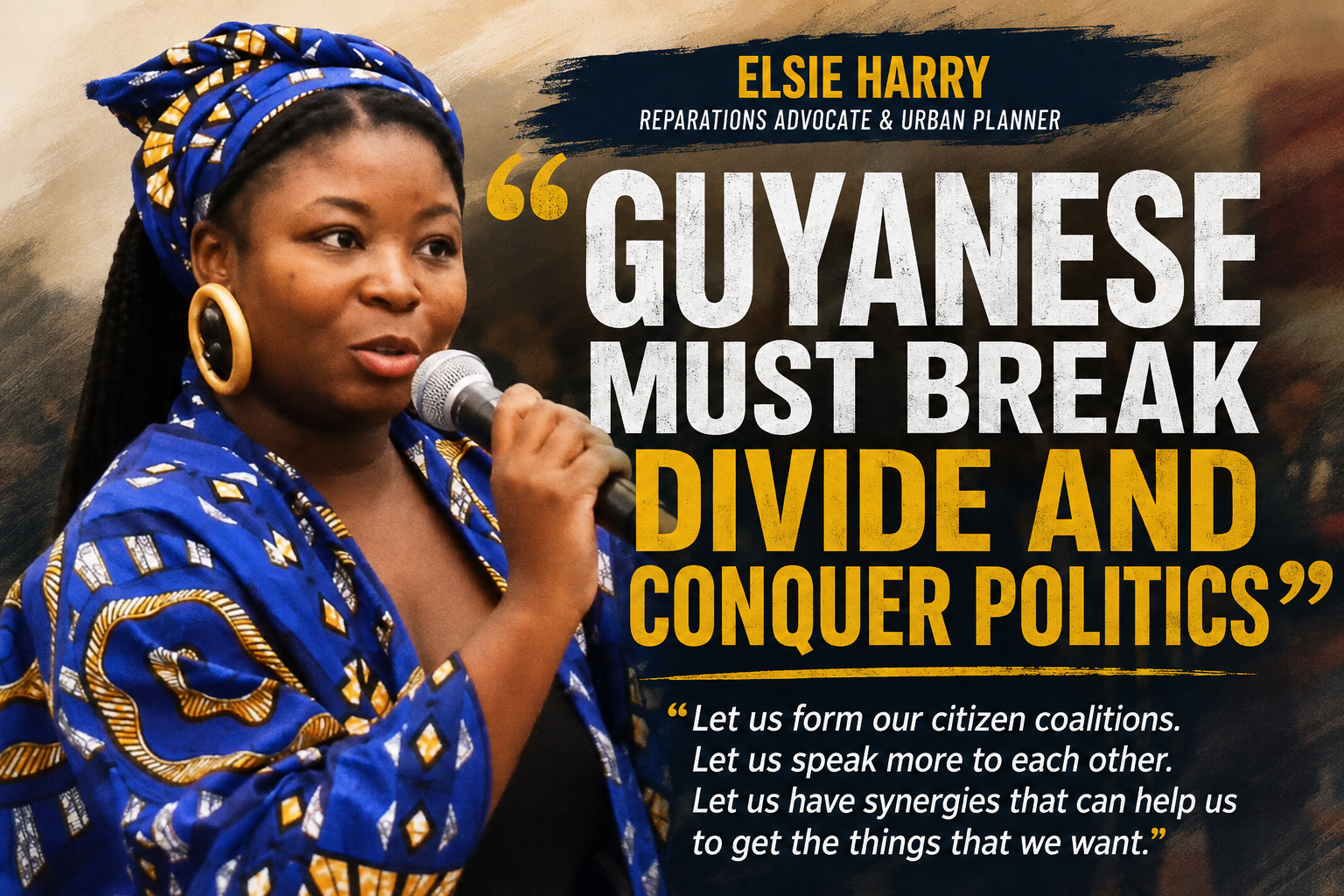
Community Development Advocate, and urban and rural planner Elsie Harry has called for stronger citizen coalitions across Guyana’s ethnic and professional communities, arguing that division among ordinary people has made it easier for governments to ignore the voices of the very communities their policies and projects are supposed to serve.**
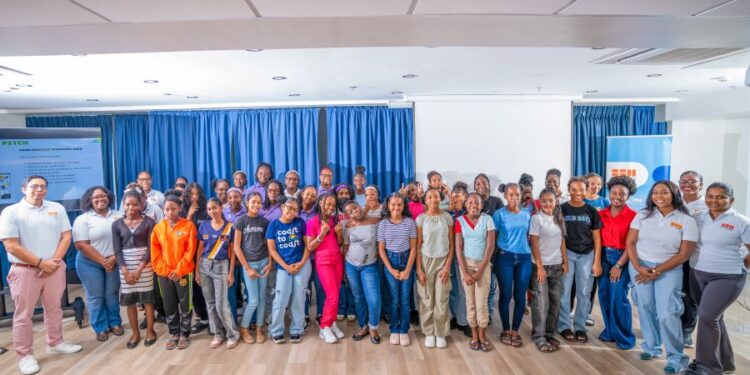
Harry made the comments during the “Ina Maimu Yetatokon (Listen to Our Voices)” event hosted by the Amerindian Peoples Association (APA) at the Guyana Marriott Hotel on Friday.
Commending the APA for bringing people together, Harry described herself as an ally of the organisation’s work and said Guyana has numerous groups advocating for rights, but too often those groups operate separately.
“There are many rights groups in Guyana. For example, I work within the African Guyanese community. The APA is working on Indigenous rights, but we rarely talk to each other. We rarely meet with each other and form coalitions across our ethnic groups to get things done,” Harry said.
She argued that Guyana continues to suffer from a “divide and conquer” approach inherited from colonialism and exploited by politicians.
According to Harry, citizens cannot expect significant change while remaining separated along ethnic, professional and other lines.
“We really have to form these coalitions across the ethnic groups, across the professions,” she said, adding that teachers, doctors, engineers and other professionals should see advocacy for Indigenous communities and other vulnerable groups as part of their own civic responsibility.
Harry, an urban and rural planner by profession, used her own experience working with the Government of Guyana to illustrate what can happen when development is planned without meaningful consultation with the people affected.
She recalled being assigned to a government project in **Aishalton**, where authorities intended to repave the community’s runway.
Harry said that when she arrived, the engineers went about their technical work while she decided to speak directly with residents about the project. What she heard surprised her.
The community did not want the runway repaved. Residents wanted it relocated.
Harry said residents explained that children had to cross the area where the runway was located while travelling home from school, creating a potentially dangerous situation when aircraft were landing.
According to Harry, residents told her they had repeatedly raised the matter during National Toshaos Council meetings, but the government considered repaving the existing runway more economical than relocating it.
“How can you repave a runway in a place where the community doesn’t even want it? Does that not matter to you?” Harry recalled asking those involved in the project.
She said the experience remained “seared” into her memory because it exposed a fundamental problem with the relationship between government, professionals and communities.
“There were no Indigenous engineers on our team. There was no conversation with the people in the community when we got there. It was us from the coast coming from the coast to do work in an Indigenous community without speaking to the people who this work was quote unquote supposed to benefit,” she said.
Harry said the larger question is why citizens continue to permit governments to operate in this manner.
“The people who are in power, the people who we put in power, do not listen to us. But why are we allowing it?” she asked.
Her intervention drew a connection between Indigenous rights, development planning and the wider problem of citizen participation in Guyana. Harry argued that communities would have considerably greater influence if advocacy organisations and professional groups stopped working in isolation and began supporting each other.
“Let us form our citizen coalitions. Let us speak more to each other. Let us have synergies that can help us to get the things that we want more efficiently,” Harry urged.
Her account of the Aishalton project also prompted a response at the event highlighting the importance of free, prior and informed consent, a principle long advocated by Indigenous organisations in decisions affecting Indigenous peoples and their communities.
Harry’s message ultimately extended beyond Indigenous advocacy. She called for a model of citizenship in which African Guyanese organisations, Indigenous organisations, professionals and other civil society groups recognise that their struggles frequently intersect, and that their collective voice can be considerably more difficult for those in power to ignore.