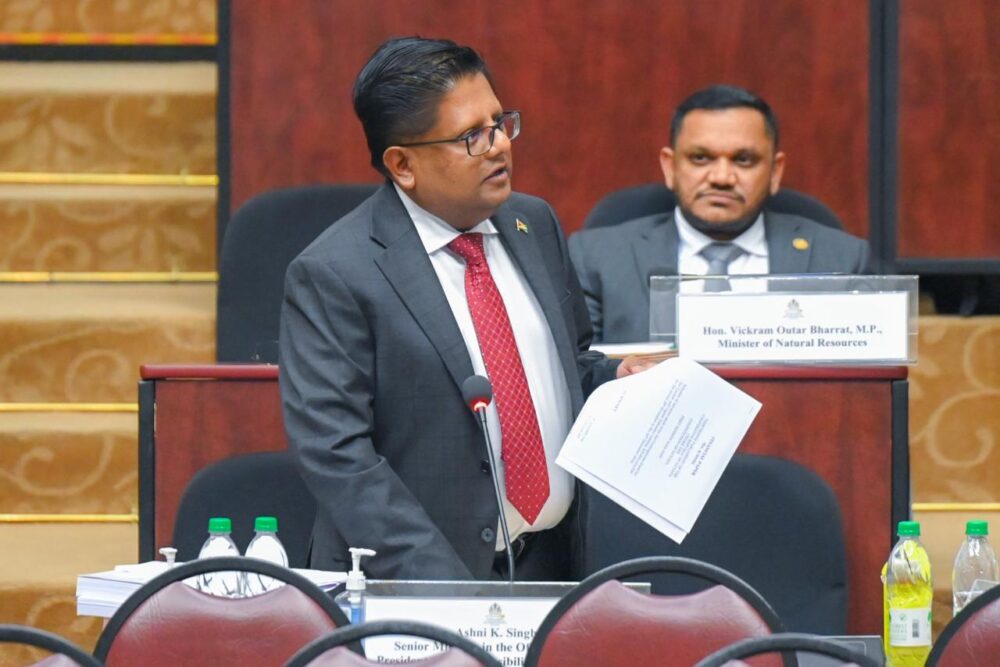
The National Assembly of Guyana has approved the Government’s $1.558 trillion National Budget for 2026 following several days of debate, with Senior Minister in the Office of the President with Responsibility for Finance, Dr. Ashni Singh, piloting the measure through the House in the early hours of Saturday morning.
The budget was passed without the support of the combined Opposition, which voted against the measure, citing concerns over its priorities, pace of passage and impact on ordinary citizens.
The 2026 fiscal plan is the first budget of the People’s Progressive Party/Civic (PPP/C) Government following its return to government after the 2025 General and Regional Elections and marks the sixth budget presented by Dr. Singh since the party returned to office in August 2020.
During his presentation on January 26, Dr. Singh said the budget is grounded in the PPP/C’s 2025 Manifesto. He said Budget 2026 builds on commitments outlined in President Irfaan Ali’s inaugural and policy addresses and advances the Government’s long-term development agenda.
Operating under the theme “Putting People First,” Dr. Singh said the budget is designed to ensure that Government policies and investments result in measurable improvements in citizens’ lives and expanded opportunities nationwide. He emphasised that no new taxes were introduced and that the plan seeks to convert economic growth into national and household prosperity while maintaining fiscal discipline.
Key allocations include $196.1 billion for roads and bridges, $183.6 billion for education, $161.1 billion for health, $159.1 billion for housing, $119.4 billion for energy development, $113.2 billion for agriculture and food security, and $100.3 billion for public security.
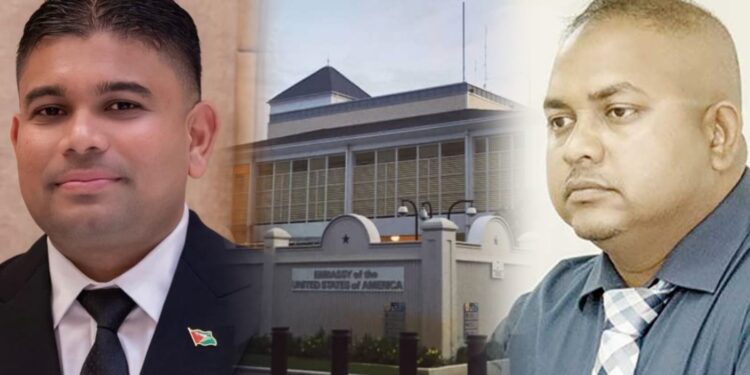
Opposition members sharply disagreed with the Government’s assessment. Leader of the Opposition Azruddin Mohamed told Parliament the budget “will not lift the masses out of poverty,” questioning whether the scale of spending would meaningfully reduce the cost of living. He also argued that workers, including public servants, had been overlooked.
Dr. Terrence Campbell, speaking on behalf of A Partnership for National Unity (APNU), described the spending plan as underwhelming and inconsistent with its “Putting People First” theme. He argued that modest increases in social assistance and pensions would not meaningfully address rising living costs and questioned the absence of certain campaign commitments.
Meanwhile, Amanza Walton-Desir, leader of the Forward Guyana Movement (FGM) said the budget resembled previous plans and did not go far enough to cushion vulnerable groups. She expressed concern that small increases for public servants, pensioners and children would not keep pace with escalating food prices.
Analysts have also criticised the process, arguing that the size and rapid passage of the $1.558 trillion plan limited meaningful scrutiny. Some maintained there was “too little time to scrutinise” the expansive budget, warning that the compressed debate period weakened parliamentary oversight of how public funds will be allocated and spent.
Despite the objections, the Government used its majority to secure passage of the bill. In closing the debates, Dr. Singh reiterated that the administration remains committed to delivering tangible gains for Guyanese and demonstrating the effectiveness of its policies over the next five years.