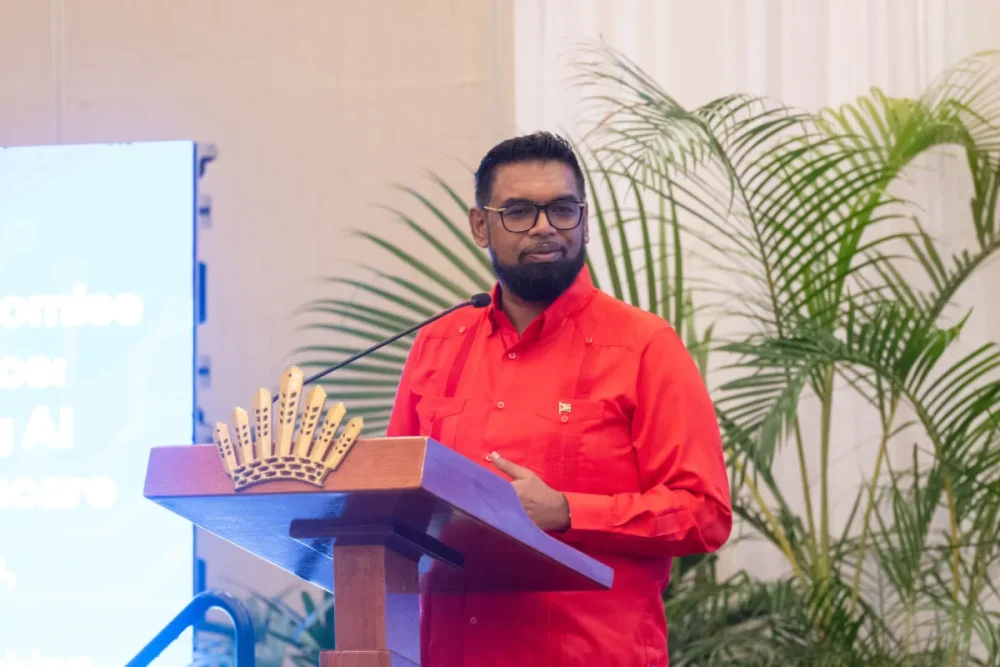
By Mark DaCosta- On Monday, May 25 during a flag-raising ceremony commemorating the 60th anniversary of our independence, President Mohamed Irfaan Ali proclaimed that our country has transformed from a modest GDP of $229 million to one of the globe’s fastest-growing economies with a valuation exceeding $75 billion. His remarks echoed the government’s triumphs, highlighting record oil production and a national budget that surpassed a trillion dollars for the first time in history. While he celebrated this economic milestone with fervour, the unvarnished truth of everyday life for many Guyanese tells a very different story, marked by the crushing burdens of poverty and deprivation.
President Ali painted a picture of a thriving nation, one he argued has overcome colonial divisions and external threats to emerge as a symbol of unity and resilience. His assertion that Guyana stands as “the fastest-growing economy on earth” merits scrutiny. The International Monetary Fund’s figures, which confirm a staggering average GDP growth of 47 per cent per year between 2022 and 2024, serve as impressive benchmarks on paper. Yet, juxtaposed against such glittering statistics, a prevailing humanitarian crisis looms large, with approximately 58 percent of our population grappling with varying degrees of economic hardship. While forecasts suggest that per capita income will soar to nearly $38,000 by 2028, for many families, the daily struggle against hunger and poverty remains a stark reality that undermines these optimistic projections.
The infrastructure boom, characterised by grandiose constructions such as multi-lane highways and innovative public works, creates a façade of development. The government’s aggressive investment in physical infrastructure, underpinned by significant oil revenues, has undeniably altered the landscape of our country. Yet, this monumental focus on building roads and bridges often overshadows the essential needs of ordinary citizens. According to diverse commentators, the glaring gaps in social welfare — like child food security, adequate wages, and support for the disabled and elderly — offer more than just a moral indictment; they reflect a profound failure in our nation’s development strategy.
People often ask on social media, where are the policies that ensure a living wage for our working class? Many individuals employed in sectors outside of oil find their earnings stagnating amid inflationary pressures, leaving them teetering in the cycle of poverty. A road lined with pedestrian crossings may look good on a government brochure, yet it does not fill empty stomachs or provide access to quality healthcare. The deluge of construction projects cannot mask the stark reality that the most vulnerable among us remain without the basic human dignities — food security, proper wages, and comprehensive healthcare.
Our country’s failure to adequately care for those who have devoted their lives to building its foundations — the pensioners — underscores a profound systemic injustice. Seniors, who once actively contributed to the progress of our nation, are now often left destitute, surviving on pensions that fail to meet their simplest needs. As we celebrate milestones of financial growth, we must not overlook the people who have spent decades working tirelessly, only to face financial uncertainty in their twilight years.
Children going to sleep hungry while billion-dollar budgets are tabled is a moral crisis that the government cannot afford to ignore. Hunger is not just a statistic; it is a real threat that undermines the very future of our workforce. When young lives are robbed of proper nutrition and education, our nation sacrifices its potential for genuine progress.
The illusion presented by President Ali of a nation basking in prosperity is starkly contradicted by the voices of the disenfranchised. The allure of infrastructure should not eclipse the urgent needs for direct social equity and reform. Instead of prioritising large-scale construction projects that create temporary jobs, our leaders must redirect attention to sustainable welfare systems that guarantee no family faces starvation.
As we stand at this crucial juncture in our history, it is imperative that we reject the narrative of success based solely on visible growth. According to one analyst, “Development should not merely be defined by the length of our highways or the heights of our buildings but must focus on the wellbeing and dignity of all citizens.
“In this battle against systemic inequality, the future is in our hands. The time has come for our leaders to pivot towards a vision of true national progress that values and uplifts every Guyanese, rather than one that glorifies physical grandeur at the expense of our humanity.”