For decades, the Caribbean Community (CARICOM) has spoken with near unanimity in defence of Cuba, opposing the United States embargo and championing Havana’s sovereignty at regional and international forums. That longstanding regional consensus showed signs of strain on Wednesday after Guyana and Trinidad and Tobago publicly distanced themselves from a strongly worded CARICOM statement condemning escalating measures against Cuba and warning against any military aggression toward the island.
In a statement issued today from CARICOM’s headquarters in Georgetown, the Council for Foreign and Community Relations (COFCOR) expressed “profound concern” over the intensifying economic, commercial and financial restrictions imposed on Cuba, describing the measures as contributing to severe hardship for the Cuban people.
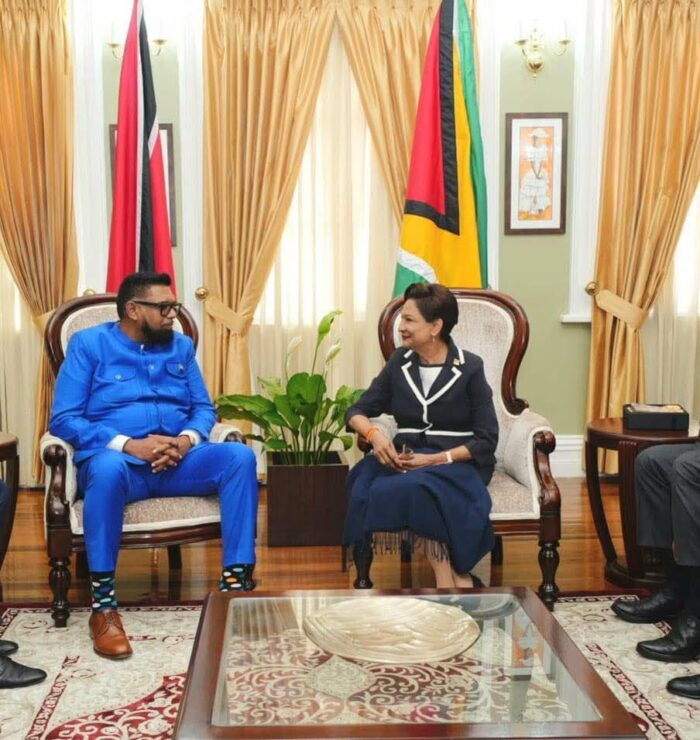
But in a notable departure from the bloc’s traditionally united posture, the statement ended with an unusual qualification: “The Cooperative Republic of Guyana and The Republic of Trinidad and Tobago reserve their positions on the foregoing Statement.”
The reservation has raised concern within regional diplomatic circles because CARICOM states have historically maintained a united front on Cuba-related matters, particularly at the United Nations where Caribbean governments have consistently voted overwhelmingly in favour of resolutions calling for an end to the U.S. embargo.
The development is especially striking in Guyana’s case, given the country’s deep historic relationship with Cuba and the substantial support Guyana has received from Havana over several decades.
 Cuba has played a major role in Guyana’s healthcare, education and human resource development sectors. Hundreds of Guyanese doctors, nurses, engineers and other professionals were trained in Cuba under scholarship programmes. Cuban medical brigades have also served in Guyana for years, particularly in hinterland and underserved communities where healthcare access remains limited.
During the COVID-19 pandemic, Cuba dispatched medical personnel across the Caribbean, including Guyana, at a time when global healthcare systems were under immense strain.
The People’s Progressive Party (PPP), while in opposition before returning to office in 1992 and during 2015-2020 when in Opposition, had itself repeatedly defended Cuba against U.S. sanctions and praised Havana’s solidarity with Guyana and the wider Caribbean. PPP leaders historically participated in pro-Cuba forums, criticised the embargo as unjust and supported CARICOM’s collective diplomatic position on the issue.
Against that backdrop, Guyana’s decision to reserve its position is likely to attract scrutiny both domestically and regionally.
In the statement, COFCOR said the measures against Cuba “compound the trade and economic embargo imposed on Cuba for over six decades, which has had a deleterious effect on the lives and livelihoods of the Cuban people.”
The Council warned that the worsening situation in Cuba also affects CARICOM nationals studying and living there, many of whom are medical students benefiting from Cuban scholarships.
“The mounting hardships facing the Cuban people also seriously impact CARICOM nationals studying and living in Cuba, whose well-being remains a priority for the Community,” the statement said.
The regional body further condemned efforts to obstruct Cuba’s fuel supplies, arguing that the island has a sovereign right to access energy resources.
“COFCOR unequivocally affirms Cuba’s sovereign right to import and receive fuel, and condemns the obstruction of energy supplies to Cuba, which has precipitated a grave humanitarian crisis,” the statement declared.
Of particular concern was COFCOR’s reference to recent rhetoric suggesting possible military action against Cuba. CARICOM warned that any such intervention would threaten regional peace and stability.
“COFCOR reaffirms the need for the preservation of the Caribbean as a Zone of Peace and expresses alarm at recent statements that suggest the possibility of military aggression against the Republic of Cuba,” the Council stated.
It warned that military action “would inflict unnecessary human suffering, impose grave material costs, and fundamentally destabilize the security architecture of the entire Caribbean region.”
CARICOM’s relationship with Cuba dates back to 1972 when Guyana, Jamaica, Barbados, and Trinidad and Tobago became the first English-speaking Caribbean nations to establish diplomatic relations with Havana despite intense Cold War pressure. The move is widely regarded as a defining act of Caribbean political independence and regional solidarity.
Over the years, CARICOM leaders have consistently argued that the U.S. embargo violates international law and disproportionately harms ordinary Cubans. Annual United Nations votes against the embargo routinely receive overwhelming global support, with Caribbean nations among Cuba’s strongest defenders.
In Wednesday’s statement, COFCOR reiterated that position, asserting that Cuba “poses no threat to any nation” and remains “a peaceful and cooperative member of the international community.”
The Council also maintained that the continued use of “unilateral coercive measures constitutes an unjustifiable violation of human rights, the principles of free trade, and the fundamental norms governing relations among sovereign states.”
Neither Guyana nor Trinidad and Tobago has publicly explained why they chose to reserve their positions on the statement. However, analysts are likely to view the move through the lens of both countries’ expanding strategic and economic ties with the United States, particularly in the energy sector.
Still, the decision marks a rare moment of visible divergence within CARICOM on one of the region’s most historically consistent foreign policy positions.