Linden has become the first community in Guyana to launch a citizen-led Waste to Wealth Train-the-Trainer composting initiative, an environmental and economic programme designed to reduce biodegradable waste while creating new income opportunities for residents.
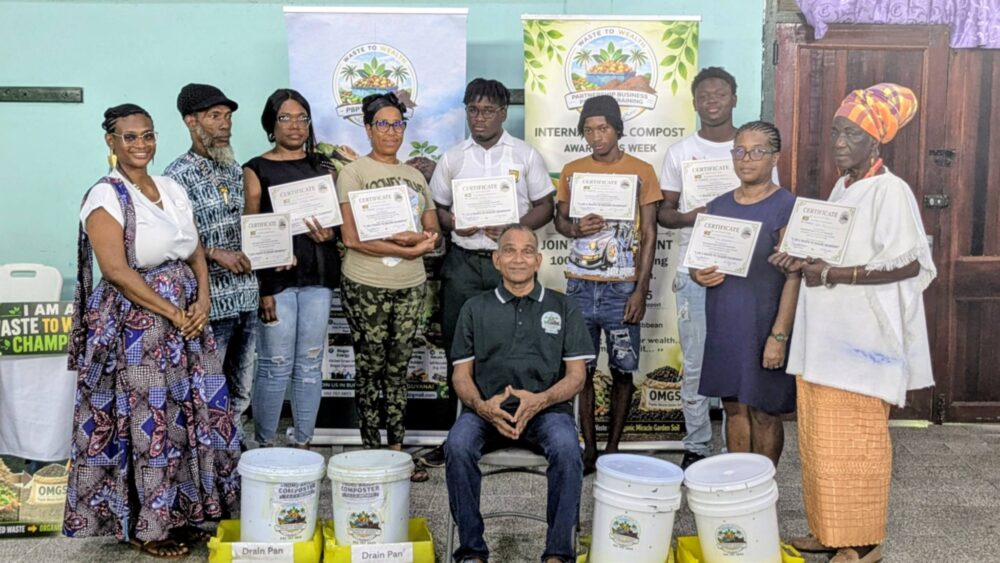
The pilot programme, spearheaded by Waste To Wealth Caribbean in partnership with Outliers Zone Caribbean, trained eight families to convert kitchen scraps and cardboard into organic compost rather than disposing of them at the dumping site near the entrance to Linden’s Blue Lake.
Organisers believe the initiative could become a national model for tackling biodegradable waste while promoting sustainable agriculture and entrepreneurship.
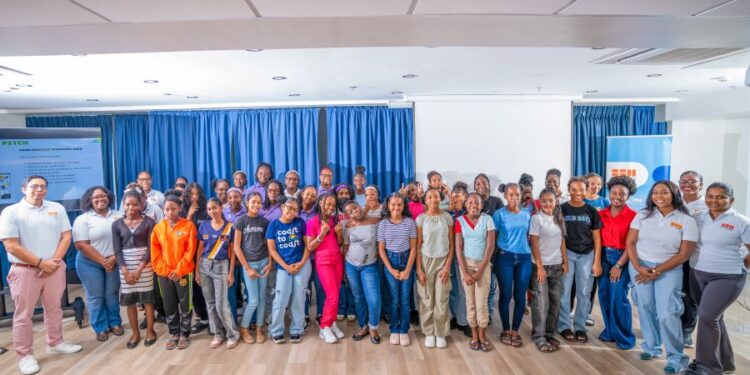
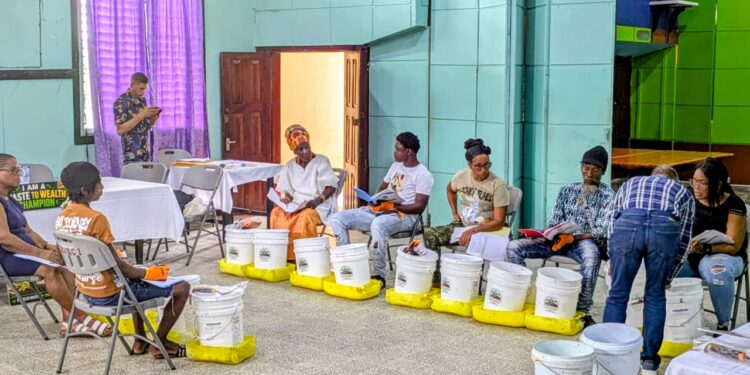
The inaugural training was held on June 25 at the Guymine Constabulary Recreational Hall, where participants—including farmers, housewives and young people—received practical instruction in compost production and small-scale business development.
The programme was facilitated by Outliers Zone Caribbean Chief Executive Officer Athalyah Yisrael and Waste To Wealth Caribbean founder Rampertab Etwaria.
Opening the session, Yisrael challenged participants to rethink their understanding of wealth, encouraging them to view waste as a resource capable of generating income.
According to the organisers, discussions centred on the importance of developing what they described as a “wealth mindset,” with composting presented as an asset that can reduce household expenses while creating opportunities for entrepreneurship.
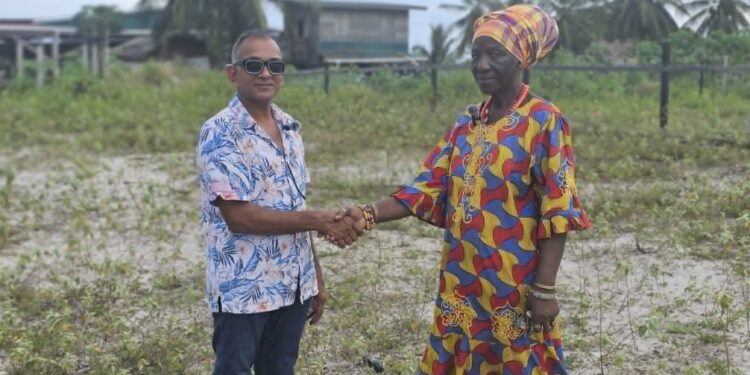
Etwaria then demonstrated how everyday kitchen waste could be transformed into Organic Miracle Garden Soil (O.M.G.S.), using current market prices for vegetables to illustrate how compost production can lower household food costs and improve food security.
Participants were trained in the programme’s proprietary T.E.C.H. composting method, learning how to maintain the proper balance of organic materials, prevent odours and pests, and produce nutrient-rich compost suitable for home gardens or commercial sale.
Each participating family invested $50,000 to receive a backyard composting kit, a training manual, practical instruction and 12 weeks of coaching and mentoring leading to their first compost harvest.
Upon successful completion of the programme, participants will become eligible for certification as Train-the-Trainers, allowing them to mentor additional households while earning $15,000 for each family they successfully recruit and guide through the programme.
Linden Town Clerk Lennox Gasper and Deputy Mayor Wainwright Bethune attended the launch, meeting with participants and encouraging more households, market vendors and farmers to join future training sessions.
Three days after the workshop, programme coordinators returned to Linden and confirmed that all eight families had already begun composting.
Over the next 12 weeks, participants will submit weekly progress videos documenting their compost production as organisers monitor the pilot programme and gather data to support its expansion into other communities.
The initiative also featured prominently at the Linden Locs Festival, where organisers conducted live demonstrations showing festival patrons how kitchen waste and discarded cardboard can be converted into Organic Miracle Garden Soil. Samples of the finished compost were distributed to members of the public.
The enthusiasm generated by the programme has also prompted members of an existing farmers’ cooperative to explore establishing Linden’s first commercial compost production facility. The proposed site would process biodegradable waste from households and market vendors while creating additional revenue opportunities for certified trainers.
Etwaria, who has operated commercial composting facilities on his farms for the past 15 years, said he will assist in designing the proposed operation.
“This outcome demonstrates exactly what we set out to achieve; significant social and environmental impact alongside strong commercial profitability for citizens, for Linden, and for the wider region,” Etwaria said.
According to Waste To Wealth Caribbean, approximately half of household waste is biodegradable and could be diverted from landfill sites through composting. The organisation is encouraging Linden residents to reduce the volume of waste entering the Blue Lake dumping site by transforming organic refuse into compost for personal use or commercial sale.
Organisers say if the pilot programme proves successful, it could serve as a blueprint for similar community-based composting initiatives across Guyana, helping to reduce landfill waste, strengthen food production and create new economic opportunities through the circular economy.