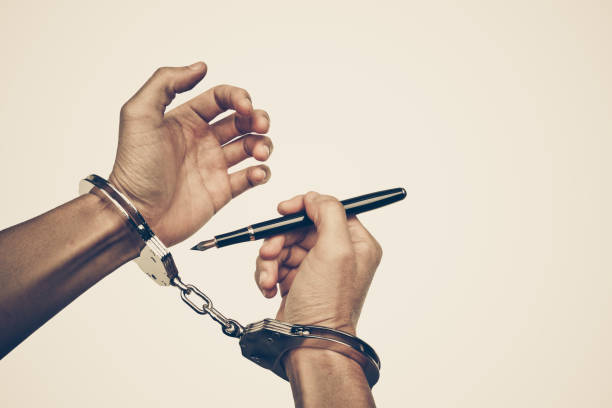
By Mark DaCosta- The freedom of the press in our country has taken a disheartening turn, indicating an alarming regression that cannot be overlooked.
According to Reporters Without Borders, a key global observer of press freedom, our nation has slipped in our annual ranking, now occupying the 76th position out of 180 nations assessed. This is a drop from last year’s 73rd place, showcasing a concerning trend for our media landscape. The score associated with this ranking is now at 59.58, categorying the state of press freedom as problematic, a stark decline from the previous year’s score of 60.12. It is essential to analyse these numbers, as they highlight the shrinking space for journalism and dissent in a democratic society.
One of the primary roles of a free press is to serve the public interest, acting as a rigorous check on government power. The constitutional guarantee of freedom of expression is not just a formal nicety; it is foundational to democracy. Article 146 of our nation’s Constitution guarantees that all individuals have the right to express their opinions without interference, emphasising the necessity for citizens to access diverse views and information freely. This access is essential for an informed public, which is integral to a functioning democracy. Without it, the populace cannot make well-informed decisions or hold those in power accountable, thus undermining the very essence of democracy itself.
Reporters Without Borders has notably reflected the deteriorating state of press freedom in our country, elaborating on the threats faced by journalists who dare to challenge the ruling authorities. The watchdog highlighted that while there are formal protections for freedom of speech, significant barriers to genuine journalistic practice remain. Journalists frequently encounter intimidation, while media outlets struggle to survive financially, exacerbated by diminishing state advertising resources. This situation signals a troubling trend where the interests of those in power overshadow the need for impartial and critical journalism.
In the political context, RSF has reported that politicians are increasingly marginalising media houses for reasons tied to political expediency. This trend has culminated in an environment where press conferences become rare events, heavily managed by the state. Notably, recent changes instituted by the National Assembly have led to contentious new restrictions that bar news cameras from access to government proceedings. Such actions reflect a marked attempt to limit the media’s role as a watchdog.
A more insidious issue is the virtual silence surrounding crucial governmental matters. The Reporters Without Borders report did not capture the alarming fact that ministerial press conferences have become almost non-existent, leaving citizens starved for information. Only a scant few opportunities have been afforded, with one recent exception being a press briefing by the Minister of Home Affairs responding to a specific incident. Furthermore, opportunities for journalists to engage directly with members of the government have dwindled, as information is increasingly disseminated unilaterally through social media platforms, eliminating the interactive engagement that is vital for accountability.
It is important to acknowledge complaints raised by the Guyana Press Association regarding the pervasive lack of responsiveness from key government figures. Despite the inherent role of the media in a democracy, there is a striking absence of dialogue, with the police force frequently ignoring basic media inquiries. In addition, parliamentary committees remain inaccessible to journalists and the public, reinforcing the narrative of disengagement from the very entities that are supposed to serve the public interest.
While the current climate suggests that journalists enjoy a degree of respect and protection, the reality is far more complex. Reports of verbal harassment and hostility towards journalists from politicians and their supporters paint a different picture — one where the freedom of the press is continually under threat. The composition of the media regulatory authority, appointed directly by the president, raises concerns about the impartiality of the sector, especially considering that licenses for media outlets can be revoked at the whim of those in power.
Despite a relatively low incidence of physical violence against reporters in our nation, the pervasive atmosphere of intimidation, both legal and online, casts a long shadow over the media landscape. The lack of legal repercussions for such acts reinforces an environment in which aggressive behaviour towards journalists remains unchecked.
The current situation presents a grim snapshot of the global trend, wherein for the first time in 25 years, more than half of the countries in the World Press Freedom Index are classified as experiencing either severe or difficult conditions for press freedom. A decline in the overall score of countries surveyed highlights a worrying trend toward the criminalisation of journalism and the erosion of fundamental rights, even in nations one would expect to uphold democratic standards.
For our country to navigate the many challenges it faces, it must foster an environment where the press is not only free but empowered to do its job without fear of retribution.