By Miranda Kaplan- Culantro is one of those herbs I’d always paused and wondered over in stores, but never taken the time to really investigate, much less buy and use.
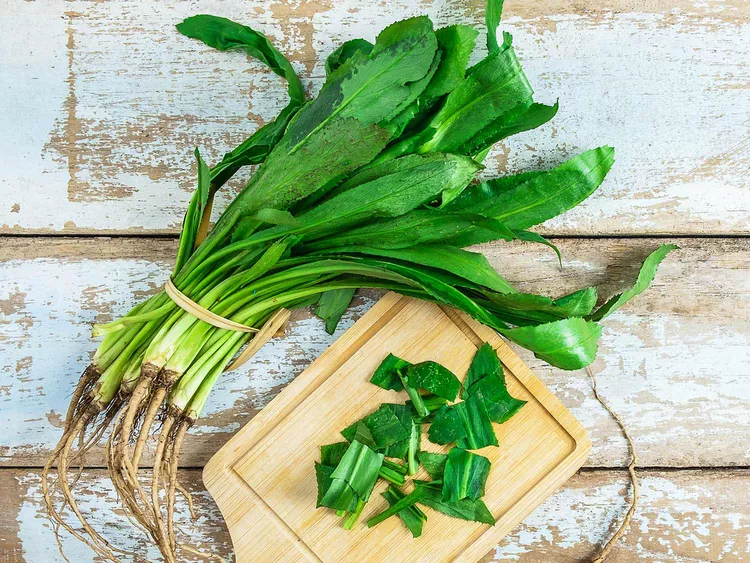
The plant, Eryngium foetidum, which also answers to fitweed, ngò gai, and a handful of other names (in addition to sometimes being referred to as, yes, “cilantro”), is native to Mexico, Central and South America, and the Caribbean, but is grown in tropical zones worldwide. It produces long, pretty, true-green, sawtooth-edged leaves that smell very strongly of, well, cilantro.
It’s like a concentrated dose of cilantro aroma and flavor, intense enough to waft up from a grocery bag or smack you in the face as you move it from the refrigerator shelf to the counter. (Apparently whoever gave it its Latin name didn’t care for this quality, since “foetidum” means “stink”; I can attest that if you like the smell of cilantro, you should find nothing objectionable about its cousin.)
According to the culinary experts I sought out, culantro can be used in many of the same contexts you’d find cilantro, with a couple of important distinctions. First, because culantro is more potent, you’ll need to use less of it. Second, it’s suitable for long-cooked dishes in which cilantro would impart bitterness or lose its more delicate flavor.
Enrique Awe, chef at the Running W Steakhouse & Restaurant in San Ignacio, Belize, uses culantro in beef and chicken soups, rice and beans, and stewed beans. “It offers a very nice, herby, citrusy taste,” he says. “Also, the flavor blends very well with coconut milk.” He recommends tearing or cutting the leaves before adding them to stews to release better flavor.
Illyanna Maisonet, the author of Diasporican and former columnist for the San Francisco Chronicle, notes that culantro is an essential ingredient in Puerto Rican recaíto, a kind of sofrito that includes no tomato and forms the base for many Puerto Rican dishes. Whole leaves of culantro, also called recao in Puerto Rico, can be added directly to your blender for recaíto, or they can be cut into chiffonade and added to salads or used as a garnish, Maisonet says.
Sneaking a few bites of the raw herb, I found it had a slight sharpness, almost pepperiness, that cilantro doesn’t. And, real talk from a far-from-pro cook: I liked that the broad, flattish, relatively sturdy leaves are easier to cut than cilantro’s thin, frilly ones, and don’t require stripping. (Not to mention the fact that I had to chop a smaller amount overall.)
Culantro is still rare to find in the dominant supermarket chains of the continental US; your best bets for finding it are in Asian and Latin American markets. (“Check that one local Asian market that is known to carry everything,” Maisonet advises.) After purchasing, wrap the leaves loosely in a damp paper towel, place them in an unsealed plastic bag, and use within about a week.
(Extracted and edited from seriouseats)