Friday, June 19, 2026
Village Voice News
ADVERTISEMENT
  • Home
  • News
  • Sports
  • Editorial
  • Letters
  • Global
  • Columns
    • Eye On Guyana
    • Hindsight
    • Lincoln Lewis Speaks
    • Future Notes
    • Blackout
    • From The Desk of Roysdale Forde SC
    • Diplomatic Speak
    • Mark’s Take
    • In the village
    • Mind Your Business
    • Bad & Bold
    • The Voice of Labour
    • The Herbal Section
    • Politics 101 with Dr. David Hinds
    • Talking Dollars & Making Sense
    • Book Review 
  • Education & Technology
  • E-Paper
  • Contact Us
No Result
View All Result
  • Home
  • News
  • Sports
  • Editorial
  • Letters
  • Global
  • Columns
    • Eye On Guyana
    • Hindsight
    • Lincoln Lewis Speaks
    • Future Notes
    • Blackout
    • From The Desk of Roysdale Forde SC
    • Diplomatic Speak
    • Mark’s Take
    • In the village
    • Mind Your Business
    • Bad & Bold
    • The Voice of Labour
    • The Herbal Section
    • Politics 101 with Dr. David Hinds
    • Talking Dollars & Making Sense
    • Book Review 
  • Education & Technology
  • E-Paper
  • Contact Us
No Result
View All Result
Village Voice News
No Result
View All Result
Home News

Hinds Says Budget 2026 Falls Short on Equity and Inclusion

Admin by Admin
February 7, 2026
in News
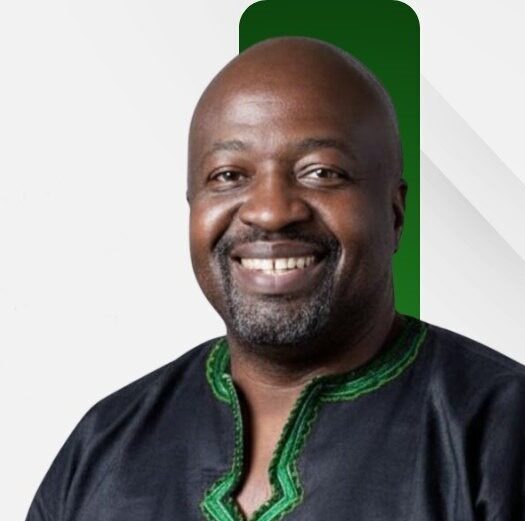
Dr.David Hinds- WPA Co-leader

Dr.David Hinds- WPA Co-leader

0
SHARES
0
VIEWS
Share on FacebookShare on Twitter

By Mark DaCosta- Speaking during the 2026 Budget Debate, Dr. David Hinds, Member of Parliament for the Working People’s Alliance (WPA) within A Partnership for National Unity (APNU), warned that Guyana’s transition to an oil-rich economy is exposing deep and widening social challenges. He argued that the budget reflects misplaced priorities by favouring certain groups over others, and urged a national reckoning on equity, inclusion, and who truly benefits from the country’s growing wealth.

Hinds is an influential figure in Guyanese politics, renowned for his advocacy on social justice issues and critical examination of governmental policies. As a member of the WPA, he has consistently pushed for greater inclusivity and representation of all social classes in policy-making. His comments during the budget debate aimed to spark a conversation about the meaning of “putting people first” within the context of a budget that allocates an astonishing $1.558 trillion.

READ ALSO

‘IsWe’ Gets 25 Years Without Parole for Killing Girlfriend

Walton-Desir Backs London for GECOM Comr, Calls for Managed Transition and Electoral Reform

In an era marked by high inflation and increasing costs of living, Hinds admonished his parliamentary colleagues to rise above partisan divisions and approach the budget with integrity and foresight. He expressed disappointment at the narrow lens through which many members of the assembly viewed the budgetary allocations, urging a more expansive consideration of its impact on every facet of society. “Critical thought and analysis compel us sometimes to critique that which we may have benefited from,” he asserted, signalling that gratitude should not preclude reasonable criticism.

The crux of Hinds’ address  around the complexity of identifying who “people” are in the context of policy creation. He implored legislators to consider the multifaceted nature of society that encompasses various social classes, ethnicities, and age groups. Hinds questioned the administration’s commitment to inclusivity, suggesting that the current budget, while substantial, failed to reflect the needs of all citizens. He presented the stark reality that “58 percent of those people are living in misery,” drawing attention to the struggles of ordinary citizens as they face rampant inflation and socioeconomic instability.

In his presentation Thursday Hinds did not shy away from drawing historical parallels to emphasise the importance of critical engagement with government policies. Referencing the turbulent political climate of 1953, he invoked the words of national poet Martin Carter, who penned poignant reflections on oppression and the struggle for dignity. By citing national poet, Martin Carter’s “Dark Time,” Hinds painted a foreboding picture of the current state of affairs, where “the faces of men and women are strained and anxious” due to the prevailing economic hardships and uncertainties, exacerbated by external threats from neighbouring Venezuela.

As he continued his address, Hinds shifted focus to the very individuals who were instrumental in developing the budget — the public servants. He lamented that these indispensable workers seemed entirely absent from the considerations of the budget, stating, “public servants have not found a place in this budget.” He highlighted the stark difference between the minimum wage for public servants, set at a mere $102,000, compared to the private sector’s $60,000, questioning whether such disparities were acceptable in a budget of this scale.

The debate further illuminated the disparities in higher education funding. Hinds voiced alarm over the trend of sending students abroad for degrees while neglecting to adequately support the nation’s premier institution, the University of Guyana. He argued for a redistribution of funds from government-sponsored overseas scholarships, advocating instead for bolstered support for local education, imploring, “Let us put public servants first.”

Reflecting on historical injustices, he brought to light the need for reparations for African Guyanese, a community that has experienced systemic marginalisation. Citing experts who have calculated a staggering $131 trillion owed for unpaid wages over centuries, he urged the government to consider this demographic in the budget. “In our budget of 1.558 trillion dollars, nowhere could we have found a place to put some resources towards reparations?” he questioned, exposing the neglect of historical injustices within present policy.

Towards the end of his remarks, Hinds expressed frustration regarding the lack of consultation between the ruling party and opposition members prior to the budget’s unveiling. He argued that such engagement would have fostered a sense of ownership over the budget and allowed for a more collaborative approach to governance. The need for a genuine partnership in addressing national issues was underscored by his assertion that “there is a difference between a manifesto and a budget.”

The insights shared by Dr. Hinds resonate deeply within the hearts of those who see a government potentially failing to honour promises of equity and inclusivity. His call to action urges not just a critique of numbers but a challenge to rethink priorities in our country’s governance, lest we continue to overlook those who have long been silenced. The cry for justice, dignity, and representation in our budgetary processes cannot be ignored, making it clear that the struggle for equity remains as urgent as ever in our society today.

ShareTweetSendShareSend

Related Posts

Murdered, Shonette Dover  and Shaquawn Alleyne, also known as “IsWe”
News

‘IsWe’ Gets 25 Years Without Parole for Killing Girlfriend

by Admin
June 19, 2026

Shaquawn Alleyne, known as "IsWe", was on Thursday sentenced to 25 years imprisonment for the 2021 murder of his 21-year-old...

Read moreDetails
L-R FGM Leader Amanza Walton-Desir and 
Mr. Nigel London
News

Walton-Desir Backs London for GECOM Comr, Calls for Managed Transition and Electoral Reform

by Admin
June 19, 2026

Forward Guyana Movement (FGM) leader and the party's lone Member of Parliament, Amanza Walton-Desir, has nominated Nigel London for appointment...

Read moreDetails
News

Young Guyanese Entrepreneur Launches Platform to Transform Fundraising

by Staff Writer
June 19, 2026

Founder Carl Handy recently unveiled the initiative, describing it as a centralized platform that allows individuals, charities, community groups and...

Read moreDetails
Next Post
Speaker Manzoor Nadir presiding over the 2026 Budget Debates

Speaker Under Fire for Curtailing Debate and Press


EDITOR'S PICK

In this image from video, security video is shown to senators as House impeachment manager Rep. Eric Swalwell, D-Calif., speaks during the second impeachment trial of former President Donald Trump in the Senate at the U.S. Capitol in Washington, Wednesday, Feb. 10, 2021. (Senate Television via AP)

After Democrats’ visceral presentation, Trump team on stage

February 12, 2021

Trade Union Congress opens Triennial Delegates Conference today

November 8, 2023

Exxon-led consortium’s 2024 profit in Guyana rose 64% to $10.4 billion

June 4, 2025
Royals stumble at the start  Smith won the toss in the first day-game of the season, and batting first seemed the right decision given the sapping heat. However, Royals couldn't make the most of that advantage with their top three gone within ten balls of each other. Buttler looked good during his brief stay, but Smith and Samson didn't last long enough for even a brief sparkle.  Samson's dismissal required several replays, with the third umpire trying to determine whether Chahal had got his hands under the ball while diving full-length to his right. The soft signal on the field was 'out', and the third umpire eventually ruled that the images didn't provide enough evidence to overrule the on-field call, which gave Chahal his first wicket.  The Royals sent in Robin Uthappa at No.4, but if the move was intended to give some stability, it didn't quite have the desired effect. Far from his fluent best, Uthappa couldn't get going, and ended with his third score of less than a run a ball in four matches so far this season.  Lomror, Tewatia lead recovery  Royals had gone with Mahipal Lomror for this game ahead of Ankit Rajpoot, bringing in a batsman who could bowl occasional spin for a seam bowler, and Lomror repaid that faith with a robust innings of 47. At the death, the big-hitting pair of Rahul Tewatia and Jofra Archer smashed four sixes between them to push the Royals past 150. But with Tom Curran not getting a bat and Tewatia and Archer facing only 22 balls between them, it left questions about the Royals batting order, and whether they would have been better served by sending in quicker scorers earlier.  Padikkal starts, Kohli finishes  In only his fourth IPL innings, Padikkal powered to his third half-century. He looked at ease from the start of this innings, effortlessly picking up Jaydev Unadkat for six over deep midwicket second ball. He lost Aaron Finch in the third over, lbw to a Shreyas Gopal googly, but Kohli joined him for a match-winning stand. The two would go on to put up 99 runs in 80 balls. Kohli could afford to take his time and play himself in, with the asking rate not too high and Padikkal stroking the ball freely.  Padikkal lost his stumps to Archer - easily the best Royals bowler on show - when he was stepping away to make room, but de Villiers joined Kohli to knock off the remaining runs comfortably.

Virat Kohli and Devdutt Padikkal lead Royal Challengers Bangalore to third win

October 4, 2020

© 2024 Village Voice

No Result
View All Result
  • Home
  • News
  • Sports
  • Editorial
  • Letters
  • Global
  • Columns
    • Eye On Guyana
    • Hindsight
    • Lincoln Lewis Speaks
    • Future Notes
    • Blackout
    • From The Desk of Roysdale Forde SC
    • Diplomatic Speak
    • Mark’s Take
    • In the village
    • Mind Your Business
    • Bad & Bold
    • The Voice of Labour
    • The Herbal Section
    • Politics 101 with Dr. David Hinds
    • Talking Dollars & Making Sense
    • Book Review 
  • Education & Technology
  • E-Paper
  • Contact Us

© 2024 Village Voice