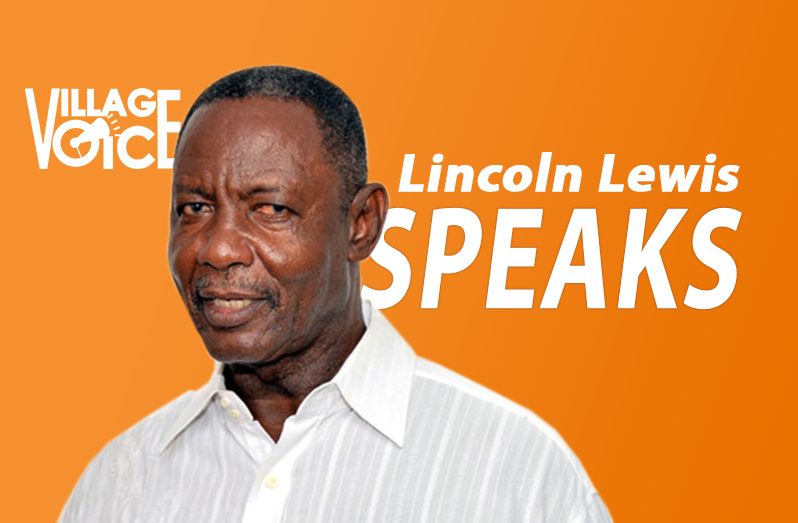
Social commentator and columnist GHK Lall has launched a sharp attack on the conduct of the Speaker of the National Assembly, accusing him of systematically undermining democratic norms, suppressing opposition voices and curtailing press freedom, in an opinion column published today by Village Voice News.
In the op-ed, titled “Mr. Speaker, or Mr. Master Executioner?”, Lall argues that the Speaker has abandoned the neutral and protective role traditionally associated with the office and instead operates as an enforcer for the governing People’s Progressive Party (PPP). Lall contends that the Speaker’s actions have contributed to what he describes as a dangerous deterioration of parliamentary democracy in Guyana.
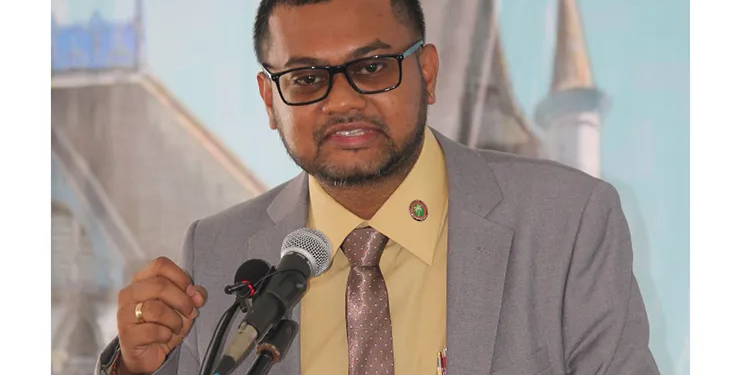
Lall frames his critique around repeated rulings and interventions by Speaker Manzoor Nadir that have blocked or curtailed opposition initiatives in the National Assembly. He suggests that when government MPs address the presiding officer as “Mr. Speaker,” they implicitly acknowledge his usefulness to their political objectives, while opposition MPs, he argues, do so “with the hollowness of tattered consciences” because of what they have experienced at his hands.
“The record of Guyana’s Public Executioner strides on its own legs,” Lall writes, asserting that motions, papers and procedural requests brought by opposition members have been repeatedly “chopped off” without consideration. He points specifically to an incident in which the Speaker disallowed a proposed moment of silence for an 11-year-old girl, describing that ruling as emblematic of an office-holder disconnected from conscience, civility and democratic restraint.
The columnist maintains that such actions go beyond procedural strictness and amount to the destruction of democratic norms. According to Lall, when parliamentary conventions are dismantled, the system begins to resemble “parliamentary despotism,” a condition in which a “Public Executioner enjoys great popularity with powerful recruiters and controllers” while being rejected by ordinary citizens.
Lall also references the Speaker’s handling of opposition leadership matters, singling out the treatment of We Invest in Nationhood (WIN) Leader of the Opposition Azruddin Mohamed. He characterises the Speaker’s rulings and interventions as an aggressive attempt to politically neutralise Mohamed, arguing that repeated efforts were made to remove or marginalise him within the parliamentary process.
In the column, Lall extends his criticism to recent restrictions placed on the media’s access to the National Assembly, describing them as the latest escalation in what he sees as a pattern of silencing. He alleges that the press was first constrained through procedural delays and then effectively “decapitated” through formal decisions that limit coverage and participation.
“Truncate the press is the new preferred pastime of Mr. Executioner,” Lall writes, arguing that press freedom is essential to accountability and that restricting media access further undermines democratic oversight of the legislature. This week, the Speaker limited access to the media gallery, claiming he was enforcing a prior agreement with the Guyana Press Association—a claim the association has since publicly rejected.
While heavily metaphorical in language, the column situates its critique within ongoing public debate over the Speaker’s role, neutrality and decision-making. Opposition parties and civil society groups have previously raised concerns about rulings that limit debate, disallow motions and restrict media access, while the government has consistently defended the Speaker’s actions as lawful and consistent with Standing Orders.
Lall concludes that the Speaker’s record, taken as a whole, represents a fundamental shift away from democratic stewardship toward partisan enforcement, warning that such a trajectory places Guyana’s parliamentary democracy at risk unless checked by public scrutiny and institutional reform.