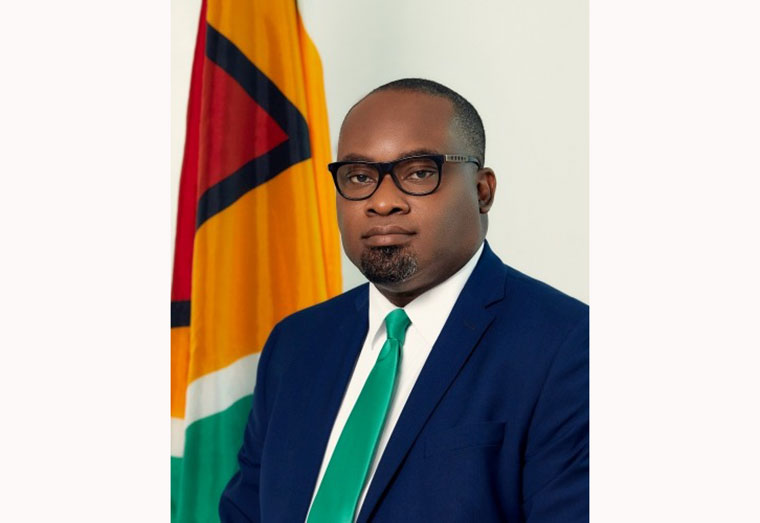
Guyana may be heading for a democratic disaster. Senior Counsel and Opposition Member of Parliament Roysdale Forde has sounded the alarm that Guyana is barrelling toward an election “without the bare minimum of democratic safeguards.”
The parliamentarian’s stark warning follows President Irfaan Ali’s Independence Day- May 26, 2025- announcement that General and Regional Elections will be held on September 1, 2025—just one day after Venezuela’s failed stunt to stage an illegal election in the contested Essequibo region.
But what should have been a celebration of democratic renewal “reeks of manipulation, desperation, and a rather brazen attempt to rig the rules in their favour,” Forde wrote in a scathing op-ed released shortly after the announcement.
At the heart of his alarm: Guyana’s electoral system is floundering in disrepair, with no functioning census data more than three years after the exercise was completed. “Where is the census report?” Forde asked. “There has been no official publication, no breakdown of the demographics, and no transparent accounting of population changes. Why the secrecy?”
Implementing Plan to Rig Elections
The government’s refusal to release the census data is igniting fears of a calculated cover-up. Observers suspect the demographic shifts revealed in the report could damage the governing People’s Progressive Party (PPP), which analyst said could be engineering an electoral scheme beneath the radar.
Those suspicions were amplified by a chilling disclosure from Foreign Secretary Robert Persaud. In a recent social media post, Persaud revealed that an estimated 100,000 persons of Venezuelan ancestry are now living in Guyana. “Shouldn’t this reality give ALL Guyanese a cause to be alert?” he asked, triggering widespread alarm.
Former Prime Minister and Georgetown Mayor Hamilton Green took it a step further, warning he was “reliably informed scores of Venezuelan citizens who entered Guyana illegally through our rather porous borders are facilitated with so-called Late Registration, and therefore being granted National Identification Cards, and therefore will be registered as Guyanese citizens and are entitled to vote.”
Forde insists scenarios such as—unchecked migration, missing census data, and a collapsing verification system—is laying the groundwork for a rigged vote. “The lack of population data cripples the authorities’ ability to properly plan and opens the door for manipulation,” he wrote.
Long-standing crisis of the bloated voters list
Making matters worse is the long-standing crisis of the bloated voters list. According to GECOM’s own data, as of February 2025, there are 738,484 registered voters—nearly 80,000 more than the 2020 count. Forde says this glaring anomaly obliterates trust in the process and “feeds suspicions of fraud.”
He also blasted the PPP/C for its “selective outrage,” recalling that the same party had railed against the bloated list while in opposition. “But now, with the party firmly holding the reins of power, the rhetoric has conveniently shifted—or, more accurately, evaporated,” he charged.
In 2015, then Opposition Leader Bharrat Jagdeo argued that cleaning up the voter list was essential to reducing electoral irregularities and safeguarding the integrity of the process. He also pushed for enhanced biometric systems to strengthen voter identification, citing incidents where presiding officers permitted voting based solely on facial recognition.
Accusing the government of weaponising democracy for political gain, Forde wrote: “One must ask: was the concern about electoral integrity genuine, or was it merely a strategic cudgel to delegitimise the results of elections they lost?”
Also under fire is the government’s inexplicable failure to implement biometric verification for voters—despite having already signed a $34.5 million contract with German firm Veridos for a national e-ID system in 2023. “It is amazing that they can enter into an agreement for e-ID but find it difficult to do a similar initiative to secure the integrity of the nation’s electoral process,” Forde noted.
No reason Guyana cannot implement biometrics to reduce voter fraud
The technology exists. The money exists. What’s missing, overserves say, is political will.
Guyana Trades Union Congress (GTUC) General Secretary Lincoln Lewis echoed the call, citing Ghana’s swift implementation of biometric registration for 15 million voters in just six weeks. “There is no reason Guyana, with fewer than one million voters, cannot do the same,” he said. “The problem is not a lack of resources; it is a lack of political will. This country does not suffer from a shortage of money, but from a shortage of leaders prepared to put the national interest above personal or partisan agendas.”
GECOM Chief Election Officer Vishnu Persaud has pegged the cost of biometric implementation at $4.1 billion (US$20 million). But Lewis has blasted that excuse. “If the government can find $57.5 billion in a supplemental budget less than four months after passing a $1.38 trillion budget, then it can damn well find $4.1 billion to protect the integrity of our elections.”
Forde is now pointing to that very $55 billion supplemental request as further evidence of what he describes as an “election heist in motion.”
He warns it could be used to “grease palms, fund vote-buying schemes, and tighten the ruling party’s grip on power.”
In 2015 Jagdeo proposed implementing biometrics such as iris scans and photo IDs to secure the voting process. In 2025 the PPP has distanced itself from the demand and accepting of going into to elections with a fraudulent list and no biometrics.
“The PPP/C operates as if Guyanese are too distracted or too weary to notice the layers of deception,” Forde wrote. “But Guyanese do notice. They see a regime that governs not with moral clarity but with a corrosive hunger for power.”
For Forde, the stakes have never been higher.
“This is not just another election date—it is a reckoning for the PPP/C dictatorial regime,” he warned. “The collective memory of stolen mandates, institutional rot, and broken promises is still fresh. And this time, Guyanese are watching more closely than ever.”
Leader of the Opposition, Bharrat Jagdeo’s call for biometrics