As Venezuela presses ahead with plans to hold elections for Guyana’s Essequibo region on May 25th and aggression against Guyanese soldiers intensifies, concern is mounting over the domestic implications of unchecked Venezuelan migration.
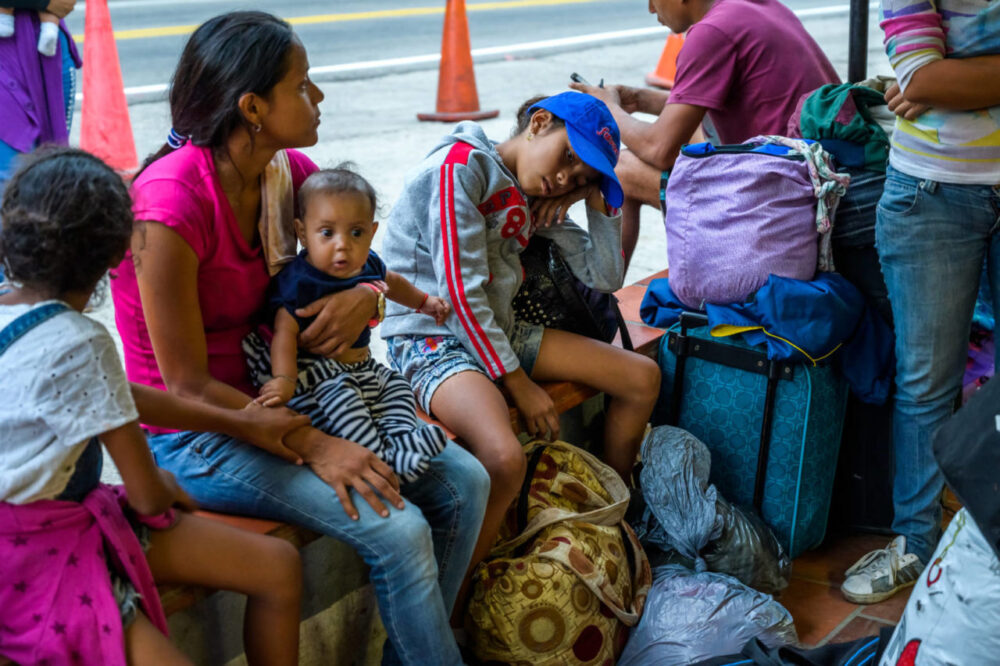
Foreign Secretary Robert Persaud triggered debate this week after posting on Facebook that nearly 100,000 persons of Venezuelan ancestry now live in Guyana, either directly or indirectly. “Shouldn’t this reality give ALL Guyanese a cause to be alert?” he wrote. “People’s vigilance is equivalent to people’s power and defense.”
One social media user bluntly responded: “The first order of business should be to stop the migration. You can’t continue to allow them in and then tell citizens to watch them. 100,000 is about 25% of our Army.”
Linden Mayor Sharma Solomon also weighed in, stating: “100,000 Venezuelans in Guyana! For the most part, the people of this country were deliberately brought to this point, to now be told, this is our problem. We must ‘Stay Alert.’”
The issue of uncontrolled migration isn’t new. In February, former President David Granger warned that the migrant crisis began under the People’s Progressive Party (PPP) government and worsened dramatically over the past 12 years under Venezuelan President Nicolás Maduro.
Granger blamed the current government for neglecting the country’s porous 3,000 km border, noting the lack of public administration, health, security, and defence infrastructure in key border regions.
President Irfaan Ali has sought to reassure the nation amid rising anxiety over Venezuela’s actions. “We are not sitting back,” he said recently. “The Guyana Defence Force, the government, and every stakeholder, we are putting everything in place to ensure that the sovereignty and territorial integrity of Guyana are protected.”
However, the opposition and civil society aren’t convinced.
Opposition Leader Aubrey Norton issued a sharp rebuke, accusing the Ali administration of lacking a comprehensive plan and failing to engage stakeholders meaningfully. “We’ve made numerous proposals in Parliament and in meetings with the President, but the government continues to ignore them,” Norton stated. He said the government promised to act, but nothing materialises.
He pointed to a parliamentary motion that called for a national public relations campaign to raise awareness about Venezuela’s aggression—something President Ali reportedly agreed to, but never implemented.
Norton also highlighted the government’s failure to honour its promise to hand over the chairmanship of the Parliamentary Committee on Foreign Affairs to the opposition. He said Shadow Minister Amanza Walton-Desir was supposed to assume the role, but the committee has neither convened nor changed leadership.
“We have had enough of the government wanting our support when Venezuela acts up,” Norton said.
As the Essequibo crisis deepens and domestic frustration grows, Guyana finds itself confronting not just an external threat, but the political and social strain of its internal divisions.