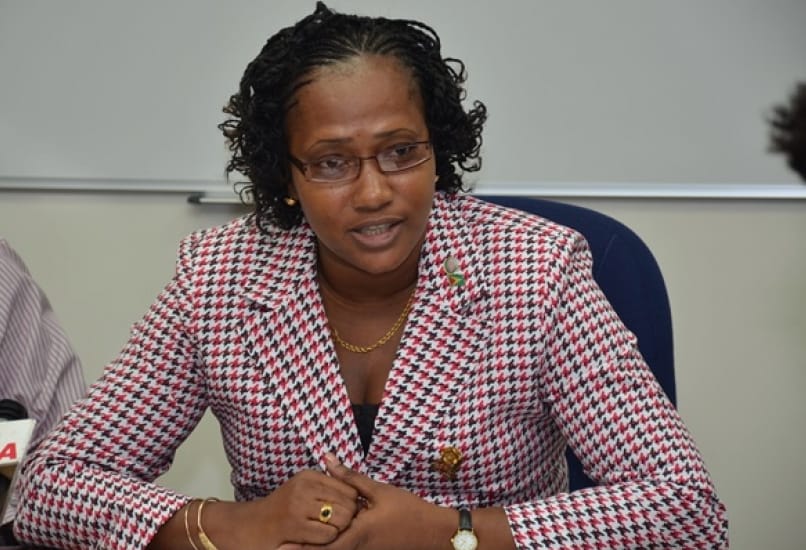
Former Minister and Member of Parliament Annette Ferguson has issued a stern public warning about what she views as growing threats to Guyana’s democratic integrity and national sovereignty. With the September 1 General and Regional Elections fast approaching, Ferguson used her Facebook platform to outline a series of developments she believes require urgent attention from all Guyanese.
Among her key concerns is the ongoing instability within the Guyana Elections Commission (GECOM), citing recent disclosures by GECOM Commissioner Vincent Alexander. In a recent media publication Alexander has raised serious concerns about the electoral body’s readiness for the 2025 elections, accusing government-appointed commissioners, the GECOM Chair, ret’d Justice Claudette Singh and the Chief Elections Officer Vishnu Persaud of overstating the commission’s preparedness while ignoring critical safeguards against voter fraud.
At the heart of Alexander’s warning is the urgent need for digital voter identification at polling stations, a measure he says could mitigate the risk of illegitimate voting. Alexander dismissed claims, both local and international, that GECOM’s system is sufficiently secure, citing a recent exposé by the Forward Guyana Movement revealing that a national ID card was issued to a non-registered individual. This case, he argued, exposes a gaping vulnerability and echoes past instances of fraud that were allegedly covered up. He warned that without decisive reforms, Guyana’s electoral democracy risks being compromised by a system unwilling to confront its own flaws.
These reports, Ferguson noted, point to internal dysfunction that risks undermining public confidence in the electoral system.
The former minister also highlighted the continued acting appointments of the Chancellor and Chief Justice—critical judicial roles which remain substantively unfilled. According to her, this constitutional lapse weakens institutional independence and judicial oversight.
Perhaps most strikingly, Ferguson questioned the implications of the United States’ recent announcement that it will provide security support during the election period. She also criticized recent comments made by the U.S. Ambassador to Guyana, calling them excessive and inappropriate for diplomatic engagement.
“The Ambassador must be reminded, respectfully but firmly, that Guyana is a sovereign state governed by the rule of law and its own Constitution—not by the preferences or pronouncements of any foreign power,” Ferguson stated.
Referencing the controversial 2020 elections, she warned that foreign involvement, however well-intentioned, must not blur the line between support and interference. “While international partnerships are valuable, sovereignty must never be compromised,” she added.
Ferguson concluded her statement with a rallying call to her fellow citizens:
“Guyanese, the time has come for us to speak up, stand firm, and push back against any form of foreign overreach in our electoral affairs. Let us reaffirm that Guyana is not a satellite of any state.”
Her remarks arrive amid intensifying debate over electoral readiness, judicial appointments, and foreign involvement. As political tensions mount, Ferguson’s statement reflects broader anxieties within segments of the population about ensuring free, fair, and fully sovereign elections in 2025.