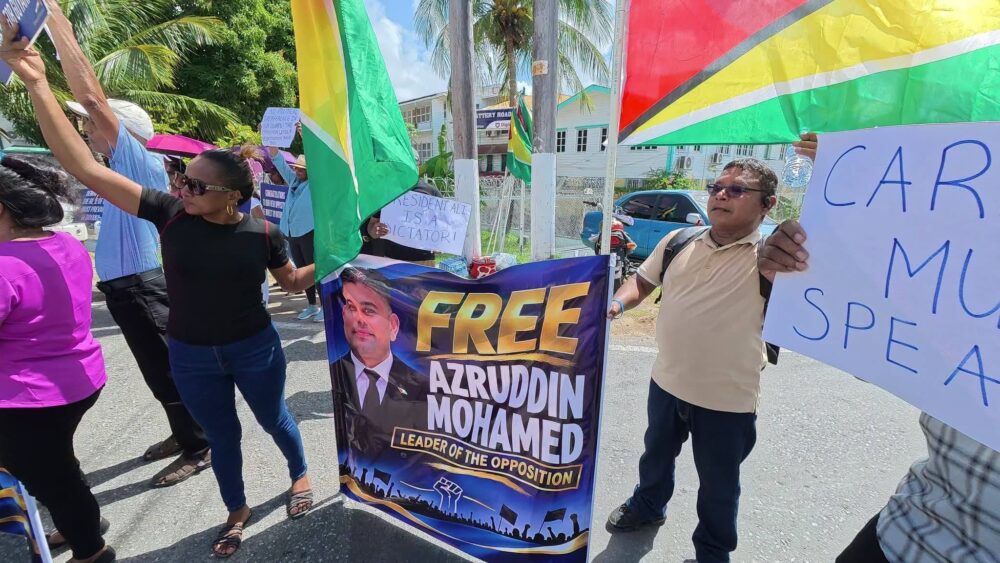
The opposition took its campaign for the release of Leader of the Opposition Azruddin Mohamed beyond Guyana’s borders on Friday, staging a protest outside the Guyana Marriott Hotel in Kingston, Georgetown, where regional judicial officials were gathered for the Ninth Biennial Conference of the Caribbean Association of Judicial Officers (CAJO).
The November 20 demonstration was intended to bring international attention to Mohamed’s continued detention and raise questions about judicial independence, due process, constitutional rights and the rule of law in Guyana.
The choice of venue was deliberate. With judges, magistrates and other judicial officials from across the Caribbean attending the regional conference, the protest provided the Opposition with an opportunity to place its concerns before a wider Caribbean audience.
The Office of the Leader of the Opposition had publicised the demonstration ahead of time, calling on supporters to participate in a peaceful and orderly exercise. The picketing was scheduled for 10:00 a.m. to 11:30 a.m.
The protest came amid growing political controversy surrounding Mohamed’s continued remand on a bailable offence, despite his having secured bail in other, more serious matters before the courts. His passport has also been lodged pursuant to a court order, restricting his freedom of movement.
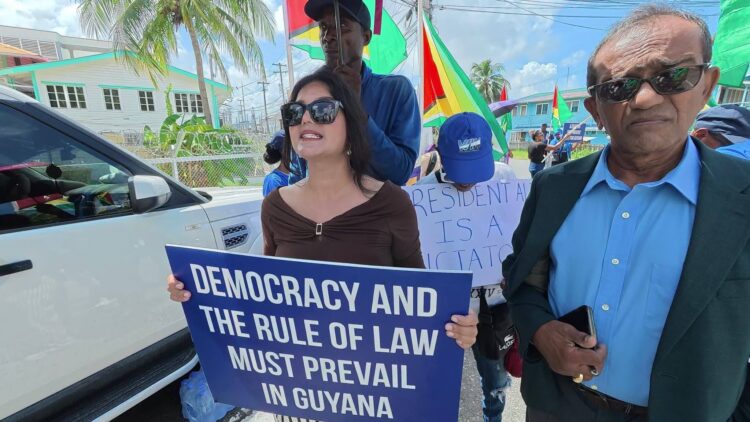
The Opposition has questioned the circumstances surrounding his detention, arguing that the treatment of an elected Leader of the Opposition raises wider concerns about constitutional protections, equality before the law and the ability of elected representatives to discharge their parliamentary responsibilities.
The demonstration also followed a significant legal setback for Mohamed. On November 18, High Court Justice Priscilla Chandra-Hanif dismissed an application by his mother challenging the magistrate’s refusal to grant him bail. However, the judge indicated that a renewed application could be made before the magistrate if circumstances materially changed, including developments concerning the disclosure of evidence.
The timing of Friday’s protest also carried significance because the CAJO conference, which ran from November 19 to 21, brought together approximately 194 delegates from across the region under the theme, “Changing Fundamentals of Judging.”
At Thursday’s opening ceremony, President Irfaan Ali addressed the importance of public confidence in the judiciary and cautioned against intimidation and improper attempts to influence judicial officers.
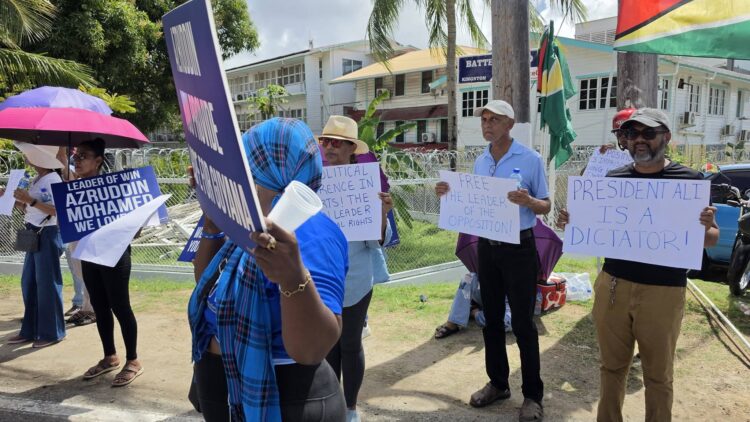
Against that backdrop, the Opposition’s decision to demonstrate outside the conference venue placed the question of judicial independence and public confidence in Guyana’s justice system squarely alongside discussions taking place at the regional gathering.
The controversy surrounding Mohamed’s detention has increasingly become a matter of regional political and legal interest, particularly given the shared legal traditions and constitutional principles across Caribbean countries.
For the Opposition, the protest was an attempt to ensure that Mohamed’s circumstances were not treated solely as an internal Guyanese political matter but examined within the broader context of democratic governance, due process and the protection of fundamental rights.
However, it remains unclear whether any visiting chief justices or other senior judicial delegates personally engaged with the protesters, whether a formal memorandum was delivered to the conference, or whether CAJO issued an official response to the demonstration.
The protest nevertheless underscored the Opposition’s determination to internationalise its concerns over Mohamed’s detention and bring greater regional attention to questions surrounding the administration of justice in Guyana.