The AFRICAN UNION (AU) was officially LAUNCHED on July 9, 2002, in Durban, South Africa, succeeding the Organization of African Unity (OAU). The Constitutive Act that created the AU was adopted on July 11, 2000, and officially entered into force on May 26, 2001.
The African Union (AU) is a CONTINENTAL POLITICAL and ECONOMIC Organisation comprising 55 MEMBER STATES that span the ENTIRE AFRICAN Continent. Headquartered in Addis Ababa, ETHIOPIA, the AU focuses on promoting Peace, Human Rights, and Socio-economic INTEGRATION.
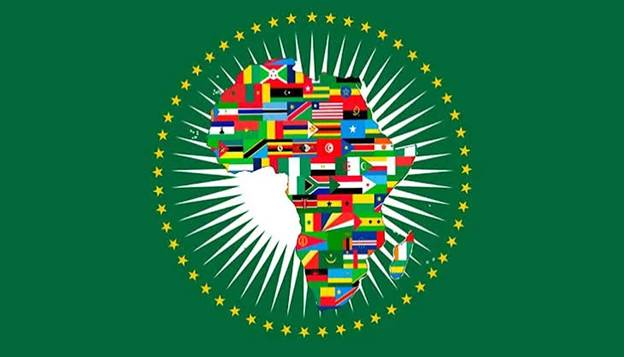
Mission: Its VISION is to build an integrated, prosperous, and peaceful Africa driven by its citizens.
Flagship Projects: The AU focuses on large-scale developmental initiatives, most notably the African Continental Free Trade Area (AfCFTA) to create a SINGLE MARKET for goods and services across the continent.
Long-Term Plan: It operates under Agenda 2063, a 50-year blueprint for structural transformation, which includes goals like an integrated high-speed train network and enhanced free movement of people.
The Assembly: The supreme organ composed of the Heads of State and Government of all member countries.
The Commission: The AU’s secretariat, responsible for the day-to-day management of the organization.
Peace and Security Council: Tasked with anticipating and responding to crises, as well as enforcing the AU’s policies on peace and conflict resolution.
A SWOT analysis of the African Union (AU) reveals an institution with a STRONG COLLECTIVE Mandate BUT persistent implementation GAPS. The Union navigates a complex BALANCE between continental INTEGRATION and State SOVEREIGNTY.
STRENGTHS (Internal) Unified GLOBAL Voice:
- Represents 55 member states collectively, securing a permanent seat in the G20 and coordinating continental positions on global climate and economic policies.
- Comprehensive Frameworks: Holds clear blueprints for growth, notably Agenda 2063 (“The Africa We Want”) and the African Continental Free Trade Area (AfCFTA).
- Peace and Security Architecture: Maintains active conflict resolution organs, such as the Peace and Security Council, and deploys peacekeeping forces to volatile regions.
- Legal and Institutional Structure: Possesses formal judicial, parliamentary, and administrative bodies located at its Addis Ababa Headquarters to streamline regional integration.
WEAKNESSES (Internal) Financial DEPENDENCY:
- Rely heavily on external International donors(like the EU) for their operational and program budgets, undermining its strategic autonomy.
- Enforcement Power Bottlenecks: Operates on consensus, frequently prioritizing national sovereignty over continental intervention. It lacks binding mechanisms to force member states to comply with its resolutions.
- Institutional Capacity Limits: Slow bureaucratic processes, recent restructuring disruptions, and a shortage of technical personnel at the secretariat stall major initiatives.
- Inconsistent Crisis Response: Criticized as a “CLUB OF LEADERS” that sometimes reacts slowly to democratic backsliding, military coups, and human rights violations due to the strict non-interference doctrine.
OPPORTUNITIES (External) AfCFTA Market EXPANSION:
- Capitalizing on the African Continental Free Trade Areato build the world’s largest single market, boosting intra-African trade and manufacturing.
- Demographic Dividend: Leveraging the youngest, fastest-growing workforce globally to accelerate digital transformation and economic innovation.
- Green Energy and Critical Minerals: Leading global supply chains for the energy transition by managing Africa’s massive reserves of lithium, cobalt, solar, and hydro potential.
- Geopolitical Leverage: Exploiting renewed diplomatic interest from major global powers to secure better trade terms, development investments, and debt relief.
THREATS (External) Political INSTABILITY:
- Resurgent military coups, civil conflicts(e.g., in Sudan and the Great Lakes region), and domestic terrorism drain organizational resources.
- Climate Vulnerabilities: Severe droughts, water scarcity, and extreme weather events damage local agricultural economies and spark resource-driven migration.
- Global Economic Headwinds: Rising sovereign debt distress, high inflation, and shrinking direct foreign aid strain the fiscal capacity of member states to fund AU projects.
- Regional Fragmentation: Geopolitical alignment rifts among member nations or competing agendas within Regional Economic Communities (RECs) weaken central AU authority.
The OPEC Comparison: Opportunities & Realities: A MINERAL BLOCK similar to OPEC presents DISTINCT strategic ADVANTAGES alongside SEVERE structural CHALLENGES.
Massive Global Leverage: Africa controls the vast majority of resources vital to the global green energy transition. The DRC produces over 70% of the world’s cobalt, while South Africa dominates platinum-group metals (PGMs). Zimbabwe holds massive lithium reserves. A unified bloc could give these countries immense pricing power over Western and Chinese supply chains.
Mandatory Local Processing: Rather than exporting cheap raw ore, a cartel-style alliance could collectively mandate local processing (beneficiation). Refined intermediate goods generate higher tax revenues and create millions of local manufacturing jobs.
The Obstacles: Unlike OIL, which is a SINGLE commodity, “critical minerals” span DOZENS of completely different metals (lithium, cobalt, nickel, graphite). This diversity makes setting uniform production quotas incredibly complex.
Alternative Alliances Already in Play. Instead of a strict pricing cartel, African nations are utilizing EXISTING legal frameworks to ACT COLLECTIVELY.
The AfCFTA Advantage: Countries are leveraging the African Continental Free Trade Area (AfCFTA) to build cross-border regional value chains. For instance, Zambia and the DRC signed a joint cooperation agreement to build an electric vehicle battery manufacturing corridor.
G20 Critical Minerals Framework: Adopted at the Johannesburg Summit, this framework aims to guard developing nations against exploitative, raw extraction and establish fair, sustainable trade partnerships.
How a “Value-Addition Alliance” Can Succeed.
Instead of focusing on fixing prices, African nations are succeeding by acting as a cooperative policy bloc focused on industrializing the continent. Rather than trying to beat OPEC at its own game, countries are replicating the “Indonesia Model”. Indonesia successfully banned raw nickel exports, forcing global companies to build multi-billion-dollar domestic smelters and battery plants to access their resources.
To WIN GLOBAL LEVERAGE, African nations are utilizing a UNIFIED approach across THREE main avenues.
Joint PROCESSING Mandates (Beneficiation): Moving beyond raw exports to localized processing generates high tax revenues and millions of manufacturing jobs. Single nations face immediate pressure when banning raw exports, but an African Union-backed framework allows countries to stand together against international mining GIANTS.
Cross-Border REGIONAL Corridors: Because individual African nations rarely hold all parts of a single manufacturing supply chain, regional teamwork is essential. The landmark DRC-Zambia EV Battery Corridor serves as a prime example, where Zambia provides the copper and the DRC provides the cobalt to build electric vehicle battery components regionally rather than exporting raw rocks to Asia.
Leveraging GEOPOLITICAL Competition: The U.S., European Union, India, and Saudi Arabia are aggressively competing to break China’s monopoly over processed minerals. Coordinated African strategies—such as the African Development Bank’s localized investment frameworks—allow countries to demand infrastructure, technology transfers, and local factories from foreign buyers in exchange for access to mines.
https://ecfr.eu/publication/from-ore-to-more-mineral-partnerships-for-african-industrialisation/
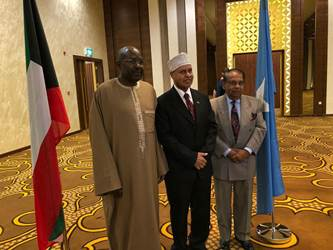
Our CONGRATULATIONS ON 24TH. ANNIVERSARY OF LAUNCH of AFRICAN UNION (AU).
Twenty-four years ago, AFRICA rewrote its DESTINY by giving rise to the African Union (AU), stepping boldly out of the shadow of fragmentation and into the light of unshakeable solidarity.
As we celebrate this MILESTONE, we do not just honor an institution—we honor the fierce, UNSTOPPABLE SPIRIT of over ONE BILLION PEOPLE moving forward as a SINGLE, powerful economic and political force.
From the ambitious BLUEPRINTS of Agenda 2063 to the pioneering strides of the African Continental Free Trade Area, this continent is actively proving that its WEALTH lies not just beneath its soil, BUT within the boundless INNOVATION of its YOUTH and the collective WILL of its 55 member STATES.
The JOURNEY has never been about waiting for the FUTURE; it is about building the World’s LARGEST SINGLE MARKET, asserting MINERAL sovereignty, and claiming a permanent, EQUAL SEAT on the GLOBAL stage.
Do Let this 24TH. ANNIVERSARY SERVE as a powerful REMINDER that UNITY is Your GREATEST CURRENCY, Your DIVERSITY is Your unmatched STRENGTH, and a Prosperous, Self-Reliant Africa is NO longer just a VISION—it is an UNFOLDING REALITY that You are building TOGETHER, piece by piece, DAY by DAY.
3 KEY Items. Institutional Modernisation & Global Stature (2021–2026).
- AfCFTA Trade Commences (2021): Officially operationalized the single market tariff-reduction program and launched the Pan-African Payment and Settlement System (PAPSS)to allow intra-African trade using LOCAL CURRENCIES.
- Historic Colonialism Resolution (2026): Formally passed a landmark resolution designating historical transatlantic slavery and colonialism as crimes against humanity, solidifying a unified LEGAL push for GLOBAL REPARATIONS.
- Permanent G20 Membership (2023): Secured a permanent, voting seat inside the G20, matching the institutional Global stature of the European Union.

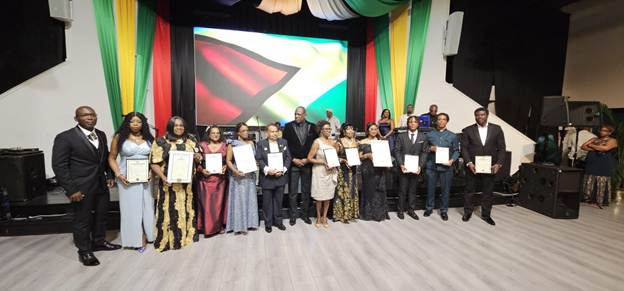
ALL PRAISES TO God, Bhagwan, Allah, Abraham, Yahweh, Buddha, Olodumare, Ogun, Shango, Amma, Mamu, and Ptah’s, GRACES, WILL, and GUIDES.