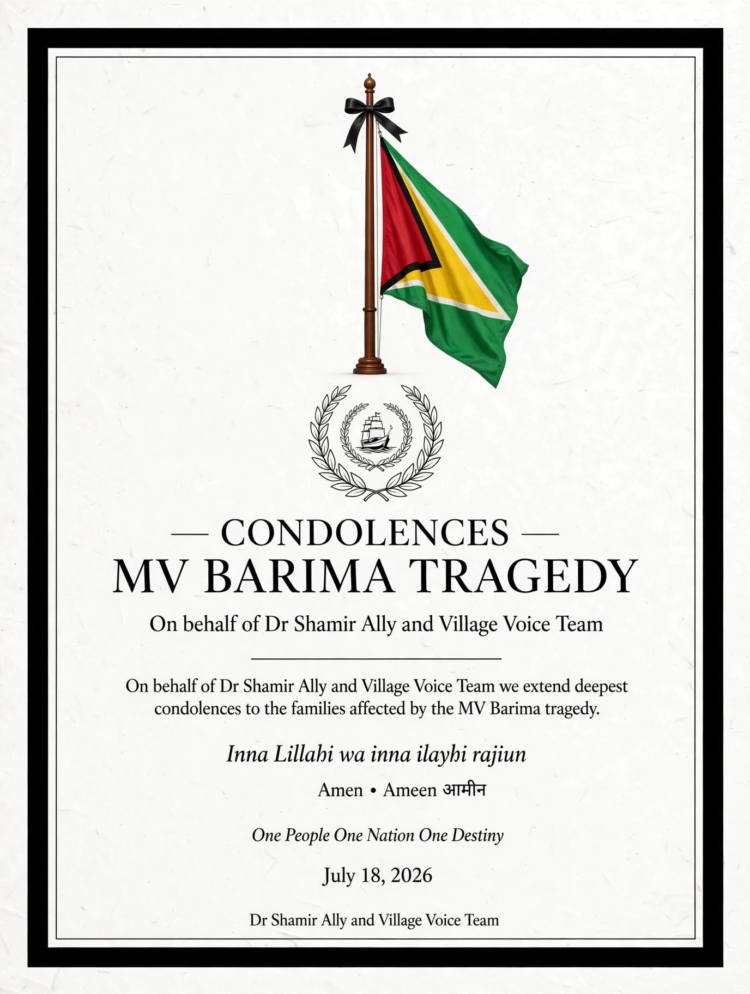
CONDOLENCE
Inna Lillahi wa inna ilayhi raji’un. Amen. आमीन Ameen.
OUR HEARTS are BROKEN for OUR BROTHERS and SISTERS of MV Barima. To the FAMILIES who LOST LOVED ONES, we share YOUR GRIEF.
To the SURVIVORS, WE pray for your speedy and complete recovery. To the RESCUERS still searching across 1,040 sq km of sea, WE THANK YOU. Guyana, WE are with YOU.
One People, One Nation, One Destiny.
Introduction to the Guyana PLAN/PROPOSAL for DIGITAL NOMAD VISA
As Guyana enters a NEW AREA OF GLOBAL VISIBILITY and ECONOMIC GROWTH, we SHOULD/MUST ensure our immigration and economic policies REFLECT the way PEOPLE WORK TODAY.
What is a DIGITAL NOMAD ?
A digital nomad is a person who LEVERAGES TECHNOLOGY to work REMOTELY, allowing them to TRAVEL and LIVE in various LOCATIONS around the WORLD. Many digital nomads work from coworking spaces, cafés, or even their accommodations.
The digital nomad lifestyle has been steadily gaining in popularity since the early 2010s, especially as REMOTE WORK has become MORE ACCESSIBLE around the WORLD.
REMOTE WORK is no longer a NIVHE LIFESTYLE — it is a GLOBAL WORKFORCE . With over 40 MILLION DIGITAL NOMADS WORLDWIDE and RISING DAILY, countries that offer LEGAL, WELCOMING PATHWAYS for location-independent PROFESSIONALS who are capturing NEW FOREIGN EXCHANGE, skills, and GLOBAL networks WITHOUT displacing LOCAL JOBS.
NIVHE LIFESTYLE refers to a highly specialized, intentional way of living built around a specific passion, subculture, or philosophy. Rather than following conventional societal norms, individuals curate their daily routines, careers, and environments to serve a singular, focused interest.
The IDEA/PLAN for Digital Nomad Visas positions GUYANA as South America’s English-speaking remote work destination. Unlike our current gray-area approach of tourist visa extensions, this plan creates a clear, legal 1-year visa for remote workers whose income, clients, and employers remain outside Guyana. It is designed to be low barrier yet compliant: flexible income thresholds, territorial taxation, and strict protections for the Guyanese labour market.
By welcoming DIGITAL NOMADS, Guyana GAINS NEW RESIDENTS WHO RENT HOMES and APARTMENTS, support LOCAL businesses, and INVEST in our communities — while we maintain control over who works here and how. This is not about opening our job market. It is about INVITING THE WORLD TO LIVE and WORK from GUYANA, Legally, Safely, and on Guyana’s Terms.
A digital nomad visa is a type of visa that allows remote workers to live and work in a foreign country while working for an employer or clients outside of that country. It is designed for individuals who can work independently of a fixed location, often providing extended stays without the need for traditional work permits.
A DIGITAL NOMAD is almost always a SKILLS and KNOWLEDGE BASED WORKER. They RELY ENTIRELY on a LAPTOP and an INTERNET connection to EARN A LIVING; their INCOME depends directly on DIGITAL expertise that can be DELIVERED REMOTELY.
OVER 15 COUNTRIES in the Western Hemisphere, North America, Central America, South America, and the Caribbean OFFER digital nomad VISAS or Long-term Remote work PERMITS.
Central America: COSTA RICA : Offers the Estancia visa, valid for up to 2 years. Requires a minimum monthly income of \(\$2,500\) and comprehensive medical insurance. PANAMA: Features a Short Stay Visa for Remote Workers, valid for 9 months and renewable once. Requires a minimum annual income of \(\$36,000\).Belize: Offers the “Work Where You Vacation” program, which permits remote stays for up to 6 months. Requires an annual income of \(\$60,000\) (or \(\$75,000\) for families).
South America: COLOMBIA: Provides a dedicated Digital Nomad Visa (Visa VN) valid for up to 2 years. Very accessible, requiring a minimum monthly income of about \(\$750\) (roughly 10 times the local minimum wage).BRAZIL: Offers a 1-year residency visa for remote workers. Requires a minimum monthly income of \(\$1,500\) or a bank balance of at least \(\$18,000\).ECUADOR: Features a remote work visa valid for 2 years. Requires a minimum monthly income of \(\$1,350\).URUGUAY: Offers a 6-month digital nomad permit (renewable for another 6 months). You can self-declare your income, meaning there is no strict minimum salary requirement.
The Caribbean & North America: MEXICO: While technically a Temporary Resident Visa rather than a dedicated nomad visa, it allows remote workers to live in the country for 6 months up to 4 years. Requires a minimum monthly income of \(\approx. \$2,600\).Barbados: Features the 12-month “BARBADOS Welcome Stamp.” Requires a minimum income of \(\$50,000\) over the 12-month period.
The BAHAMAS: Offers the Bahamas Extended Access Stay (BEATS) program for up to 1 year. BERMUDA: Issues a 1-year Work From Bermuda Certificate. Requires proof of employment or independent business ownership outside Bermuda. ANTIGUA and BARBUD: Offers a Nomad Digital Residence (NDR) valid for up to 2 years. Requires a minimum income of \(\$50,000\) per year. CAYMAN ISLANDS : Offers the Global Citizen Concierge Certificate, permitting remote work for up to 2 years. Requires an annual income of at least \(\$100,000\). CURACAO: Offers the @Home in Curacao program for up to 6 months, which can be extended for an additional 6 months. ANGUILLA : Offers a year-long work visa for remote workers.
https://meltzerhellrung.com/digital-nomad-visas-and-the-h-1b-lottery-another-option-for-employers/
https://www.remofirst.com/post/top-30-countries-with-digital-nomad-visas
Digital Nomad Visa vs. Tourist Visa
A DIGITAL NOMAD VISA is a special visa that allows individuals to live and work remotely in a foreign country for an extended period, usually without needing a traditional work visa.
A TOURIST VISA permits short-term travel for leisure or tourism purposes but does not legally allow the visa holder to work during their stay.
When would someone need a digital nomad visa?
A digital nomad visa is necessary for anyone who plans to live and work remotely in a foreign country. Before remote work visas existed, many digital nomads relied on tourist visas or temporary stay visas for this purpose, even though it wasn’t legal for them to work in most countries on these visas—they got around the requirements because they work for outside employers and weren’t looking for local jobs in the countries they visited or lived in. During and after the COVID-19 pandemic, digital nomad visas became more common since remote work had proliferated around the world during that time.
Unlike a temporary resident visa, residence permit, or permanent residency, which often requires local employment or investment, a digital nomad visa permits remote work for foreign clients or companies. It’s ideal for those who don’t want to navigate complicated residency processes but still want to live abroad while working remotely.
Digital nomad vs. Remote worker
While both digital nomads and remote workers work from locations outside of a traditional office, the key difference is mobility. A remote worker typically stays in one location, often their home, while a digital nomad travels to various destinations while continuing to work. Digital nomads combine their work with the desire to explore novel places, while remote workers tend to have a more stable work-life routine.
How does a person apply for a digital nomad visa?
The exact application process will vary depending on which country’s visa you’re applying for. Generally, the need to complete a visa application form and submit whatever supporting documents the country requires to prove your eligibility. This may include proof of income, remote work capabilities, health insurance, etc.
Eligibility criteria for a digital nomad visa
The exact visa requirements vary depending on the country. Many countries require:
Proof of health insurance
Minimum income, which could include a monthly income, annual income, or other income requirements, such as a minimum amount of money in a bank account.
A clean criminal record
Proof of OVERSEAS employment
The Rise of Digital Nomad Visas: 2025-2026
Digital nomad visas blew up after

COVID, and 2026 is the year they have gone mainstream. What started as a workaround for people working on tourist visas is now a full migration category with 65+ countries competing for remote workers.
How BIG is this now?
40M+ digital nomads globally in 2023, projected to hit 60M by 2030.
22.9% of US workers teleworked in Q1 2024, and ∼22% of the US workforce is now remote. That’s the pool these visas are targeting. 0eff1c11
65+ countries offer some form of digital nomad or remote work residency program in 2026. Estonia was first in 2020, and new ones keep launching — Philippines April 2025, Slovenia late 2025, Bahamas 2026. 2d05 8b261f30e937
Why are Countries doing DIGITAL NORMAD VISAS?
Economic boost: Nomads spend locally, rent, use co-working spaces, and don’t take local jobs. SPAIN granted 7,368 permits in 10 months and now has ∼753,000 digital nomads.
Legal clarity: Before DNVs, many people USED TOURIST VISAS + “border runs”. That was risky and gray area. DNVs give both governments and workers certainty.
Talent attraction: Countries want skilled, mobile professionals without employer sponsorship.
What a DNV actually gives A COUNTRY?
Longer stays: Usually 6 months to 5 years, vs 30-90 days on tourist visas. Spain’s is up to 5 years.
Legal remote work: APPLICANT for DNV must WORK for a FOREIGN employer/clients, NOT LOCAL companies.
Access to services: Banking, healthcare, health insurance required.
Tax angles: Some countries offer tax-free periods, reduced rates, or territorial taxation where foreign income isn’t taxed. Ex: UAE = 0%, Costa Rica/Mauritius = no tax on foreign income. But watch the 183-day rule — stay longer and many countries claim you as a tax resident.
Common requirements in 2026
Proof of remote work/self-employment with clients OUTSIDE THE HOST country
Minimum monthly income: Ranges from ~€2,000 to €3,600+/month. Examples: Spain ~€2,850, Croatia €3,622.50, Barbados $4,167. Georgia has no minimum.
Health insurance for the stay
Clean criminal record + valid passport
Age 18+
TOP DESTINATIONS trending in 2026
Europe: Spain, Portugal, Croatia, Greece, Estonia, Malta, Slovenia.
Asia-Pacific: Thailand, Japan, South Korea, Taiwan, Philippines, Indonesia/Bali.
Americas/Caribbean: Mexico, Costa Rica, Colombia, Brazil, Argentina, Barbados.
Middle East/Africa: UAE/Abu Dhabi, Mauritius, South Africa.
UNIQUE PICKS: Georgia = no visa needed for 1 year for 50+ nationalities. Canada = visitor status allows remote work up to 1 year, no minimum income. New Zealand ranked #1 for low income + safety.
The CHALLENGES NO ONE TALKS ABOUT
Tax traps: Most DNVs do NOT exempt APPLICANT from home-country taxes. Americans still file worldwide income. Moving too often without a fixed “tax home” can avoid the Foreign Earned Income Exclusion.
No path to residency/citizenship for most: Only 3 of 65 jurisdictions grant direct citizenship for DNV time — Spain, Netherlands, Czech Republic. 15 offer pathways to Permanent Residency.
Local impact: Critics point to gentrification and housing pressure in places like Mexico, Portugal, Spain. Locals’ vs nomads tension is growing.
The era of “just show up” is ending: By 2026, countries want paperwork, proof, and taxes. Casual tourist-visa work now risks rejection, tax notices, or entry bans.
Key 2026 shifts
Expansion: Thailand rolling out extended DTV + Long Term Resident Visa. Taiwan extends from 6 months to 2 years. Italy planning 500K work visas over 3 years.
New models: New Zealand now officially allows remote work on a tourist stay without a work permit — could set a PRECEDENT.
More structured: DNVs are evolving from “lifestyle programs” into structured migration pathways.
Bottom line: If you can work from a LAPTOP, you HAVE got more LEGAL OPTIONS than ever. But “visa” ≠ “no taxes.” Check BOTH Immigration and TAX rules before you TRAVEL.
SWOT: The Rise of Digital Nomad Visas (2025-2026)
THE BIG PICTURE for DNVs — for COUNTRIES, WORKERS, and ECONOMIES:
STRENGTHS
Legal certainty for remote work: Replaces gray-area tourist-visa + “border runs”. Gives workers + governments clear rules.
Economic injection: Nomads rent, spend locally, use co-working, tourism. SPAIN alone has ∼753,000 digital nomads after 7,368 permits in 10 months.
Talent attraction without job competition: Workers bring foreign income but don’t take local jobs.
Flexible stay lengths: 6 months to 5+ years vs 30-90 days on tourist visas. Some like Spain go up to 5 years.
Tax incentives: Many offer tax-free periods, reduced rates, or territorial taxation on foreign income. Ex: UAE 0%, Costa Rica/Mauritius no tax on foreign income.
WEAKNESSES
Complex tax rules: Visa ≠ tax exemption. Most countries use the 183-day rule to claim tax residency. US citizens still owe US taxes worldwide.
Limited path to residency/citizenship: Only 3 of 65 jurisdictions grant direct citizenship for DNV time — Spain, Netherlands, Czech Republic. 15 offer PR pathways.
High income barriers: Most require €2,000-€3,600+/month proof. That excludes many freelancers.
Admin & uncertainty: Approvals take weeks. Rules vary wildly by country and change fast.
OPPORTUNITIES
Massive market growth: 40M digital nomads in 2023 → 60M projected by 2030. 22.9% of US workers teleworked in Q1 2024.
New countries entering: Philippines Apr 2025, Slovenia late 2025, Bahamas 2026. Thailand, Taiwan, Italy all expanding programs for 2025-2026.
Skill-based migration shift: Japan, Australia, Hong Kong launching talent visas that do not need employer sponsorship. Governments bet on high-potential individuals.
Lower-barrier options emerging: Georgia has no income minimum. Canada allows remote work on visitor status up to 1 year, no minimum income. New Zealand ranked #1 for low income + safety
THREATS
Local backlash: Not just visitors, not full immigrants — DNVs occupy a “strange legal and social space.” Gentrification, housing pressure, and local resentment are rising in Portugal, Mexico, Spain.
Crackdowns on casual work: “The era of ‘just show up’ is ending” — by 2026 countries want paperwork + taxes. Tourist-visa work now risks rejection/tax notices.
Double taxation risk: Without treaties, you can be taxed at home + host country. US citizens face limits on treaty relief.
Policy instability: Visa rules, income thresholds, and tax regimes are changing yearly. What’s tax-free today may not be tomorrow.
Bottom line: DNVs are a WIN-WIN, IF an APPLICANT matches the country’s income + tax rules to Applicant’s situation. For Countries, it is Revenue + Talent. For Workers, it is Legal Mobility — BUT Taxes and Local impact are the real Landmines.
IDEA/DRAFT Proposal: Guyana Digital Nomad Visa “DNV-GY”
For consideration by Ministry of Home Affairs / Ministry of Labour — 2026
Guyana is at an inflection point: OIL boom, English-speaking, low cost of living, and South America’s last great wilderness. A formal DNV would legalize remote work, attract PEOPLE, and position GUYANA as the Caribbean + South America Remote Work Hub.
MY practical FIRST DRAFT:
Visa Name & Purpose
Guyana Digital Nomad Visa (DNV-GY)
A 1-year, renewable, non-immigrant visa for remote workers, freelancers, and business owners whose income is sourced outside Guyana.
Core Eligibility
Income: Flexible / No statutory minimum. Suggest proof of $1,500 USD/month or $18,000 USD/yr — aligns with cost of living and keeps GY accessible vs Portugal/UAE.
Employment: Must be employed by, or have clients in, a company registered outside Guyana. Self-employed/freelancers accepted.
No local market access: Applicant shall not enter the Guyana labour market, take Guyanese jobs, or provide services to Guyanese entities.
Source of funds: Main place of business and/or source of income/profits must be outside Guyana. Foreign Bank Accounts.
Age: 18+
Clean record: Police clearance from home country.
Health: Proof of international health insurance valid in Guyana.
Passport: Valid 6+ months beyond stay.
Duration & Renewal
Initial stay: 365 days.
Renewal: 1x renewal for additional 365 days, max 2 years total. After 2 years, applicants must leave for 90 days or convert to another visa.
Dependents: Spouses/common-law partners + children under 18 can be included. No work rights for dependents.
Tax Treatment
Territorial taxation: Foreign-sourced income NOT taxed in Guyana, provided applicant is NOT TAX RESIDENT.
183-day rule applies: Stay 183+ days in any 12-month period = tax resident. Tax residents taxed on worldwide income, but DNV holders can apply for non-resident status if they maintain “no local economic activity.”
No local tax filing required, IF, all income is foreign + applicants are non-resident.
Application & Documentation
Proof of remote work: Employment contract, client contracts, or 3 months bank statements showing foreign deposits.
Proof of accommodation: Lease, Airbnb booking, or letter of invitation.
Purpose of visit letter: Explaining remote work activity.
Health insurance valid in Guyana.
Police clearance + passport bio page.
Application fee: G$20,000 (∼$96 USD), non-refundable.
Processing: 30-45 days. Online portal + in-person at Immigration Dept, Georgetown.
Rights & Restrictions
Allowed: Live, work remotely, open bank accounts, lease property, access private healthcare.
Not allowed: Local employment, registering a Guyanese company, providing services to Guyanese clients.
Internet: Applicant acknowledges internet reliability varies outside Georgetown. Government to publish “DNV-ready zones” with fiber backup.
Why this works for Guyana.
Strengths to leverage: English, low COL $800-1,500/mo, 90-day visa-free for US/UK/EU/CARICOM, oil boom PR.
Solves current gaps: Moves nomads from “gray area/tourist visa” to legal status, captures FX, protects local jobs.
Differentiator: “No income minimum + 1 year” would make GY the most accessible DNV in SA/Caribbean — vs Barbados $50K/yr, Colombia Col$36M/yr.
Risks to manage.
Infrastructure: Partner with GTT/Digicel to offer DNV fiber packages + generator backup for nomads.
Housing: Cap DNV applicants per year to avoid Georgetown rent spikes.
Compliance: Clear MOU with GRA that DNV = non-resident unless 183+ days + local ties.
TAGLINE: “Work from the Wild — 1 Year, English, No Local Taxes, All Adventure.”
This keeps GY low barrier BUT compliant, avoids local job competition, and uses the “365 days + flexible income” framework already suggested.
https://www.greenbacktaxservices.com/blog/digital-nomad-visa-countries/
https://www.cntraveler.com/gallery/countries-with-digital-nomad-visas-1
https://www.rippling.com/glossary/digital-nomad-visa
https://www.remofirst.com/post/top-30-countries-with-digital-nomad-visas
Digital Nomad Visas for Europe: Croatia, Cyprus, Czech Republic, Estonia, Germany, Greece, Hungary, Iceland, Italy, Malta, Netherlands, Norway, Portugal, Romania, Slovenia, and Spain.
Digital Nomad Visas for Africa: Cabo Verde, Mauritius, and Namibia
Digital Nomad Visas for Asia: Indonesia, Japan, South Korea, Taiwan, Thailand, and Turkey.
Digital Nomad Visas for Australia & The Pacific Islands: Australia and New Zealand.
Digital Nomad Visas for the Caribbean: Anguilla, Antigua and Barbuda, Bahamas, Barbados, Curacao, Dominica, and Montserrat.
Digital Nomad Visas for Latin America: Belize, Brazil, Costa Rica, Colombia, Panama, and Uruguay.
Digital Nomad Visas for the Middle East: United Arab Emirates.
Digital Nomad Visas for North America: Canada and Mexico.
How much does a digital nomad visa cost?
The FEES for a digital nomad visa vary greatly by country. Mauritius DOES NOT charge anything, but BARBADOS charges as much as $2,000 for an individual or $3,000 for a family.
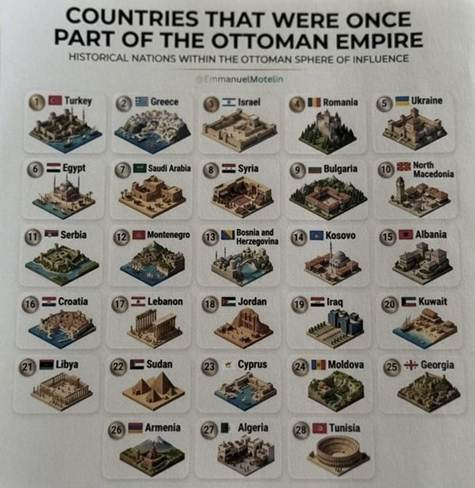
28 COUNTRIES were PART of the OTTOMAN EMPIRE.