Hon. Dr. Hakeem Jeffries, Esq., is an American politician and attorney serving as the U.S. Representative for New York’s 8th Congressional District since 2013. Born on August 4, 1970, in Brooklyn, New York, he attended Binghamton University, where he earned a Bachelor of Arts degree, Georgetown University, where he obtained a Master of Public Policy degree, and New York University School of Law, where he earned his Juris Doctor degree.
Early Career: Jeffries practised law at a private firm and served in the New York State Assembly from 2007 to 2012. Congressional Leadership: He was elected House Democratic Leader (Minority Leader) in 2023, becoming the first African American to lead a congressional party caucus in the United States.

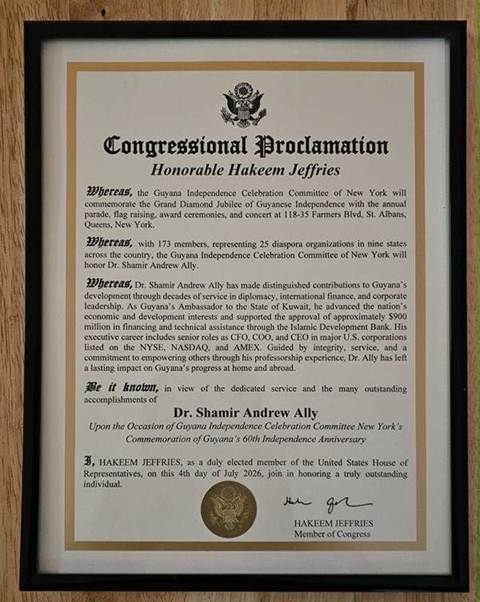
Following the DEFINITE RESULTS of the November 3, 2026, MIDTERM elections, Hakeem Jeffries is on track to become the Speaker of the House for the 120th Congress, which convenes on January 3, 2027. Historic Milestone: Upon his formal election by his colleagues in January 2027, Jeffries will make HISTORY as the USA’S FIRST BLACK SPEAKER of the HOUSE. Second in Line: As House Speaker, Hon. Dr. Jeffries will ASCEND to the SECOND POSITION in the PRESIDENTIAL LINE OF SUCCESSION, right behind the VICE PRESIDENT.
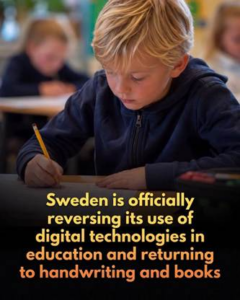
SWEDEN is actively ROLLING BACK its hyper-digitalized school system by BRINGING BACK physical books, paper, and handwriting practice. After leading Europe in classrooms without paper, the Swedish government reversed its digital-first policy to combat a drop in student reading comprehension and focus.
Why Sweden Is Making the Shift? DECLINING Reading SCORES: Swedish officials noticed a distinct drop in international reading assessment scores, such as the Progress in International Reading Literacy Study, following the massive rollout of classroom tablets and screens. COGNITIVE Advantages of PAPER: Sweden’s Karolinska Institute and other scientific bodies warned that digital tools impair learning. Physical textbooks provide spatial cues that aid memory, while reading on screens causes cognitive fatigue and constant distraction. The IMPORTANCE of HANDWRITING: Research confirms that writing by hand with a pen or pencil activates complex neural networks governing memory, motor skills, and language—benefits that are lost when typing on a keyboard.
The Implementation STRATEGY: The Swedish government launched a “back to basics” initiative supported by heavy state funding. Massive Textbook FUNDING: The government allocated hundreds of millions of kronor, including over $80 million in recent budget cycles, to purchase physical textbooks and teacher guides. The goal is to ensure every student has one physical book per subject. Cellphone-Free Schools: In addition to replacing tablets with paper, the government introduced a plan to make classrooms completely cellphone-free to maximize student attention. Calibrated Approach: This is a rebalancing effort rather than a total rejection of technology. Computers remain in classrooms for advanced research and digital skills, but they no longer replace foundational reading and writing.
Sources: https://undark.org/2026/04/01/sweden-schools-books/ and https://www.thethinkacademy.com/blog/edubriefs-sweden-education-shift-from-digital-learning-to-pen-and-paper/
SWOT Analysis: The following SWOT analysis focuses specifically on Sweden’s policy of reversing classroom digitalization and returning to textbooks and handwriting.
STRENGTHS: Strong Scientific BACKING: Grounded in research from the Karolinska Institute showing physical books improve memory and cognitive focus. National Budget CONTROL: Heavy state funding ensures schools can purchase textbooks without placing a financial burden on families. Equity Across SCHOOLS: Setting a goal of “one book per subject per student” guarantees equal educational resources regardless of municipal wealth. Neurological BENEFITS: Prioritizing handwriting activates motor-memory pathways essential for language development in young children.
WEAKNESS: High Initial COSTS: Printing, shipping, and distributing millions of physical books require a massive upfront financial investment. Teacher Retraining BURDEN: Educators accustomed to digital lesson planning must quickly adapt curricula back to analog methods. Physical Infrastructure STRAINS: Schools must revive physical storage space, libraries, and student lockers to house bulky textbooks. Potential Student PUSHBACK: Students raised in a digital era may resist the slower, less interactive nature of traditional paper learning.
OPPORTUNITIES: Global Leadership MODEL: Sweden can set a GLOBAL BLUEPRINT for other highly digitalized nations facing similar drops in reading scores. Boosting Local INDUSTRIES: The shift creates a major economic stimulus for domestic printing, publishing, and paper manufacturing industries. Improved Mental HEALTH: Reduced screen time in schools could alleviate student eye strain, digital fatigue, and classroom anxiety. Niche EdTech INNOVATION: Opportunities exist to design “hybrid” tools that merge physical writing with digital archiving.
THREATS: Rapid Tech OBSOLENCE: Reversing tech literacy might leave students less prepared for a rapidly evolving, AI-driven global workforce. Environmental IMPACT: Shifting from digital devices back to paper increases paper consumption, chemical printing waste, and shipping emissions. Implementation DISPARITIES: Wealthier municipalities might roll out books faster, temporarily widening the gap between school districts. Political VULNERABILITY: If reading comprehension scores do not rebound quickly, the expensive policy faces cancellation by future governments.
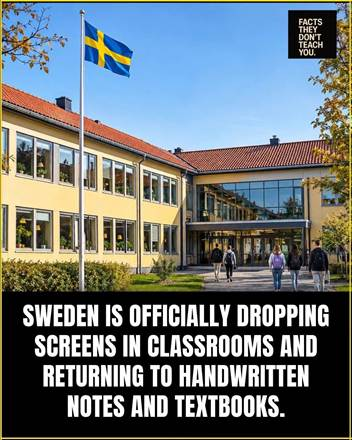
FIVE Countries Denmark, Finland, Norway, France, and Italy, are FOLLOWING.
Five other European countries—Denmark, Finland, Norway, France, and Italy—are actively moving alongside Sweden to roll back heavy classroom digitalization and bring back printed textbooks, paper tasks, and handwriting. This shift forms part of a broader “digital reckoning” as nations address falling reading scores and classroom distractions caused by saturated screen time.
DENMARK: The Danish government allocated 540 million kroner to swap digital tablets for physical books and distribute thousands of printed copies to schools. They are enforcing a strict mandate to ensure all schools are mobile-free by 2027.
FINLAND: Known for its highly rated education system, Finland introduced strict laws restricting mobile phone and device use in classrooms. They are actively reintroducing traditional physical books into early childhood and primary education.
NORWAY: Following a similar path, Norway has pushed to reduce digital device reliance in early education. Approximately 96% of primary schools have successfully removed mobile devices from learning spaces.
FRANCE: Building on its initial 2018 smartphone ban, France expanded its restrictions. They are reintroducing traditional paper planners, manual pencil-and-paper tasks, and traditional reading basics.
ITALY: Italy has banned smartphones in primary and middle schools. The country is systematically reintroducing traditional handwriting assignments and paper-based tracking tools.
THE NETHERLANDS: The country enacted nationwide classroom restrictions on mobile phones, tablets, and smartwatches. Like Sweden, Dutch officials are actively reviewing and rolling back screen reliance to rebalance education. Global Extensions: Outside of Europe, countries like SOUTH KOREA are rethinking their digital-first policies due to severe concerns over screen addiction and student mental health. In the United States, large regional districts—such as the Los Angeles Unified School District—have initiated similar pushbacks by banning screens up to the second grade and strictly capping daily digital exposure.
While INDIA is just transforming from starting off their writing journeys in notebooks to digital education, much of the world is beginning to reverse course. Countries that once heavily invested in smart learning are now returning to traditional pen-and-paper formats.
But why move backwards? The shift is raising critical questions about the true impact of technology on young minds. With the United States (USA) spending Billions on educational technology only to see disappointing outcomes, and nations like Sweden and Finland reintroducing basic learning practices, a larger pattern is emerging.