- Guyana’s fast-growing offshore oil sector has benefited from U.S. backing, reducing the immediate risk posed by Venezuela’s territorial claims.
- The Essequibo dispute is rooted in a century-old legal and colonial history that Venezuela continues to contest despite ICJ rulings.
- Venezuela’s deteriorating oil infrastructure and carbon-intensive crude make Guyana’s low-cost, lower-carbon oil especially attractive, sustaining long-term regional risk.
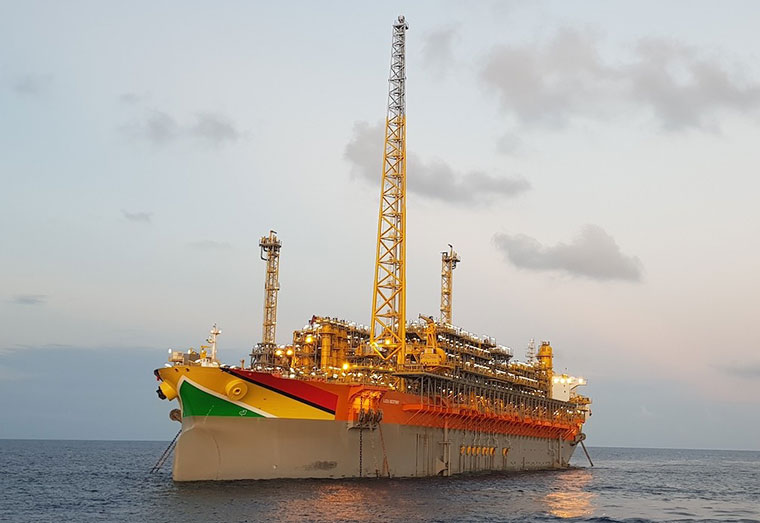
Oil production in South America’s Guyana has gone from strength to strength in recent years, as international oil majors develop several new oil-producing regions. This has led Guyana to become one of the most-promising oil producers in the Americas, with high hopes for the future of “low-carbon” oil production. Now, following the United States intervention in neighbouring Venezuela, the holder of the world’s largest oil reserves, many are questioning whether the potential expansion of Venezuela’s oil production could have a knock-on effect on Guyana’s big oil plans.
The potential involvement of U.S. oil companies in Venezuela’s oil industry could increase the regional risk of territorial disagreements. For example, Venezuela has previously claimed that a large, resource-rich area – Essequibo – in neighbouring Guyana actually belongs to Venezuela. Essequibo is the disputed area that constitutes roughly two-thirds of Guyana. It has vast natural resource reserves, including gold and diamonds, as well as offshore oil.
At present, the U.S. oil majors Exxon Mobil and Chevron, and China’s CNOOC, are developing oil operations in Guyana’s waters. ExxonMobil first discovered vast high-quality oil reserves off the coast of Guyana in 2015, which has led several international players to invest heavily in the country’s oil industry in recent years, supporting rapid economic development in the tiny South American country. This also led the government of Venezuela reassert its claim over the Essequibo region.
The two countries have been fighting over which country is the rightful owner of Essequibo for over a century. In 1841, a recently independent Venezuela claimed the region that had been ceded by the Dutch to Great Britain in 1814 during the Napoleonic Wars. Then, in 1831, Britain merged Essequibo with other former Dutch territories, Demerara and Berbice, to form the British colony of Guiana. In 1899, an international arbitral tribunal formally awarded the territory to Britain, while Guyana was still under its colonial rule, a ruling that Venezuela has staunchly disputed.
Venezuela’s Maduro government accused Guyana and the U.S. of pursuing legal colonialism by developing the Essequibo region. However, in 2018, the International Court of Justice (ICJ) ruled that Guyana’s accord was legal and binding. Following the ICJ ruling, in 2023, the Maduro government launched a large-scale military buildup along the Guyanese border. It installed bases, runways, and other military infrastructure in the region and threatened to annex Essequibo. The authoritarian president held a referendum that same year, in which 95.9 percent reportedly supported the move.
Following the referendum, Maduro announced the implementation of several measures aimed at annexing Essequibo, including the establishment of the Venezuelan state of Guayana Esequiba and the granting of operating licenses to Venezuela’s state-owned oil firm PDVSA in the territory. However, in May 2025, the ICJ issued a binding order that prohibited Venezuela from holding elections in Essequibo.
Allen Good, the director of equity research at financial services firm Morningstar, said, “With Venezuela already in the U.S.’s crosshairs and Exxon the largest operator in Guyana, any aggression would likely have elicited a U.S. response.” Good added, “Now, with the U.S.’s intent to control the country, any action by Venezuela becomes even more remote, removing a nuisance for Exxon and Guyana.”
It is not surprising, therefore, that Guyana’s President Irfaan Ali has doubled down on his commitment to the United States. Guyana’s Foreign Secretary, Robert Persaud, said in a statement on 6th January that President Ali stood by the government’s “steadfast commitment to working with the United States – the region’s strategic and important security ally.” Persaud said Ali also supported Rubio’s “reaffirmation of the US continued support for and partnership with Guyana in defence of our sovereignty and territorial integrity.”
While Venezuela is home to the world’s largest oil reserves, with an estimated 300 billion barrels, its oil production has fallen significantly in recent years due to decades of underinvestment in the country’s oil infrastructure. Its failing infrastructure is thought to require billions of dollars and more than a decade to fix, according to experts in the field. In addition, Venezuelan extra-heavy crude is extremely expensive and carbon-intensive to extract and refine. Therefore, tapping into new, “low-carbon oil production” in neighbouring Essequibo could allow Caracas to bring in new oil revenues at a much faster pace, which is extremely appealing to a government which is facing an economic collapse.
The U.S. intervention in Venezuela may have temporarily quietened the South American country’s claims on Essequibo, but due to its historic ownership of the region and the vast resources at stake, it is unlikely that any new Venezuelan government will simply let it go. Therefore, Venezuela poses a direct threat to the future of the newest petro-state’s oil expansion. The outcome will likely depend heavily on just how involved the United States becomes in Venezuelan politics and oil production.
By Felicity Bradstock for Oilprice.com