Guyana’s agricultural production across 15 priority CARICOM commodities rose by almost 28 percent in five years, strengthening the country’s push to become a major supplier of food to the Caribbean as the region battles heavy dependence on imports.
Production increased from 1.41 million tonnes in 2020 to 1.81 million tonnes in 2025—an increase of 394,698 tonnes, or 27.9 percent, according to Agriculture Minister Zulfikar Mustapha. The figures are being presented by the government as evidence that Guyana is emerging as a regional agricultural powerhouse and a key player in CARICOM’s effort to cut its food-import bill.
CARICOM has extended its regional food-security initiative to 2030, with a target of reducing the region’s food import bill by 25 percent. The programme focuses on increasing production, reducing trade barriers, improving logistics, expanding agro-processing and encouraging investment in agriculture.
Mustapha said Guyana achieved what he described as a 77 percent success rate when progress toward the regional target was assessed in 2025. He attributed Guyana’s gains to increased production, investment and cooperation among CARICOM countries, while saying other Caribbean governments are seeking Guyana’s agricultural expertise. The production increases are not limited to crops.
Guyana’s livestock sector expanded by 12.5 percent between 2020 and 2025. Poultry production increased 11.5 percent, beef 11.7 percent, pork six percent and eggs 12.4 percent. Corn, coconut and soybean production have also expanded, with soybeans increasingly being used to support the domestic animal-feed industry.
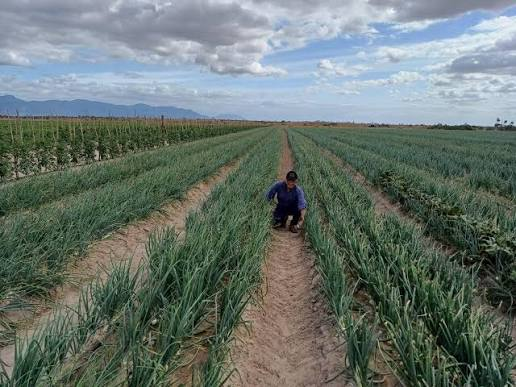
The government is now turning its attention to onions. Approximately 300 acres are expected to be cultivated in Region Nine during the current crop, with the stated objective of reducing reliance on imports and eventually generating export supplies for other Caribbean markets. The ambitions extend beyond simply growing more food.
Guyana is seeking investment in processing, cold storage, logistics, packaging, large-scale farming and other value-added activities so that more of the economic benefit remains in the country. The Guyana Office for Investment has described the strategy as producing and processing food domestically before using Guyana as a platform for supplying the Caribbean.
There is also evidence of continued growth in Guyana’s flagship agricultural export sector. The Food and Agriculture Organization projects 2026 paddy production at a record-high level and forecasts rice exports of about 420,000 tonnes in the 2026/27 marketing year. But Guyana’s agricultural push faces significant challenges.
Climate shocks, hurricanes elsewhere in the Caribbean, rising fuel and fertilizer costs and transportation and logistics constraints remain threats to the region’s food-security ambitions. CARICOM itself identifies improved regional transport, financing, agricultural insurance and climate resilience as critical to meeting its target. The numbers nevertheless mark a significant shift.
Guyana is no longer presenting agriculture solely as a domestic industry. Georgetown is positioning the country’s land, water resources and expanding productive capacity as part of a wider Caribbean food-security strategy. The challenge now is whether increased production can translate into reliable supplies, competitive prices and sustained exports—and whether Guyana can build the processing and transportation infrastructure needed to turn its agricultural expansion into lasting regional influence.