The Commission of Inquiry into the sinking of the MV Barima is examining serious questions about the vessel’s emergency beacon, the search-and-rescue response and the difficulties rescuers encountered trying to enter the wreck, as witnesses provide accounts of the disaster that claimed more than 100 lives.
At the latest hearing, Guyana Defence Force Coast Guard Petty Officer Alwin Hibbert testified that divers were unable to enter the sunken vessel because hammocks, ropes and other debris obstructed access. The vessel was lying on its side, further complicating the operation.
Hibbert said the divers also faced rough seas, strong currents and poor underwater visibility, while the boats transporting them were not designed specifically for diving operations.
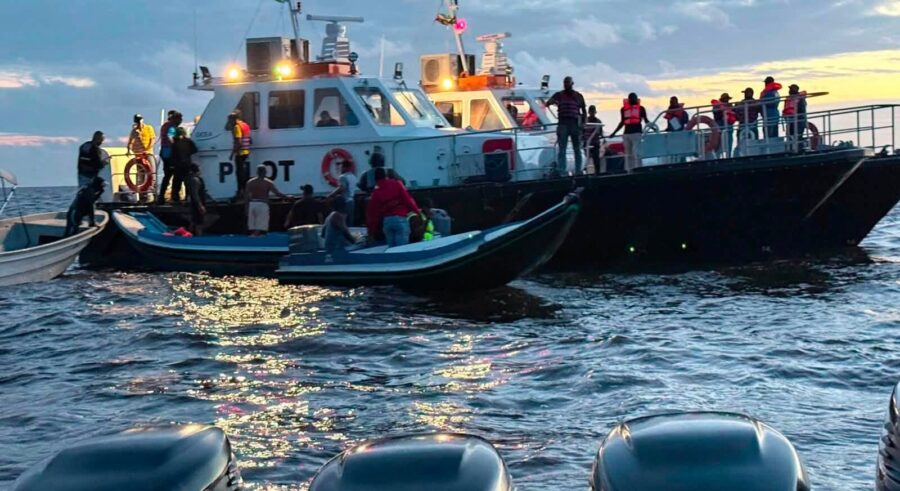
The testimony highlights the challenges faced by rescue teams as they searched for victims and attempted to examine the vessel following the July 18 sinking.
Hibbert told the five-member commission that he was instructed to deploy to the search-and-rescue area on July 20. His team initially headed towards the Coast Guard’s floating base at Pomeroon but changed direction after a fisherman reported objects floating in the water and supplied coordinates.
Among the objects observed were a gasoline cylinder, cooking tank, ice box and pillows. Hibbert said that, approximately two hours later, a fisherman alerted the team to a body surfacing in the water, after which the recovery of bodies began.
The inquiry has also heard testimony about a major gap in the emergency alert system: the registration information associated with the MV Barima’s distress beacon did not identify it as being aboard the vessel.
Rickford Samaroo, Director of Air Navigation Services at the Guyana Civil Aviation Authority (GCAA), testified that the first satellite distress alert arrived at the Timehri Control Tower at 10:43 p.m. on July 18. Aeronautical Information Services Officer Tia Valenzuela said she sent the coordinates to Coast Guard operations by WhatsApp eight minutes later, at 10:51 p.m. The Coast Guard acknowledged receipt a minute later.
Although the beacon transmitted its identification code and location, the missing vessel-specific registration information limited officials’ ability to identify the boat and contact its owner or other relevant parties.
The evidence has prompted scrutiny of emergency procedures, communication systems and the responsibilities of agencies involved in responding to maritime distress alerts.
The inquiry also heard that Coast Guard Operations reported 26 people rescued by 5:30 a.m. on July 19, while the search continued. Witnesses said the control tower relayed updated coordinates through the night.
The sinking occurred while the MV Barima was travelling from Georgetown towards Port Kaituma. The disaster resulted in more than 100 deaths and triggered calls for a comprehensive investigation into the vessel’s seaworthiness, passenger and cargo loading, regulatory oversight and the handling of the emergency.
The five-member commission, chaired by retired Belizean Justice Godfrey Phillip Smith, is examining the circumstances surrounding the sinking and the response that followed.
The testimony so far has raised questions about the vessel’s safety arrangements, the identification of the distress signal and the practical obstacles that hampered recovery efforts. However, the commission has not yet issued findings determining the cause of the sinking or assigning responsibility.
Its conclusions are expected to be important in establishing what went wrong and identifying measures needed to prevent a similar maritime disaster.