They were supposed to leave slavery with freedom—but little else. No land. No inherited wealth. No compensation for generations of forced labour. No guarantee that freedom would bring economic independence.
Barely two years after full emancipation in British Guiana, a formerly enslaved African named Kojo McPherson, known in colonial records as Cudjoe McPherson, was buying plantation land in Berbice.
He was not merely surviving freedom. He was investing in it.

Kojo is an Akan day name meaning a boy born on Monday, reflecting West African naming traditions carried across the Atlantic by enslaved Africans. Cudjoe was the colonial rendering of Kojo, while McPherson was the European surname attached to him during his life under slavery.
The transformation was extraordinary. A man born into a system in which Africans could legally be treated as property became a landowner, entrepreneur and community builder.
More than 180 years later, his descendant, veteran trade unionist Lincoln Lewis, speaks of him with pride and a sense of responsibility.
Lewis, McPherson’s great-great-great-great grandson, sees his ancestor as more than a figure in an old family tree. He represents what formerly enslaved Africans could accomplish when they gained even a measure of economic freedom.
Lewis has defended his ancestor’s legacy, particularly in relation to ancestral land at Kingelly.
“[I stand] on broad and strong shoulders.”
And of McPherson, Lewis has declared:
“To say I am mighty proud of him would be an understatement.”
From Slavery to 500 Acres
Full emancipation came on August 1, 1838, following the apprenticeship system that came after slavery was abolished in 1834.
Emancipation, however, did not redistribute the plantations. Estates remained overwhelmingly in the hands of their former owners, while Africans who had generated much of the colony’s wealth emerged from slavery with little material security.
McPherson refused to accept landlessness as the meaning of freedom.
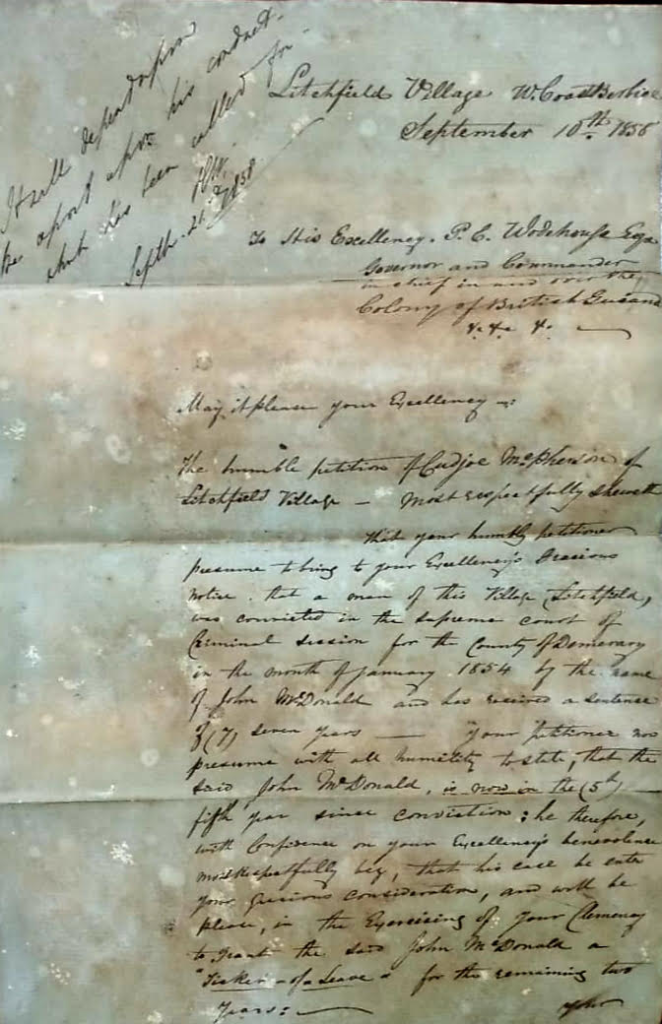
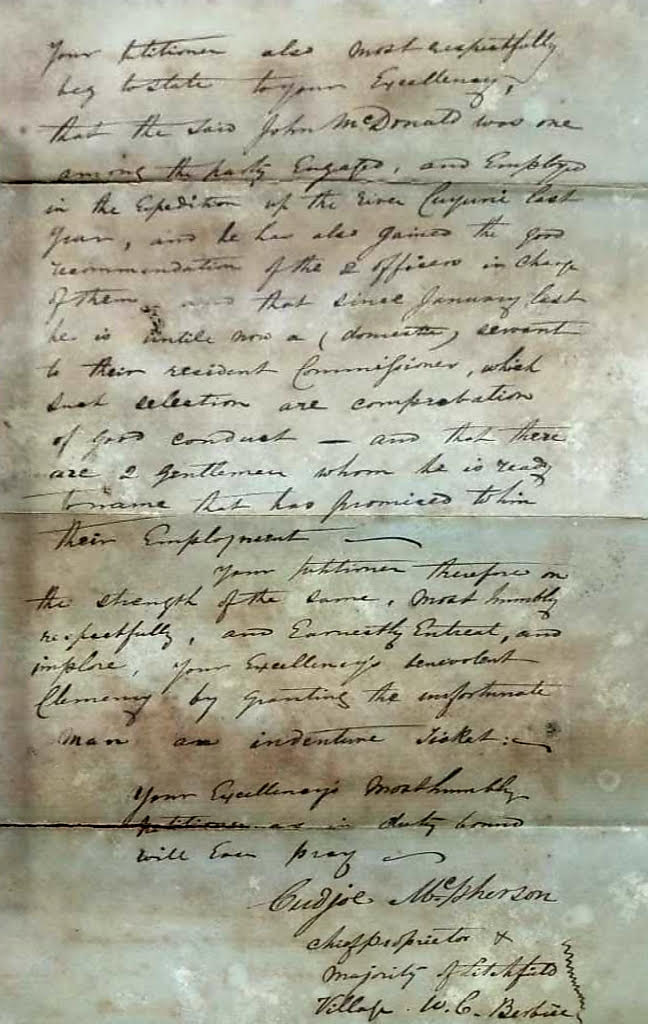
Around 1840, he purchased Plantation Litchfield, a 500-acre property on the West Coast of Berbice, for $3,000. The National Trust of Guyana records that he subsequently divided the plantation into 12 units and sold them, with the formal transport issued on November 14, 1840.
The purchase was remarkable because of both its size and its purchaser.
A formerly enslaved African had accumulated enough resources to buy 500 acres of plantation land—and then helped other Africans acquire portions of it.
An 1841 account by Stipendiary Magistrate Wolseley described McPherson as an “intelligent black man” and recorded his purchase of Lichfield and sale of portions to fellow labourers who had previously been enslaved on the estate.
The reversal was profound.
People who had once worked the land without owning themselves were now buying pieces of the plantation on which they had been enslaved.
Land Was Freedom Made Tangible
McPherson’s achievement formed part of the wider African Village Movement.
Across West Coast Berbice, Africans pooled their resources to purchase plantations and establish independent communities.
At Golden Grove, 14 labourers bought 500 acres for $1,716.
At St. John, 46 labourers purchased 252 acres for $5,000.
At Perseverance, 109 labourers acquired 250 acres for $2,000.
Other communities included Fyrish, Three Sisters, Zuid Holland, Plegt Anker and Zuid Aan Vleyt. On the Corentyne, 20 freed Africans purchased approximately 500 acres at Gibraltar for $4,383.
These were more than settlements.
They were declarations:
We are free. We can own. We can build. We can provide for ourselves.
Former President David Granger noted that freed Africans acquired approximately 15,000 acres for cash during the decade after emancipation, highlighting the extraordinary scale of their economic enterprise.
Kingelly: From Landowner to Village Builder
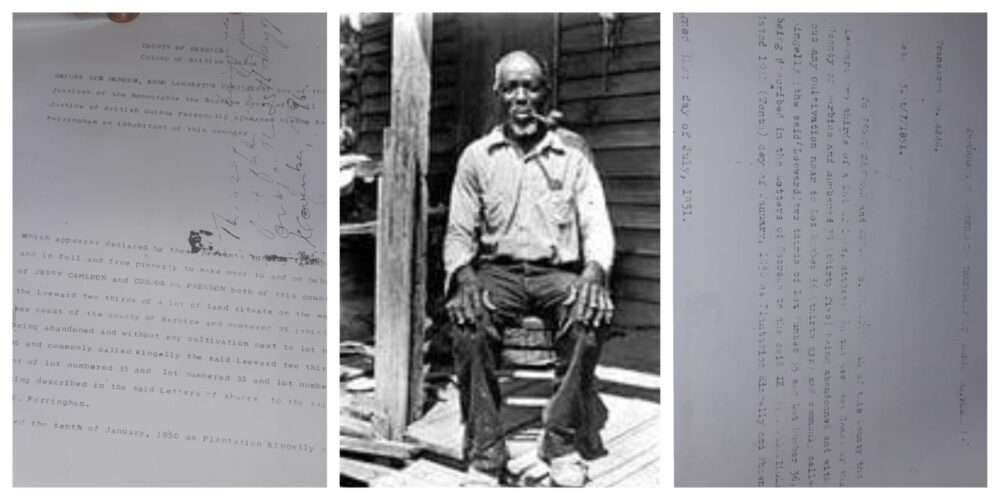
McPherson’s ambitions did not end with Litchfield. Historical records connect him with Kingelly, another former plantation on the West Coast of Berbice. In 1850, McPherson and Jessy Cameron acquired Kingelly and neighbouring Phoenix from Bishop Eastmond Foderingham. Cameron eventually retained Phoenix, while McPherson retained Kingelly. The property later became central to questions of ancestral land ownership.
In 2017, Lewis appeared before the Commission of Inquiry into African ancestral lands and produced a transport connected to McPherson’s ownership of Kingelly. He argued for the protection of remaining ancestral lands for McPherson’s descendants.
Kingelly also demonstrates that McPherson was not simply accumulating property.
He was creating opportunity.
In 1868, surveyor William Chalmers was commissioned to survey Kingelly. The southern portion was divided into 32 lots, while McPherson retained land on the northern side. Land was being transformed into community.
A Legacy Bigger Than Land
McPherson understood that a village could not survive on land alone.
Historical accounts describe him as literate and active in community affairs. He was involved in education and taught children to read before a schoolmaster assumed responsibility for teaching.
A house built in 1888 by his granddaughter Mathilda McPherson and her husband Haley Young still stands at Kingelly, providing a tangible link to the family and community he helped establish.
Kojo McPherson’s story should not be confined to the margins of emancipation history.
He bought land. He helped others become landowners. He supported education. He built community. He demonstrated that freedom could be transformed into economic independence.
The historical irony could not be greater. A system that denied Africans ownership of their own bodies produced, within years of emancipation, a man who owned hundreds of acres.
A system designed to create economic dependence produced an entrepreneur.
And a system that sought to erase African identity could not erase Kojo.
He did not inherit a foundation.
He built one.
Today, through descendants such as Lincoln Lewis, that legacy continues to raise a question for a new generation:
“What will we build with the freedom they fought so hard to make real?”
The Village Movement was born from poverty, exclusion and injustice. But it produced something slavery could never permanently destroy: a people determined to own, build, educate, farm, organize and leave something behind. They did not simply receive freedom. They put freedom on the land.