By Mark DaCosta-Political discourse in Guyana currently faces a disheartening lack of cooperation among opposition factions. Veteran trade unionist and commentator Lincoln Lewis consistently encourages political leaders to prioritise the needs of the people over personal grievances. His recent reflections, published in “Eye On Guyana,” highlight the necessity of unity in a political landscape marked by division.
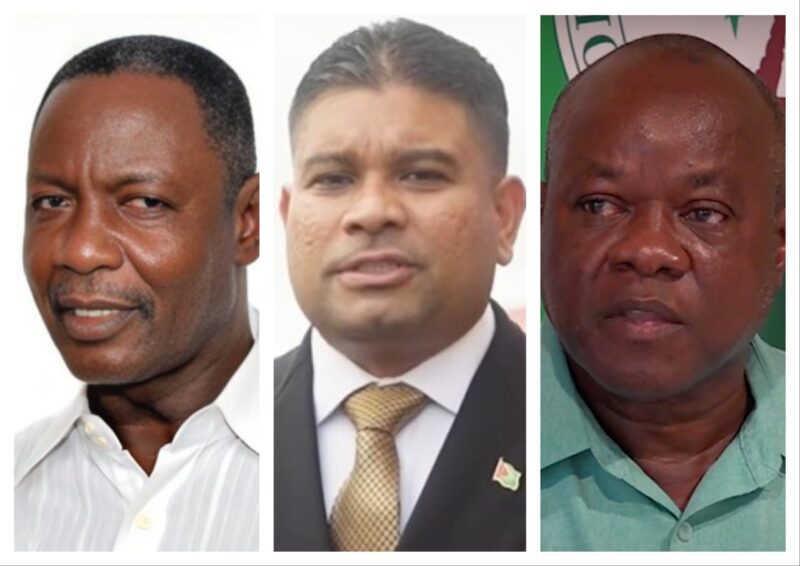
One of Lewis’ longstanding messages emphasises that leaders are elected not to serve their interests but to represent and serve the constituents who place them in office. He reminds us that political maturity has often been elusive, particularly in recent times. In light of this, Lewis urges both the Leader of the Opposition, Azruddin Mohamed of the We Invest in Nationhood (WIN) party, and Aubrey Norton, Chairman of A Partnership for National Unity (APNU), to set aside personal differences and engage in constructive dialogue for the community’s benefit.
Lewis emphasises the dual responsibilities that Mohamed holds — to his party and to holding the Government accountable. He notes the potential repercussions of Mohamed’s exclusion of APNU representatives from vital commissions, stressing that the powers afforded to politicians under the Constitution must be exercised with inclusivity in mind. “Local government is the most basic form of representative democracy,” Lewis asserts, reiterating the importance of collaboration across political lines for effective governance.
On August 24, a crucial meeting took place aiming to resolve these pressing concerns. Attendees include significant figures such as Odessa Primus, WIN’s General Secretary, Sherwin Benjamin, APNU’s General Secretary, and Dr. David Hinds, a prominent APNU parliamentarian. While tensions have heightened due to disputes surrounding the Local Government Commission (LGC) and the Guyana Elections Commission (GECOM), the meeting serves as an opportunity to promote dialogue.
Reports from the closed-door session indicate a cordial atmosphere; however, both leaders failed to confront the core grievances involving the LGC and GECOM directly. Mohamed insists on appointing WIN representatives exclusively to the LGC, while APNU objects vigorously. Despite the urgent nature of these concerns, both parties sidestep these discussions and instead focus on establishing a procedural framework for future negotiations. As a result, the public is left to wonder about the effectiveness of such vague arrangements in the face of immediate political crises.
As the meeting concluded, expectations build for a joint consensus outlining a commitment to collaboration. However, as days pass, it becomes clear that agreement is elusive. Failures in communication among the general secretaries lead to the abandonment of a unified front, creating frustration among WIN’s supporters and casting doubt on the possibility of meaningful alliances with established political entities.
Lincoln Lewis consistently warns about the detrimental effects of “garrison politics,” a term that highlights the trend of prioritising personalities over principles. He advocates for a cessation of this practice and calls attention to the growing intolerance displayed by both the government and opposition towards alternative voices. “Rights are universal,” Lewis reminds politicians, emphasising their duty to respect the rights of all citizens and to include various factions in political discourse.
Despite the apparent failure of the recent meeting, Lewis, having been reached out to by Village Voice News, shares that he remains optimistic about the potential for parties to find common ground. He believes there is an opportunity for cooperation not just in parliament, but also at grassroots and at all other levels, where meaningful consensus and agreements can serve the interests of all constituents and the populace.
As the opposition grapples with internal inconsistencies, the People’s Progressive Party (PPP) administration continues to have opportunities to exploit this discord. Critics of the government underscore that a failure to unite may allow the regime to administer unchecked. Yet, the implications of Lewis’ analysis highlight a broader necessity for political cooperation in achieving a more inclusive democracy.
The events surrounding the meeting on August 24 encapsulate the larger challenges confronting the nation. Lincoln Lewis’s call for unity and collaboration remains crucial now more than ever. As we stand at a crossroads, the enduring question is: Will our political leaders heed the call to put aside personal differences and engage in meaningful dialogue for the sake of our people?