Jasmin Cort has spent months fighting for the recovery of her father, Neil Cort, and her uncle, Kenneth “Kenny” Cort, who perished when the MV Barima sank on July 18.
Their bodies have still not been recovered.
Every Tuesday, Jasmin returns to the streets, determined to keep the tragedy in the public consciousness and press for the vessel to be raised. Her campaign is driven by a daughter’s grief and a family’s desperate need for answers, accountability and the opportunity to lay their loved ones to rest.
But instead of receiving the compassion and attention that such an unimaginable loss demands, Jasmin says she has now been subjected to physical force by the very police officers entrusted with protecting her.
During last week’s peaceful protest, which coincided with the visit of King Charles III to Guyana, Jasmin was manhandled by police officers and thrown to the ground. Former Member of Parliament and minister Annette Ferguson was also subjected to police force during the confrontation.
For Jasmin, the incident represents more than an encounter with the police. It is another painful reminder of how difficult her fight for answers has become, even as her family continues to live with the consequences of a tragedy that has denied them closure.
In an emotionally charged statement, she rejected the characterisation of her as merely a protester, insisting that her presence on the streets is rooted in a deeply personal loss.
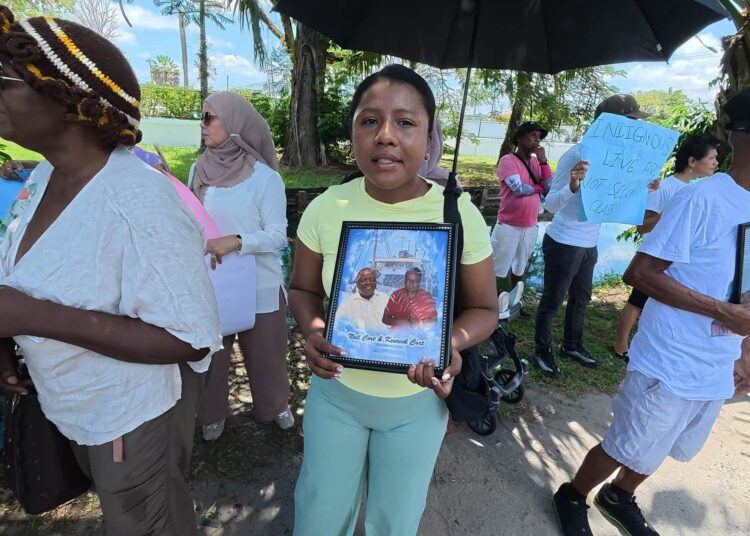
“I am not just a protester. I am a daughter grieving a father who never came home.”
Those words capture the anguish behind the weekly demonstrations. While the public may see placards and protests, Jasmin says her family is carrying a pain that cannot be measured by the length of a demonstration or the attention it receives.
She described the family’s experience as an unimaginable tragedy made worse by unanswered questions, the absence of closure and the continuing struggle to secure accountability.
She said she never imagined that demanding information about her father and uncle would expose her to physical assault by law enforcement officers.
“I never imagined that demanding answers about my father and uncle would lead to me being physically assaulted by the very people entrusted to protect us.”
Her statement lays bare the emotional toll of a campaign that has continued for months. She is grieving, exhausted and angry, but remains unwilling to abandon the search for answers.
“I am grieving. I am exhausted. I am angry. And I am still searching for answers.”
Jasmin also rejected any attempt to diminish her demands by framing her protests as political activity or public inconvenience. Her grief, she stressed, is not a political performance, and her right to demand justice does not disappear because her actions make those in authority uncomfortable.
“My grief is not a political performance. My pain is not an inconvenience. And my right to demand justice does not disappear because my voice makes others uncomfortable.”
At the centre of her campaign is a devastating reality: Neil and Kenneth Cort have not been brought home. Their remains remain unrecovered, leaving the family without the opportunity to give them a proper burial and find some measure of closure.
Jasmin says she should not have to wage such a difficult public battle simply to establish what happened to her father.
“I should not have to fight this hard to find out what happened to my father. I am a daughter before I am a protester. And I just want my father home.”
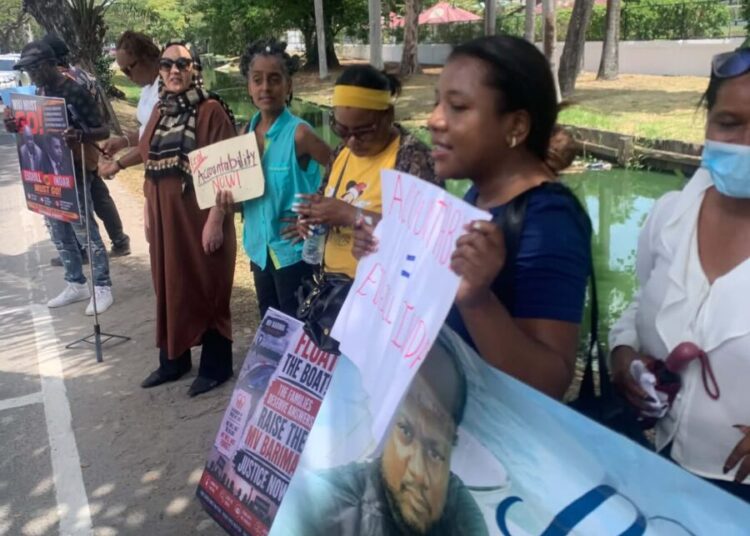
She ended her statement by invoking the words, “If you are neutral in situations of injustice, you have chosen the side of the oppressor,” underscoring her belief that silence in the face of injustice only allows it to continue.
Since the July 18 sinking, Jasmin has refused to allow the passage of time to bury the questions surrounding the disaster. Her Tuesday protests have become a continuing demand for the recovery of the victims and accountability for the tragedy.
The police response to last week’s demonstration has raised further concerns about the treatment of peaceful protesters and the responsibility of law enforcement to protect, rather than intimidate, citizens exercising their right to demonstrate.
For Jasmin, however, the struggle remains painfully personal. She is a daughter who lost her father, a niece who lost her uncle, and a family member still waiting for both men to be recovered.
Her demand has not changed: bring Neil Cort home.