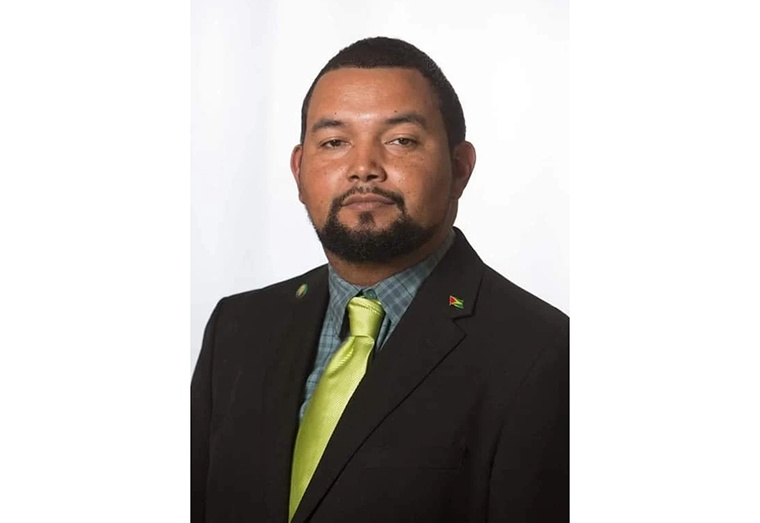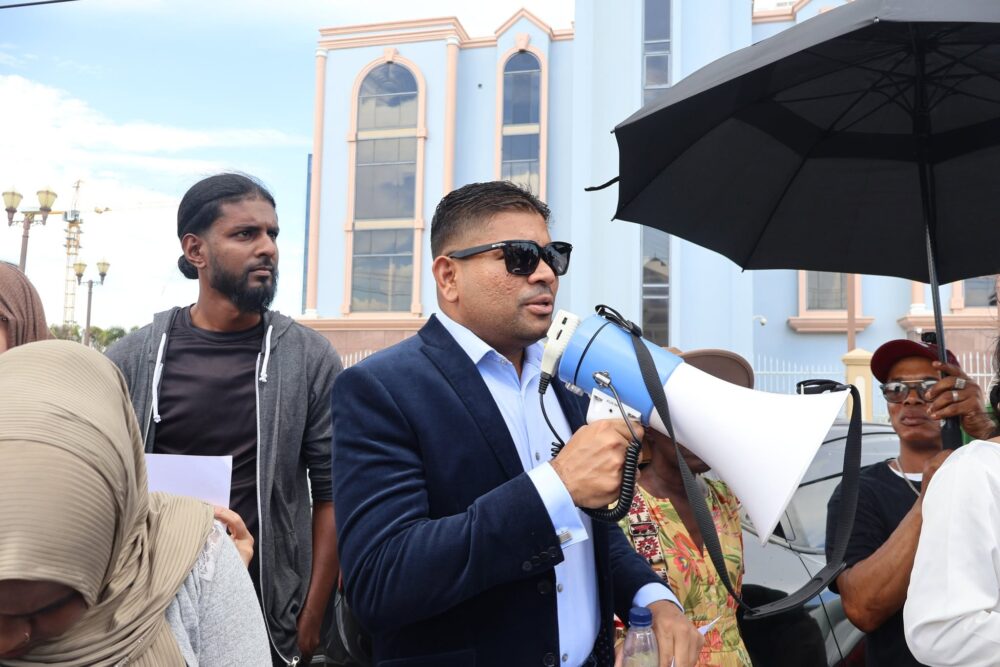
Chief Magistrate Judy Latchman on Tuesday rejected, for a second consecutive day, an application by United States prosecutors to revoke Opposition Leader Azruddin Mohamed’s bail in the extradition proceedings against him and his father, Nazar Mohamed, ruling that the prosecution had failed to establish substantial grounds for withdrawing his bail.
The decision followed Monday’s rejection of an earlier application by Jamaican attorney Herbert McKenzie, who represents the United States in the extradition proceedings. On Tuesday, prosecutor Glen Hanoman renewed the effort, citing allegations concerning other criminal matters and possible breaches of bail conditions.
However, Latchman maintained that the existence of charges or allegations, without substantial supporting evidence, was insufficient to justify revoking bail.
In delivering her decision, the Chief Magistrate stated:
“I do not find any substantial ground for revoking the bail of Mr. Azruddin Mohamed.”
She explained that the prosecution could not rely on the mere existence of other charges to establish that Mohamed had committed, or was likely to commit, an offence.
“However, charges by themselves without more do not satisfy the court that Mr. Mohamed has committed an offence or is likely to commit an offence.”
Latchman also found that the prosecution had not established that Mohamed was a flight risk, had supplied a false residential address or had breached his bail conditions. She indicated that the prosecution could strengthen its application by submitting affidavits and supporting evidence.
The ruling is significant because it represents the second consecutive rejection of efforts by US prosecutors to have Mohamed’s bail in the extradition matter withdrawn.
Separate remand order keeps Opposition Leader behind bars
Despite the Chief Magistrate’s decision, Mohamed will not be released from prison. He remains on remand at Lusignan Prison following Magistrate Abigail Gibbs’ refusal to grant him bail in a separate Cybercrime Act case involving allegations of unauthorised acquisition and disclosure of police surveillance footage.
Constable Ryan Greene and Constable Ashton Chappelle have also been charged in connection with that matter.
The distinction between the proceedings is important: Latchman’s decision preserves Mohamed’s bail in the extradition case but does not overturn the separate remand order i
n the Cybercrime Act matter.
Lewis raises concerns over constitutional implications
The repeated attempts to revoke Mohamed’s extradition bail have intensified concerns about the wider political implications of the criminal proceedings, particularly following warnings by Guyana Trades Union Congress General Secretary Lincoln Lewis.
In an interview with Village Voice News, Lewis argued that the prosecution of Mohamed must be examined against the background of his political activism, criticism of the government and efforts to expose alleged corruption.
Lewis has warned that the proceedings could form part of an effort to secure a conviction that would remove Mohamed from the National Assembly and weaken the political influence of his We Invest in Nationhood (WIN) movement.
He pointed specifically to Articles 155(1)(c) and 156(2) of Guyana’s Constitution, which address disqualification from membership of the National Assembly and the position of a sitting member who has a right of appeal against a relevant disqualification decision.
Article 155(1)(c) provides for disqualification where a person is under a sentence of death or serving a sentence of imprisonment exceeding six months, including a suspended sentence of such duration. Article 156(2) addresses the parliamentary position of a member who has a right of appeal against a relevant disqualification.
Lewis believes the provisions make the criminal proceedings against Mohamed particularly consequential, arguing that a conviction carrying the relevant sentence could provide a constitutional route to excluding the Opposition Leader from parliamentary duties.
His position is that the government may be seeking to use the criminal justice system to achieve a political objective.
Human rights association questions US involvement
The Guyana Human Rights Association (GHRA) has also raised serious concerns about the extradition proceedings, accusing the Guyanese government of using the United States to eliminate its principal political opposition.
In a statement published by Village Voice News on November 3, the association questioned the involvement of US legal representatives whose services in the extradition proceedings are funded by the Guyana Government.
The GHRA argued that the government has a partisan interest in the matter because Mohamed and WIN represent a significant political challenge to the governing People’s Progressive Party.
The association questioned whether US lawyers were acting as prosecutors rather than representatives safeguarding American interests and called on the US Government to reconsider its role. It also urged international human rights institutions to monitor the proceedings.
The extradition case concerns US allegations of financial crimes against Mohamed and his father. Those allegations have not been determined at trial, and the extradition proceedings are not a determination of guilt.
With Latchman rejecting two consecutive attempts to revoke Mohamed’s bail in the extradition matter, the legal battle continues alongside mounting political and human rights concerns over his detention.
At the centre of the controversy is whether the proceedings are being pursued strictly through the ordinary administration of justice or whether, as Lewis and the GHRA contend, they are contributing to the political exclusion of the Opposition Leader.