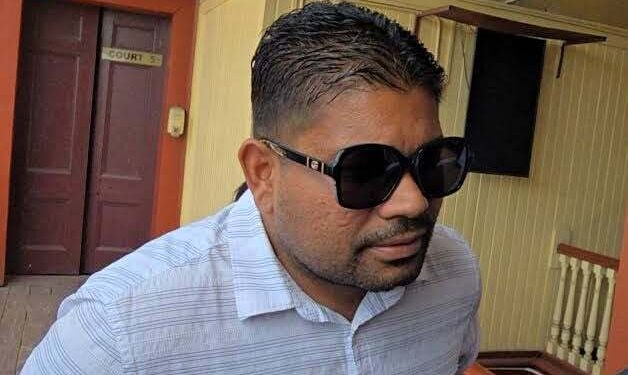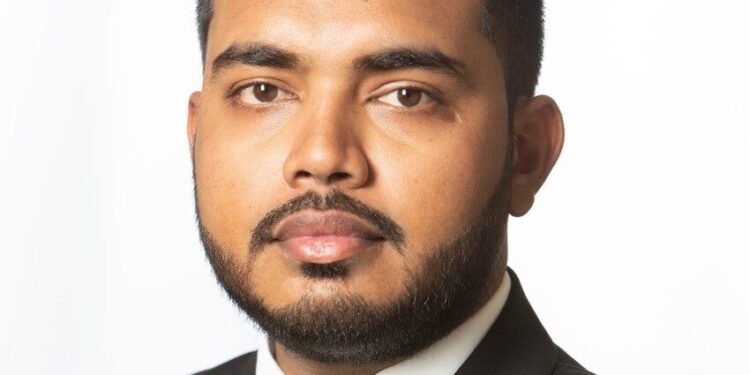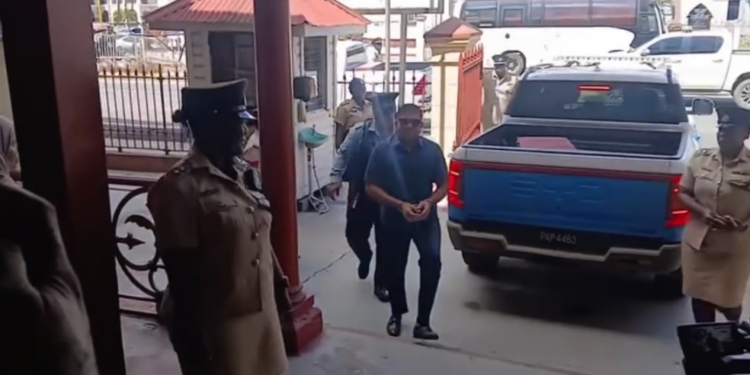
Another member of the Guyana Police Force has been remanded to prison in connection with the alleged leaking of confidential surveillance footage to Opposition Leader Azruddin Mohamed, as questions surrounding the October 12 confrontation involving the force’s intelligence chief, Senior Superintendent Prem Narine, continue to undermine confidence in the police’s official account.
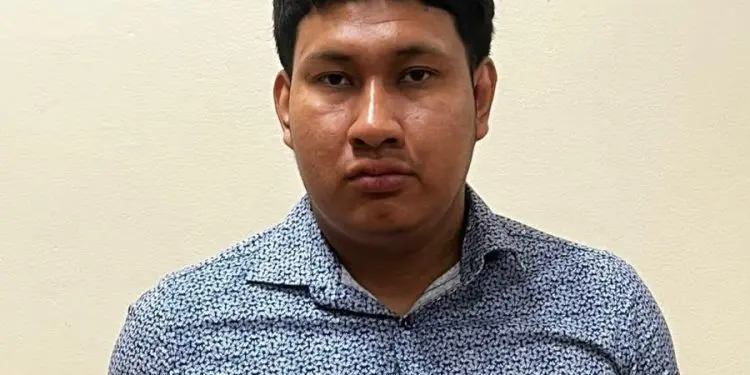
Constable Ashton “Chappy” Chappelle, 24, of Non Pariel, East Coast Demerara, appeared before Magistrate Abigail Gibbs on Monday, charged with obtaining and giving electronic data relating to the national security of the State, contrary to the Cybercrime Act No. 16 of 2018.
Gibbs refused bail and remanded Chappelle until November 24, 2026, the same date Constable Ryan Greene and Mohamed are scheduled to return to court.
According to the Guyana Police Force, the charge was instituted under Section 9(1)(b), contrary to Section 9(2)(b) of the Act, and relates to an alleged offence committed on October 24. Chappelle was arrested on October 30 and charged on November 2. If convicted, he faces a fine of up to $8 million and five years’ imprisonment.
Footage raises questions about police credibility
The investigation followed Mohamed’s October 26 press conference, during which he played more than 20 minutes of CCTV recordings allegedly obtained from the police surveillance command centre.
The Opposition Leader released the footage to challenge the police’s account of the October 12 confrontation near the residence of Senior Superintendent Narine, the Guyana Police Force’s intelligence chief and a key witness in the United States extradition proceedings against Mohamed and his father, Nazar Mohamed.
According to the police’s initial account, Narine was at his residence when he observed a vehicle travelling slowly along the street before it allegedly passed and returned. Police said Narine took cover and discharged several rounds from his service firearm after hearing what sounded like a gunshot.
The vehicle, occupied by Mohamed and two members of his staff, was subsequently intercepted at Vlissengen Road and Sandy Babb Street.
Mohamed presented a different account, maintaining that he was investigating reports of a heavy police presence outside Narine’s residence and attempting to record the deployment of police personnel.
The CCTV recordings appeared to contradict significant aspects of the official narrative, particularly the sequence of events surrounding the alleged gunfire and the subsequent interception. Mohamed relied on the footage to argue that the police had misrepresented what transpired.
The controversy has therefore moved beyond the identity of the person responsible for leaking the recordings. It has placed the credibility of the Guyana Police Force under scrutiny, with questions about whether the public was given an accurate account of the confrontation.
Narine’s role in extradition proceedings
The incident is particularly sensitive because Narine is a significant witness in the US extradition proceedings against the Mohameds. His intelligence work and testimony have featured in the case, which involves allegations of serious financial crimes that the father and son have contested.
Investigation focuses on alleged leak
Chappelle’s arrest adds another police officer to the widening investigation into the handling and disclosure of the surveillance recordings.
While the police are pursuing those suspected of leaking sensitive material, the more pressing public-interest questions remain unanswered: how did the footage challenge the official account, and why have the apparent discrepancies not been adequately explained?
Protecting sensitive national security information is important. However, that responsibility must not overshadow the need for transparency and accountability when police conduct itself is called into question.
The investigation must establish not only who accessed and disclosed the recordings, but also whether the force’s original account accurately reflected what happened on October 12.