GEORGETOWN, Guyana — The Guyana Human Rights Association (GHRA) accused the Guyanese government of using the United States to eliminate its main political rival, alleging that American legal representatives in the extradition proceedings against Opposition Leader Azruddin Mohamed are being paid by the Guyana government.
“There is concern in Guyana that the PPP Government is using the American government to get rid of its principal opposition,” the GHRA said in a statement dated November 3, 2026.
The rights group noted that the US legal representation in the extradition proceedings is funded by the Government of Guyana, which it said “has a partisan interest in the matter in view of the political challenge of Mr Mohamed and his WIN party to the continued paramountcy of the PPP.”
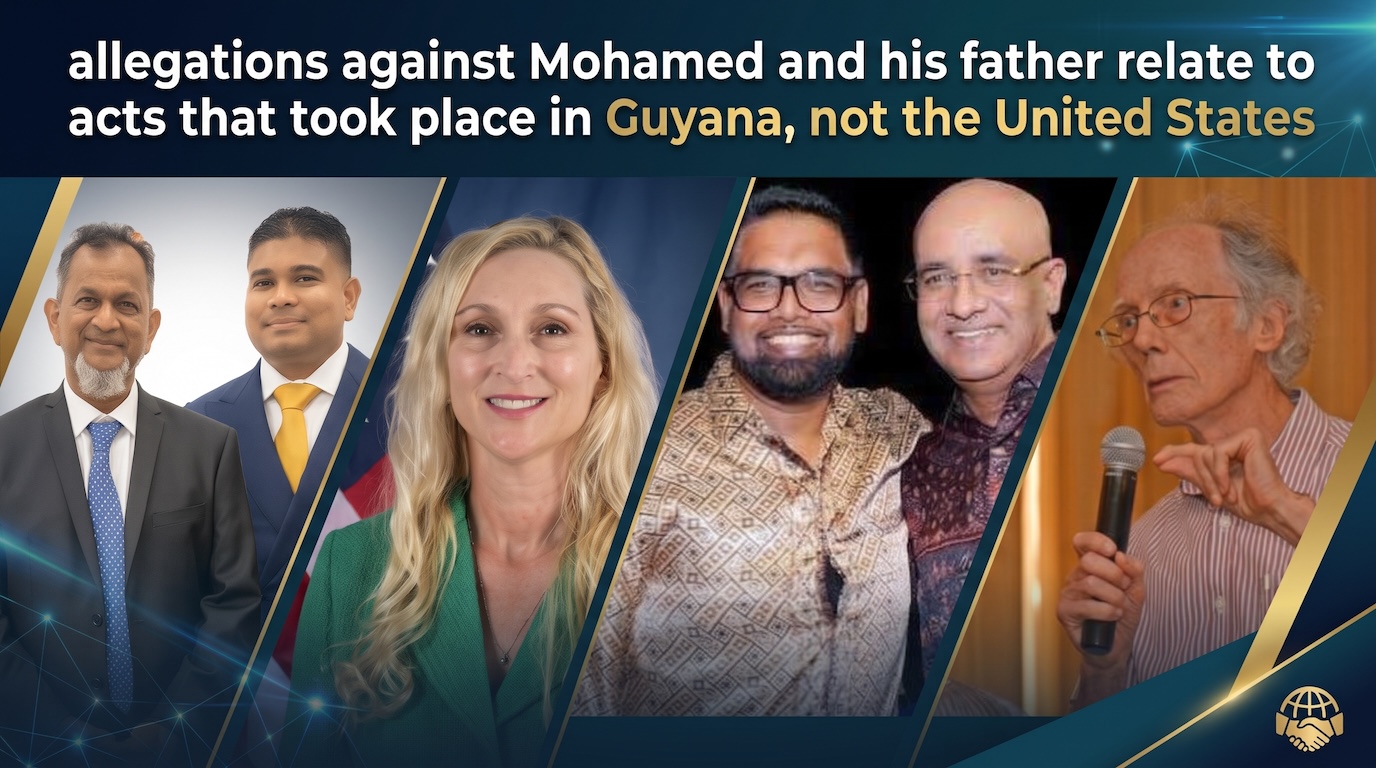
The GHRA also pointed out that the allegations against Mohamed and his father relate to acts that took place in Guyana, not the United States.
The statement condemned Friday’s decision by Magistrate Abigail Gibbs to deny bail to Mohamed in a matter involving his acquisition and circulation of a video recording of a shooting incident. Mohamed maintains that a senior police officer tried to assassinate him.
At Monday’s extradition hearing before Chief Magistrate Judy Latchman, counsel representing the US made several unproven allegations against Mohamed and was reportedly appealing the chief magistrate’s decision not to rescind his bail. The GHRA questioned whether US counsel had “taken on the role of a prosecutor rather than of an officer of the law watching over the interests of the USA.”
The group raised three concerns about the conduct of US legal representatives: whether it is proper for the US to act as prosecutor; whether the US is “doing the bidding of the Government of Guyana” in what it described as the persecution of Mohamed, who it said has been “followed, harassed, arrested on spurious grounds, charged with what might be trumped-up charges, denied bail, kept in solitary confinement, and openly threatened from within the Guyana Police Force”; and who should serve as guardian of legality when the two governments are allegedly colluding.
The GHRA called on the US government to reconsider its role and urged the International Commission of Jurists, the UN High Commissioner for Human Rights, and the Inter-American Commission on Human Rights to act urgently to protect Mohamed, his sisters and parents. It also encouraged local civil bodies, especially the Guyana Bar Association, to actively monitor a case it said has “pivotal implications for Guyana’s legal system and national independence.”