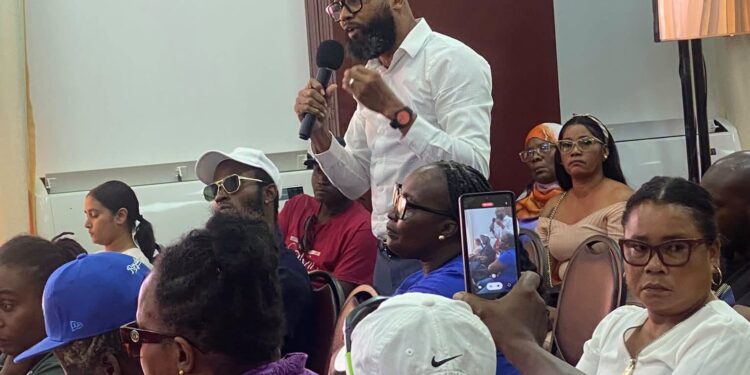
Allegations of political interference, preferential contracting, and extraordinary financial gain have emerged over infrastructure works in Region Five, with A Partnership for National Unity (APNU) Lead Parliamentarian Dr. Terrence Campbell raising serious concerns about whether public projects are being directed toward a company allegedly linked to a senior political figure.
At the center of the controversy is Greenway Distributors Inc., a concrete supplier that Campbell suggests has become the dominant provider for state-funded works in the region.
“After receiving numerous reports that Region 5 authorities demand that all concrete for infrastructure projects be purchased from a company tied to Nigel Dharamlall, I decided to launch an investigation.”
A Billion-Dollar Rise Under Scrutiny
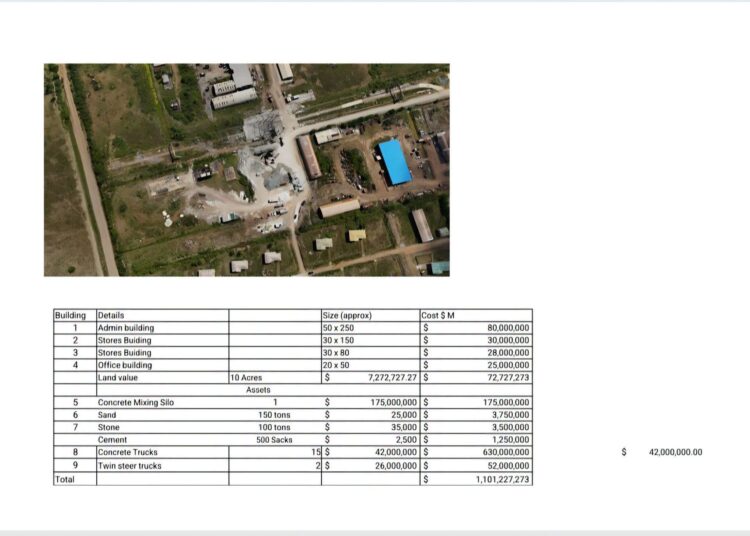
Campbell pointed to what he described as a staggering financial trajectory. According to his findings, Greenway’s assets reportedly grew from G$40 million in 2022 to over G$1.1 billion by August 2026.
“This is a phenomenal financial performance. Kudos to Monica. Congratulations on becoming a billionaire.”
The company, he noted, is owned by Monica Shiri Sharma and was incorporated on September 1, 2020, shortly after the PPP/C returned to office.
He further highlighted a personal connection he said was uncovered during his inquiries:
“It turns out that Monica is the ex-wife of Nigel.”
“Well Hidden” Operations, Evasive Responses
Campbell said efforts to locate Greenway’s operations led him to a facility “well hidden” behind offices and residences associated with the Mahaica-Mahaicony-Abary (MMA) scheme at Onverwagt.
Attempts to question workers were unsuccessful after he was recognised. He also recounted an interaction with regional leadership that raised further concern.
“I did ask the Chairman of Region 5 about the allegation that concrete for all infrastructure projects in the Region must be purchased from Greenway. He shrugged his shoulders and walked away.”
Forced Supply? A Market Without Choice
If the allegations are substantiated, contractors working on publicly funded projects may effectively be required to source materials from a single supplier—raising serious concerns about competition, pricing, and transparency.
Such a scenario would point to more than influence—it would suggest control over a critical supply chain tied to state spending in a region benefitting from increased infrastructure investment.
“Progress Over Protest” — For Whom?
Campbell also referenced recent remarks by President Irfaan Ali during an outreach in Hopetown, where residents were said to have chosen “progress over protest.”
“If the allegations about Greenway and Dharamlall’s connection are true, then one Region 5 resident, Nigel Dharamlall, is making great progress indeed.”
Direct Questions, No Clear Answers
Campbell has publicly posed several questions:
“For Region 5 authorities — Do you insist that all concrete for infrastructure projects be purchased from Greenway?”
“For Monica — Are you the beneficial owner of Greenway or are you fronting for your ex-husband? How did Greenway grow its asset base by 2750% in four years?”
“For Nigel: Do you use your political influence in Region 5 to direct all contractors to purchase concrete from Greenway?”
“If you are the beneficial owner of Greenway, do you disclose this ownership in your Integrity Commission filings?”
Call for Investigation—But Little Confidence
Campbell said there is sufficient basis for multiple state agencies—including SOCU, GRA, FIU, and the Integrity Commission—to examine the matter.
“There is a lot here for SOCU, GRA, FIU and the Integrity Commission to investigate. I doubt they will do anything.”
A Pattern Emerging?
In a pointed closing remark, Campbell suggested the issue may reflect a broader trend:
“In my next life, I want to be a family member of a PPP Minister. From Mustapha’s son to Susan’s wife to Dharamlall’s ex-wife, they all seem to be doing well.”
Mounting Pressure
Allegations surrounding officials within the PPP administration have become increasingly pervasive, surfacing across multiple sectors and raising persistent questions about transparency and accountability. The frequency and consistency of these claims—ranging from procurement practices to perceived preferential treatment—have begun to erode public confidence in governance. While the government has rejected many of these assertions, the concerns continue to gain traction in public discourse.
With billions being spent on infrastructure across Guyana, the latest controversy underscores a fundamental concern: whether public resources are being allocated through transparent processes or influenced by private connections. While the government has rejected many of these assertions, the concerns continue to gain traction in public discourse, with growing attention on whether authorities will respond with openness or allow lingering questions about fairness, accountability, and who ultimately benefits from public spending in Region Five to remain unresolved.