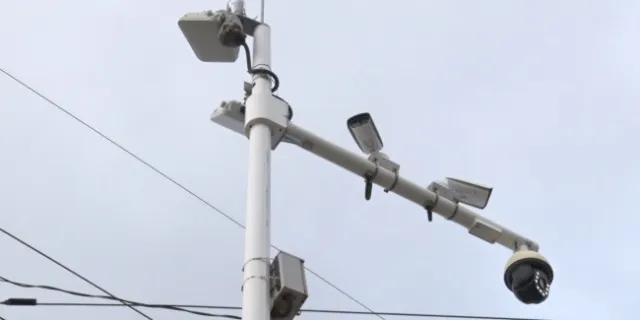
By Mark DaCosta- The leak of footage from the Guyana Police Force’s Command Centre is not the misdeed of a single officer. It is the product of a government and a police leadership that built a sensitive surveillance system without securing it, and that now lurches from one improvised response to the next. That is the central charge of the People’s National Congress Reform/A Partnership for National Unity (PNCR/APNU), which on 2 November turned the national argument away from individual guilt and towards institutional competence.
The affair centres on recordings tied to the October 12 shooting incident involving Opposition Leader Azruddin Mohamed and Senior Superintendent Prem Narine, head of the Special Branch. Police allege that a 20-year-old constable on duty at the Command Centre, Ryan Greene, copied the footage onto a flash drive and handed it to Mohamed, allegedly in exchange for GY$800,000. Mohamed has maintained that the roughly 23-minute recording supports his claim that the encounter was a failed attempt on his life. Both Greene and Mohamed were refused bail and remanded until November 24 after being charged under the Cybercrime Act. None of the allegations has been tested in court.
The controversy widened on Monday with the charging and remand of another police officer, Constable Ashton Chappell, who was charged with the same offence and ordered to remain in prison until November 24. His arrest adds another dimension to the controversy surrounding the unauthorised disclosure of sensitive police surveillance footage and raises further questions about the security protocols, internal controls and supervision governing access to the Command Centre’s recordings.
This development also reinforces APNU’s central argument that the investigation must extend beyond individual officers to examine the institutional safeguards and leadership failures that may have allowed the breach to occur.
The coalition’s statement steers clear of the evidence and goes straight to the machinery. It accuses the administration of governing through “impulsive decision-making, knee-jerk reactions and politically convenient fixes,” when the moment demands sober, considered management. It goes further, suggesting the Government and the Force’s leadership are “two peas in a pod,” each waiting for trouble to arrive before reacting to it.
The coalition’s reasoning rests on a simple premise. Any state that installs a national surveillance network must assume that insiders may stray, that access may be abused and that sensitive material may leak. Vetting, monitoring and training exist to guard against exactly those risks. The coalition therefore insists the matter is one of “institutional responsibility,” and argues that “A system is only as strong as the safeguards” surrounding it. It poses a pointed question: how was a network of such national importance put into service without adequate checks, restricted access and effective supervision?
The stakes, it argues, reach well beyond one incident, and it describes the breach as potentially “one of the most serious compromises of a state-operated security information system.” If recordings can be taken without authority, what protects footage involving ordinary citizens, witnesses, vulnerable people and live investigations? Surveillance material of this kind often holds some of the most personal and consequential evidence the state possesses. Its security is therefore a matter of public trust, not merely of police administration.
The coalition is equally sceptical of the official remedy. Transfers, a rushed review or fresh restrictions, it warns, could introduce new weaknesses if authorities do not first grasp how the breach occurred. In their place it proposes a seven-part programme. It wants an independent technical review of the system’s design and vulnerabilities, along with a close examination of the personnel assigned to the Command Centre. It calls for individual user authentication, audit trails, continuous monitoring and supervisory approval for anyone handling sensitive recordings. It seeks specialist training in information security, confidentiality and evidence management, together with modern operating procedures and clear disciplinary consequences. It also asks for consultation with professional bodies, security specialists, civil society and the parliamentary opposition, and for independent oversight to ensure the system is never bent to political purposes.
That final demand sits against a charged backdrop. The statement cautions that the inquiry must not become a vehicle for “selective accountability, political persecution or the arbitrary targeting of individuals,” and stresses that every suspect is entitled to the “presumption of innocence and due process.” Those words arrive while the Opposition Leader himself is in custody and his camp disputes the official account of the October shooting. Readers will judge for themselves whether the statement is a principled defence of fair process or a politically timed intervention. Either way, its argument about governance stands apart from the question of who is ultimately found culpable.
That is what makes the statement difficult to wave away. Whatever the courts conclude about the individuals charged, the allegations suggest that an officer of modest rank could reach sensitive recordings and carry them out of a secure facility. The public has yet to hear a full account of how that was possible. The coalition insists that the Commissioner of Police and the Home Affairs Minister must answer for the adequacy of the systems and safeguards under their oversight, and that the responsibility cannot be pinned on a single constable.
The statement closes with a challenge that is as much civic as political. Our nation, it says, deserves a government that “anticipates problems, plans responsibly and manages national institutions with competence”. Rejecting “political theatrics, hurried announcements or knee-jerk solutions”, it calls instead for “serious leadership, professional assessment, meaningful consultation and institutional reform.”