President Irfaan Ali on Sunday unveiled the five-member Commission of Inquiry (COI) into the MV Barima disaster, but the appointments have intensified criticism that the Government has chosen to investigate one of Guyana’s worst national tragedies through a process designed almost exclusively by the Executive, without consulting the parliamentary Opposition or other key national stakeholders.
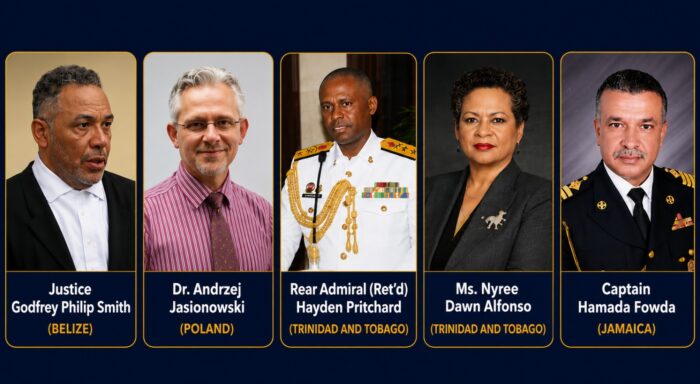
The Commission will be chaired by Justice Godfrey Phillip Smith of Belize, a former Attorney General, CARICOM’s High-Level Representative on Law and Criminal Justice, and an ad hoc Justice of Appeal in the Eastern Caribbean. Smith also served on Guyana’s Commission of Inquiry into the 2020 General and Regional Elections.
The other commissioners are Captain Hamada Fouda, a senior maritime surveyor with Jamaica’s Maritime Authority; Nyree Dawn Alfonso, a Trinidad and Tobago attorney specialising in admiralty and maritime law; Rear Admiral (Ret’d) Hayden Pritchard, former Chief of Defence Staff of the Trinidad and Tobago Defence Force; and Dr. Andrzej Jasionowski of Poland, a forensic naval architect and marine engineer with experience in major international maritime investigations.
President Ali said the Commission will determine the circumstances surrounding the July 18 sinking of the 87-year-old MV Barima, including the vessel’s loading, passenger boarding procedures, seaworthiness, maintenance history, compliance with maritime laws, the emergency response, and whether negligence, misconduct or institutional failures contributed to the tragedy. The Commission has also been directed to recommend reforms to Guyana’s maritime safety system.
But while the Government has emphasised the international credentials of the commissioners, the central issue for many Guyanese is not who was appointed, but how they were appointed.
Neither Opposition Leader Azruddin Mohamed, opposition political parties, trade unions, maritime professionals, victims’ families nor other civil society organisations were consulted on the composition of the Commission, despite repeated calls for an inclusive process capable of commanding confidence across the country.
The omission has become a central point of criticism, particularly because the inquiry is expected to examine the conduct of government ministries, regulatory agencies and state entities that ultimately report to the Executive.
The Joint Opposition—comprising We Invest in Nationhood (WIN), A Partnership for National Unity (APNU), the Forward Guyana Movement (FGM), the Alliance For Change (AFC) and the Vigilant Political Action Committee (VPAC)—said it welcomed a Commission of Inquiry but was “deeply disappointed” that there was “no consultation with the parliamentary opposition or other key national stakeholders regarding the composition of the Commission.” The parties argued that “inclusive consultation would have strengthened the credibility and legitimacy of the inquiry from its inception.”
The Opposition also questioned the timing of the announcement, noting that it came immediately before Parliament was due to debate Opposition motions on the disaster. It argued that a Commission of Inquiry cannot replace Parliament’s constitutional responsibility to hold the Executive accountable.
Beyond the Commission itself, the Opposition has maintained that Guyana remains legally obligated, as a member of the International Maritime Organisation (IMO), to conduct a separate technical marine casualty investigation in accordance with international maritime standards. It has also reiterated calls for Public Works Minister Juan Edghill and Minister Deodat Indar to step aside while the investigation proceeds, arguing that public confidence requires those whose ministries may come under scrutiny to remove themselves from the process.
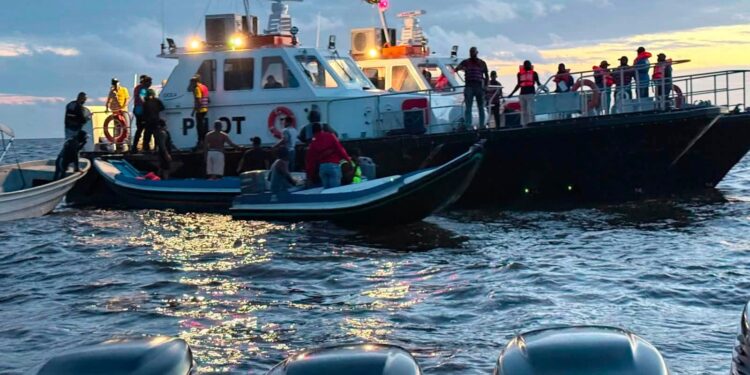
The MV Barima capsized while sailing from Georgetown to Port Kaituma with an estimated 179 passengers and crew aboard. Authorities have confirmed 73 deaths and 76 survivors, making it one of the deadliest maritime disasters in Guyana’s history.
For many Guyanese, however, the debate has now shifted beyond the qualifications of the commissioners. The central question is whether an inquiry into a tragedy of such national significance can truly command public confidence when the process that created it excluded the very voices that have been demanding truth, accountability and justice from the beginning