Last year, when Sylvester Leonardus Carmichael invited me to his home and asked me to perform the eulogy at his funeral, I was taken aback. It was not a conversation I expected to have, and certainly not one I wanted to imagine becoming reality so soon. I left that day asking myself: Why me?
But as I reflected on his life, his journey, and our relationship over the years, I came to understand. Perhaps I knew Sylvester not only as the accomplished professional, but as the village man, the family man, the human being.
Sylvester—my big cousin—came from the Carmichaels of Number 28 Village, West Coast Berbice, a family name he carried with pride, dignity, and responsibility. He honoured that name through discipline, courage, and service—not only to his relatives, but to the wider community.
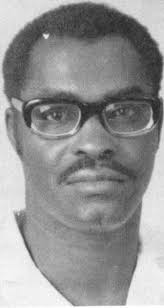
Born on January 27, 1932, in humble surroundings, Sylvester built an extraordinary life. He pursued higher education in England, earning a bachelor’s degree in Economic Management, and later a master’s degree in Mineral Economics in the United States. Yet, no matter how far education took him, he never ceased being the “village boy” from Number 28—the son of the soil who carried his roots wherever life led him.
His life stands as a powerful reminder of what is possible when determination meets opportunity. At a time when history is often distorted and contributions diminished, Sylvester represents excellence, resilience, and dignity. The Carmichaels are all heirs to that legacy.
As young people, many of us heard stories of his brilliance long before we fully understood the weight of his achievements. Teacher Felix and others spoke of him with admiration—how he excelled academically and distinguished himself early on. Before studying abroad, he served as a public school teacher, beginning a life that would itself become a lesson.
To many, he became the standard by which we measured ourselves.
When Sylvester returned to Guyana, he did not come back merely to build a career—he returned to help build a country. He played a key role in establishing Guyana Transport Services, recruiting drivers and helping to lay the foundation for a national transportation system. Under the leadership of Forbes Burnham, he later served as Chairman, where his organisational ability stood out.
His contribution extended into one of the most defining periods of Guyana’s industrial history—the nationalisation of the bauxite industry. He was among those who strongly advocated for the nationalisation of Demba in 1971, which later became GUYMINE and LINMINE. I have seen the letters he wrote to Burnham, making the case for Guyanese ownership of our resources.
He believed deeply in national development, in building systems that would give ordinary people a fair chance.
As Vice President of Marketing in the Bauxite Industry Development Company (BIDCO), he remained committed to the sector, arguing that markets for bauxite would always exist with the right vision and strategy. But more importantly, he understood that industries are built on people.
That truth was evident in 1989 during the bauxite strike arising from the “$10 to $1” Budget. At a time of tension and division, Sylvester brought people together. He invited union leaders to his home and created space for dialogue beyond formal structures. Those discussions contributed to the eventual resolution.
He was a bridge-builder.
Beyond his national contributions, there was the Sylvester we knew at home—the village man, the people’s man. Whenever he returned to Number 28, he moved from house to house, checking on the elderly, encouraging the young, and reconnecting with friends. He never allowed status or achievement to distance him from his roots.
He also believed in building at the community level. He worked to bring farmers, landowners, and workers together around cooperative agricultural efforts, seeing collaboration as a path to stronger livelihoods. He later established his own farm, raising livestock and engaging in agriculture—never losing touch with the dignity of honest labour.
And then there was his hospitality.
Syl was a good cook. And if you knew him, you knew his mauby—made from scratch, with care and pride. His home was always open. You could expect a meal, a drink, and often something to take away. That generosity was not for show—it came from a genuine love for people.
Even while living in Georgetown, the village never left him. He remained connected, stopping whenever he passed through, reminding us that community matters.
Sylvester belonged to my father’s generation, but he became a friend to mine and those who followed. He reached out to those on the margins, sat with them, listened, and reminded them they mattered. That kind of humanity cannot be taught—it comes from the heart.
His greatest legacy, however, lives in his family. He was the proud father of Janice Williams, Denis Carmichael, Colin Carmichael, and Saskia Carmichael-Sam; grandfather of Dar Williams, Brandon Carmichael, Isabel Carmichael, Bronte Cintrone, and Jazmyne Carmichael; and great-grandfather of Emmanuel Lewis, Kenneth Nunnally III, and Jaziyah Nunnally. He was also a relative of many—a guiding presence in an extended family that continues to carry his name and values.
Through them, his life endures.
On April 23, 2026, he was called home.
We mourn his passing, but more importantly, we honour his life—a life of service, vision, generosity, and love. His story reminds us that true greatness is measured not by titles, but by the lives touched and the legacy left behind.
Sylvester lived with purpose. He served with conviction. He loved your people.
And we loved him too.
May your soul rest in peace, and may his legacy continue to inspire generations to come.