MONTEGO BAY, Jamaica – They came in the dead of night. While most Jamaicans slept, the Holness administration quietly pushed legislation through Parliament imposing General Consumption Tax on short-term rentals — including properties listed on Airbnb and similar platforms.
The move, executed around 2 AM on Wednesday, bypassed any semblance of public consultation and left thousands of property owners across the island waking up to a fait accompli they never saw coming.
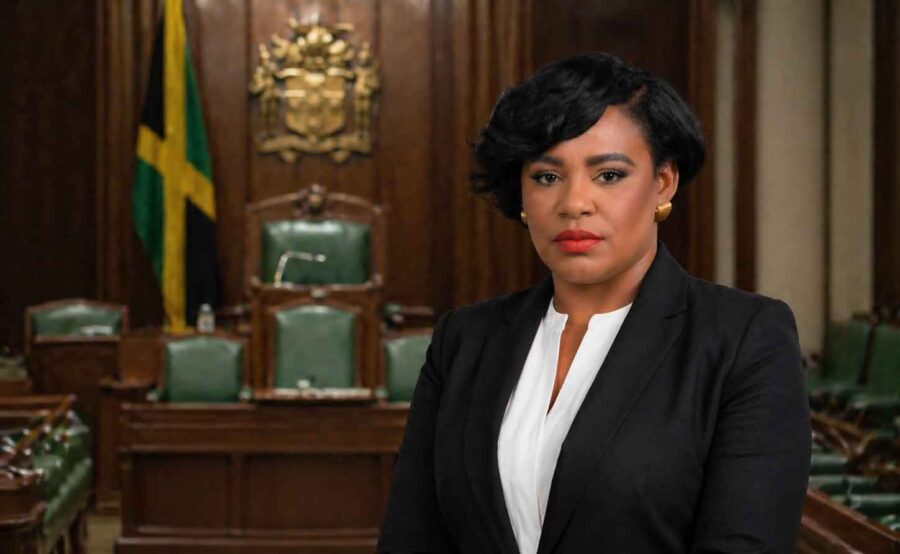
Opposition Spokesperson on Tourism and Linkages, Andrea Purkiss, was swift and unsparing in her condemnation. “The Government’s decision to rush this through in the dead of night shows complete disregard for the thousands of ordinary Jamaicans who depend on short-term rentals to survive,” the East Hanover MP declared. “There was no warning, no consultation, just stealth. We demand an explanation.”
The new tax takes effect April 1, 2027 — but make no mistake, the damage to investor confidence begins today. Jamaica’s short-term rental sector is not a cottage industry. It has exploded from 59,500 guests in 2017 to more than 800,000 in 2024, generating over $32 billion for property owners across the country.
These are not faceless corporate landlords. They are ordinary Jamaicans — many of them in the diaspora — who invested in a spare room, a garden apartment, or a second property as a lifeline. They took a calculated risk to build something. The Government just changed the rules without telling them.
A Parliament That Meets in the Dark
The manner of this legislation’s passage is as troubling as the substance. A 2 AM vote in a supposedly democratic Parliament is not governance — it is ambush. It is the kind of procedural manoeuvre designed not to serve the public but to avoid scrutiny. Any government confident in the merits of its tax policy would welcome debate. This one chose darkness.
The irony is thick. Tourism is the crown jewel this administration never tires of polishing in press releases. Minister Bartlett has built an entire international brand around Jamaica’s hospitality offering — and a critical, growing part of that offering is the authentic, community-based accommodation experience that platforms like Airbnb enable.
The same government that courts international visitors is now taxing the very ecosystem that delivers them uniquely Jamaican experiences, without so much as a town hall or a stakeholder consultation.
The Jamaican Hustle Gets Taxed
What makes this measure particularly galling is who it hits hardest. The short-term rental economy is one of the few wealth-generating vehicles accessible to middle-income and working-class Jamaicans.
A woman in St. Ann who rents out a room to make her mortgage. A returnee in Portland who renovated an old family property into a guesthouse. A young entrepreneur in Hanover who built a tiny villa to supplement her income. These are the people bearing the brunt of a tax introduced without a single public word of warning.
Purkiss is calling for full transparency and a comprehensive impact assessment before the measure takes effect. That is the bare minimum of responsible governance. The Opposition is right to press the point — and wrong to expect a quick response from an administration that chose 2 AM as its preferred hour of legislation.
The Question Jamaica Must Ask
There is a legitimate debate to be had about whether short-term rentals should attract GCT. Long-stay hotels pay it. Registered guesthouses pay it. An argument can be made for a level playing field. But that argument must be made in the light of day — through stakeholder engagement, through parliamentary debate, through impact assessments that weigh revenue gains against the livelihoods of those who will bear the cost.
None of that happened here. What happened was legislation by ambush — a Government that trusts the darkness more than it trusts the people it governs. Purkiss has drawn the line. Now the administration must step out of the shadows and justify itself.
WiredJA