Fernandes charged that the PPP’s true calculation is cynical; that no matter how poorly they treat Indigenous citizens, they can rely on traditional loyalties and truckloads of mobilized supporters to keep them in power. She warned that such blind loyalty condemns Indigenous communities to “a life of disrespect and disregard” for generations to come.
Georgetown, Guyana — APNU+AFC Prime Ministerial Candidate Juretha Fernandes has issued a blistering denunciation of the ruling PPP’s 2025 manifesto, calling its promises to Indigenous communities a “calculated insult” and proof that the administration treats Guyana’s first peoples as nothing more than political props.
Speaking directly to Indigenous leaders and villagers, Fernandes tore apart the PPP’s pledge to once again allocate a mere 15% of carbon credit revenues to Indigenous communities. She described it as an outrageous attempt to recycle crumbs for the people who bear the brunt of national poverty, yet whose ancestral lands are at the very heart of the climate finance deals fueling Guyana’s trillion-dollar economy.
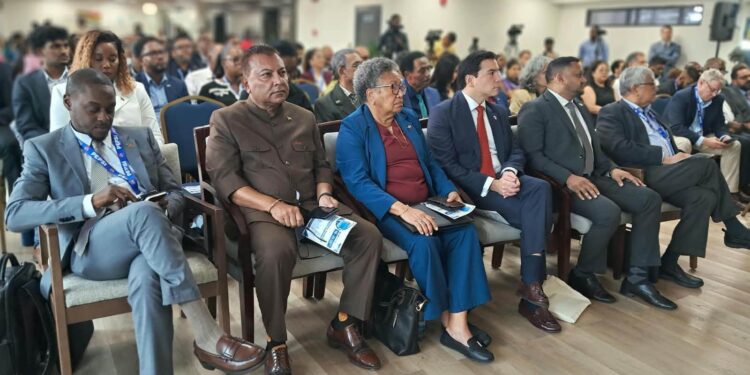
“We are living in a country in which the PPP has grown accustomed to disrespecting Indigenous communities, disrespecting Indigenous leaders, and believing that they can give the absolute minimum and you will not care,” Fernandes declared. “They spend more on mobilizing you to stand at their rallies than they do on investing in your villages.” 
Fernandes charged that the PPP’s true calculation is cynical; that no matter how poorly they treat Indigenous citizens, they can rely on traditional loyalties and truckloads of mobilized supporters to keep them in power. She warned that such blind loyalty condemns Indigenous communities to “a life of disrespect and disregard” for generations to come.
The statistics, she stressed, are damning. While Indigenous people represent less than 15% of the national population, they account for over 33% of Guyanese living in extreme poverty. For Fernandes, these numbers alone expose the PPP’s hollow rhetoric on inclusion and equity.
In sharp contrast, Fernandes vowed that an APNU-led government would quadruple village grants from $40,000 to $200,000 and boost the carbon credit allocation from 15% to at least 50%, ensuring that hundreds of millions flow directly to toshaos and village councils. This, she argued, would provide the financial autonomy needed to empower Indigenous people to build sustainable livelihoods and improve their communities without begging central government for scraps.
“This is a time for you to wake up and see who truly cares about the advancement of Indigenous people,” Fernandes urged. “Let us unite our most powerful weapon, our vote, to end this poverty trap and the PPP’s decades-long cycle of betrayal.” 
With national elections looming on September 1, Fernandes’ fiery address casts Indigenous voters as the potential kingmakers in a contest she framed as a fight for dignity, equity, and survival. Her words echoed like a warning shot; the days of token handouts and photo-op politics may be numbered if Indigenous communities decide to wield their ballots as the political equalizer.
For Fernandes, the choice is obvious either remain shackled to PPP’s culture of disrespect, or stand tall with APNU and claim a future of empowerment and justice.