Caribbean leaders and United Nations officials have launched a new regional framework aimed at addressing crime and violence as a public health emergency rather than solely a law enforcement issue, marking a significant shift in how governments across the region approach public safety.
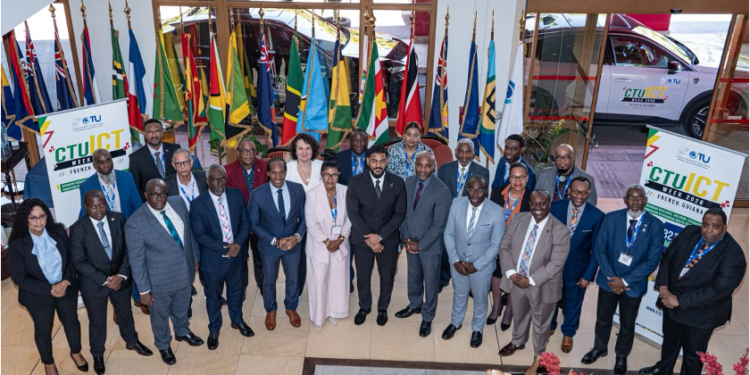
The initiative was unveiled during a two-day meeting in Basseterre on May 21-22, where the Caribbean Community, the United Nations and the United Nations Development Programme formally launched the CARICOM–UNDP Diagnostic Document and the proposed CARICOM–UN Framework for Action.
The documents establish a coordinated regional strategy to address the root causes of crime and violence through interventions in health, education, justice, social protection and community development systems.
The framework is designed to move Caribbean governments beyond traditional responses focused primarily on policing and punishment by promoting prevention-based policies grounded in data, community engagement and cross-sector collaboration.
Chairman of CARICOM and Prime Minister of Saint Kitts and Nevis, Terrance Drew, said political commitment will be critical to the initiative’s success.
“Nothing can really be done unless there is political will. Political will is what allows us to implement policies and to put whatever is necessary behind them,” Drew said.
He expressed confidence that the regional strategy could significantly reduce crime and violence over the next decade if fully implemented.
The Diagnostic Document compiles regional data, trends and analysis supporting the case for treating violence as a public health issue, while the Framework for Action provides a roadmap for implementing prevention strategies across member states with differing social and economic circumstances.
Assistant Secretary-General for Human and Social Development at the CARICOM Secretariat, Alison Drayton, said the initiative transforms political commitments made by regional leaders into a practical mechanism for action.
“Interconnected threats demand more than isolated national responses,” Drayton said, noting that crime, poverty, social exclusion and limited economic opportunities often reinforce each other.
Officials from the United Nations Development Programme stressed that the framework is intended to address the underlying drivers of violence rather than merely responding to its consequences.
Deputy UNDP Resident Representative for Barbados and the Eastern Caribbean Stephanie Ziebell said the diagnostic study provides a shared evidence base to better understand how violence is influenced by social, economic, institutional and transnational factors.
“The accompanying CARICOM-UN Framework for Action takes us a step further. It moves us from understanding the problem to thinking about how we build solutions,” she said.
Similarly, Johanna Kazana, UN Resident Coordinator for Trinidad and Tobago, Suriname, Aruba, Curaçao and Sint Maarten, said governments across the Caribbean increasingly recognise that enforcement measures alone cannot sustainably reduce violence.
“These documents reflect an important regional shift toward treating violence as a development and governance challenge, not simply a security issue,” she said.
The launch comes as several Caribbean countries continue to grapple with rising concerns over violent crime, gang activity and public security. Regional leaders have increasingly advocated for broader prevention strategies that address social inequalities, youth vulnerability, unemployment and community resilience alongside traditional law enforcement measures.
Organisers said the Basseterre meeting serves as a bridge between regional policy and national implementation and is expected to inform discussions at the Third CARICOM Regional Symposium on Crime and Violence. A strategic alignment session involving governments, regional institutions, civil society groups, academics and development partners is expected to identify priority actions for implementation under a proposed Regional Framework covering the period 2026 to 2030.
Established in 1973, CARICOM comprises 15 member states and six associate members and plays a leading role in regional cooperation on economic integration, social development and security issues. The UNDP supports governments throughout the Caribbean on governance, resilience, climate and human development initiatives.