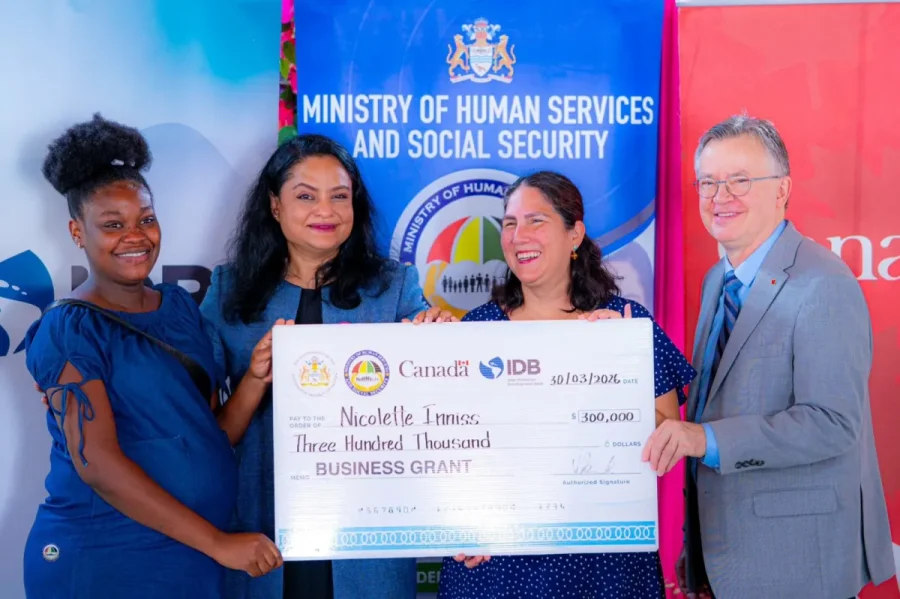
Ten survivors of domestic violence have each received $300,000 in business grants as part of efforts by the Government of Guyana to promote financial independence and long-term stability among vulnerable groups.
The grants were distributed on Monday through the Support for Safety Net Programme, a joint initiative between the Ministry of Human Services and Social Security and the Inter-American Development Bank (IDB). The beneficiaries are part of a wider group of 54 women supported by the Ministry’s Sexual Offences and Domestic Violence Policy Unit.
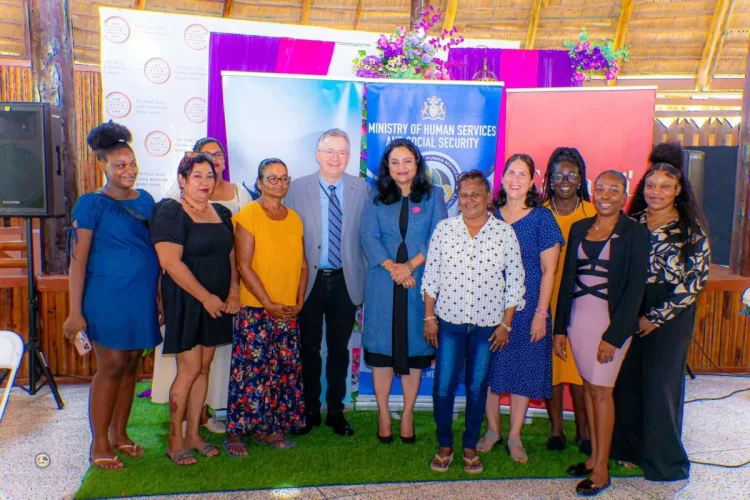
At a ceremony held at the Umana Yana, Minister of Human Services and Social Security Vindhya Persaud, alongside IDB Country Representative Lorena Salazar and Political Counsellor at the High Commission of Canada Daniel Bood, presented the grants to recipients.
Domestic violence remains a pervasive challenge in Guyana, with data from the UN Women-supported Guyana Women’s Health and Life Experiences Survey (2019) showing that approximately 55% of women have experienced some form of violence, including intimate partner abuse, in their lifetime. Regional estimates from UN Women’s Caribbean Women Count initiative further indicate that about 38% of women have faced physical or sexual violence from a partner, placing Guyana above the global average. Despite ongoing interventions, the issue remains underreported, with police data and international agencies consistently pointing to gaps in reporting, access to services, and enforcement—particularly in rural and vulnerable communities.
The initiative forms part of a broader strategy to address domestic violence not only as a social issue but also as an economic one. By providing capital for small businesses, the programme aims to help survivors generate income, achieve independence, and reduce vulnerability to abusive environments.
Officials say the grants are intended to support entrepreneurship, stimulate local economic activity, and, in some cases, enable recipients to create employment within their communities. The approach signals a shift toward empowerment, positioning survivors to rebuild their lives and break cycles of abuse through economic resilience.