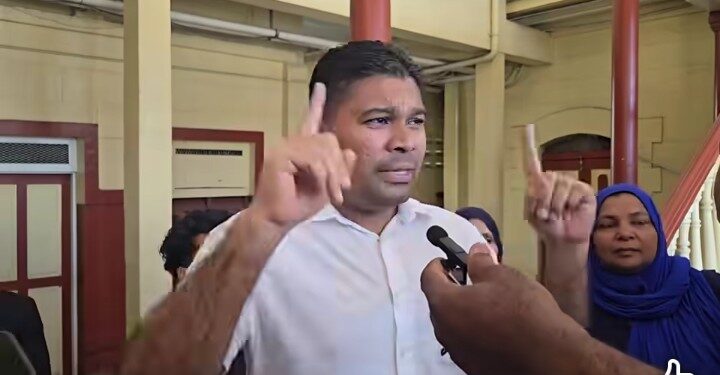
By Mark DaCosta-In a firm and unambiguous response, Members of Parliament Juretha Fernandes and Sherod Duncan of A Partnership for National Unity (APNU) have pushed back against claims outlined in a Stabroek News article concerning conditions at the Ogle settlement. Their intervention comes as management of the Eugene F. Correia International Airport intensifies calls for the Government of Guyana to urgently relocate squatters occupying land along the airport’s perimeter, warning of serious aviation safety risks.
Public Communications Consultant Kit Nascimento stated that the settlement, which has existed for more than two years within a restricted zone near active runways, poses a threat to both aircraft operations and the residents themselves. The airport has escalated the issue to the Guyana Civil Aviation Authority and Minister Colin Croal, while the Aviation Operators Association has also backed immediate relocation. However, the matter has become politically charged following a visit to the site by the APNU MPs — a move Nascimento criticised as irresponsible and as encouraging residents to resist relocation notices.
Fernandes and Duncan, for their part, argue that the situation reflects deeper shortcomings in the government’s housing policy, particularly at a time of rising living costs and ongoing infrastructural deficiencies.
At the crux of their argument, the MPs assert that the plight of families residing in the Ogle area is symptomatic of a larger, systemic failure within the government’s housing policy. They categorically dismiss suggestions that they have encouraged families to remain in unsafe living conditions, clarifying that their visit was on a fact-finding mission to understand the challenges these residents face.
According to the MPs, “We have never, and will never, encourage anyone to remain in a situation that compromises their safety.” This strong assertion reflects a commitment to advocate for those whose voices may otherwise go unheard in discussions about housing and safety.
The representatives express disappointment at the public comments from the airport’s Public Communications Consultant, whom they accuse of making “deeply misleading and irresponsible statements.” They contend that the consultant failed to consider essential facts about the Ogle community and the historical context of their struggles.
The MPs highlighted, “Families at Ogle are located only a few feet away from other established residents and have been present for at least five years,” countering claims that these families are new arrivals or squatters. By emphasising the longstanding presence of these families, Duncan and Fernandes aim to challenge the narratives that seek to delegitimise their claims and circumstances.
Critically, the statement raises alarm over the inadequacy of government housing solutions. Several families in the area have reportedly paid substantial sums for house lots, only to find themselves without essential services such as proper roads, water, and electricity. The MPs argue that accepting payments for land, which remain undeveloped, signals a serious failure in governance.
They contend, “Accepting payment without delivering habitability raises serious concerns about planning, sequencing, and value for money.” This points to a broader critique of how the current administration manages public resources and priorities.
Duncan and Fernandes further underscore the dedication and industriousness of these families, who include public servants and young parents striving to make a life amid escalating costs. Describing them as “hardworking Guyanese,” they convey that these individuals are grappling with significant socio-economic challenges rather than engaging in reckless behaviour. They view the government’s framing of these families as irresponsible actors as grossly misguided and harmful.
An alarming aspect of their statement involves the changing eligibility rules for state land applications. The MPs brought attention to the fact that many families are now facing barriers due to a revised age requirement limiting applicants to those over 21. They pose a critical question: “What transitional pathway exists for them?” This rhetoric highlights a lack of foresight and consideration in policies that directly affect vulnerable populations, particularly the youth.
For the MPs, the frustrations do not end there. They pointed out that families near the settlement had been overlooked for nearby housing developments, some of which remain unoccupied. “If safety is the justification now advanced, why were these families not integrated into the nearby housing programme when units were available?” they ask, implying a failure to act in a manner that truly prioritises the lives and wellbeing of citizens.
Depite these obstacles, the residents have expressed readiness to relocate, but under conditions that ensure dignity and adequate infrastructure. Their willingness exemplifies a desire not just for a physical space, but for a community that reflects their rights to live safely and with respect. As the MPs articulated, “Relocation must mean relocation to a safe and serviced community, not displacement to another precarious environment.” This call for thoughtful and empathetic governance echoes throughout their statement and serves as a reminder that housing issues in our country need more than superficial solutions.
Duncan and Fernandes conclude their pressing communication by calling on the Minister of Housing to take significant actions that address these pressing concerns: ensuring that paid lands are completed with necessary services, providing updates to families on waiting lists, revisiting eligibility requirements, and deploying social intervention programmes transparently. They assert, “Housing challenges are not solved by rhetoric. They require planning, sequencing, accountability, and delivery.”
In doing so, they implore the government to place the needs of its people front and centre in its housing policies for 2026 and beyond. With these statements, the MPs of the APNU stand as vigilant representatives, urging for a shift from inaction to initiatives that genuinely uplift families across our beloved nation. The time has come for the government to heed their call for comprehensive reform and truly prioritise the wellbeing of every citizen.