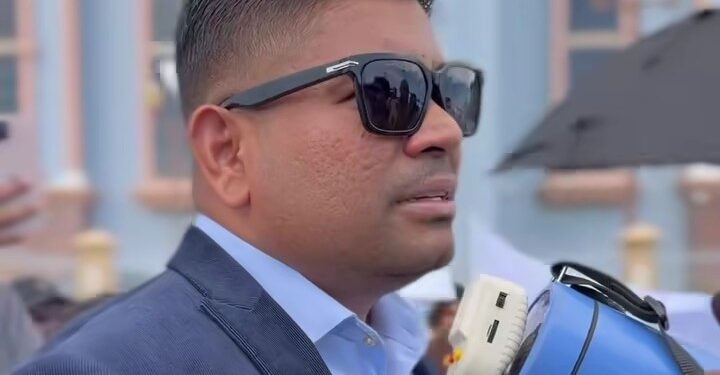
The People’s Progressive Party/Civic (PPP/C) government’s plan to acquire the Berbice Bridge is drawing heightened criticism. A letter in Village Voice News today questions the timing of the proposed buyout and its implications for taxpayers. The letter, written by Leyland Chitlall Roopnaraine, argues that the transaction risks diverting public resources to private investors even as the bridge’s concession period nears its natural expiration.
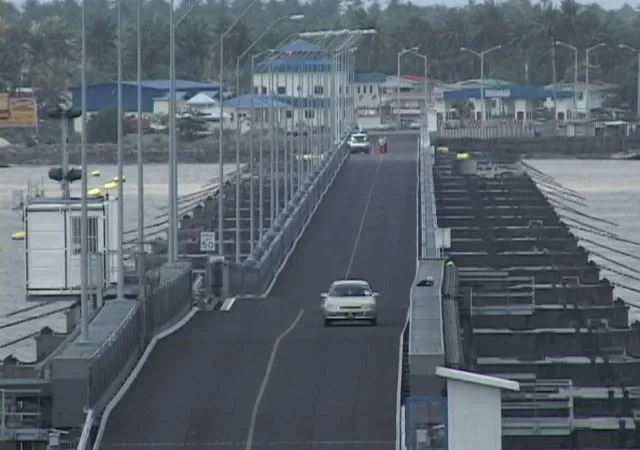
The Berbice Bridge, a 1.57-kilometre floating crossing linking Regions Five and Six, was constructed by Bosch Rexroth and Mabey and Johnson at a reported cost of about US$40 million (approximately G$8.2 billion) and opened on December 23, 2008. Developed under a Build Own Operate Transfer (BOOT) public private partnership, the project is owned by the Berbice Bridge Company Inc., with shareholding held by the National Insurance Scheme (20.2%), National Industrial and Commercial Investments Ltd. (10%), Hand in Hand Insurance (10%), New GPC Inc. (20%), Queens Atlantic Investment Inc. (20%), and Secure International Finance Company Ltd. (20%).
According to Roopnaraine, the concession agreement governing the project has never been publicly disclosed but provides for ownership to revert to the state after 21 years, placing the expected transfer around 2027. He argued that this timeline raises questions about the government’s decision to pursue an early buyout rather than allow the agreement to run its course.
Of particular attention is the shareholding structure. Businessman Bobby Ramroop owns New GPC Inc. and Queens Atlantic Investment Inc., which together account for 40 percent of the bridge’s shares and hold board representation. Ramroop is also widely reported to be a close friend of Vice President Bharrat Jagdeo, a relationship that should underscore the need for transparency and public disclosure in any state acquisition involving politically connected investors.
The letter also examined the financing arrangement of the bridge, which was reportedly structured with a high level of debt supported by toll revenues intended to service loans and generate investor returns. Roopnaraine claimed that the National Insurance Scheme invested approximately $2.9 billion from pension funds but has yet to fully recover its capital, while other investors retained significant voting influence.
Roopnarine further referenced the liquidation of CLICO in 2010, noting that the insurer’s bridge shares were subsequently sold after the company entered judicial management, and raised broader concerns about the financial outcomes for institutions linked to the project.
The removal of tolls last year- timed for the General and Regional Elections- though welcomed by commuters, was also questioned in the letter, with Roopnaraine arguing that government subsidies may have shifted the financial burden from users to taxpayers while protecting investor returns. He characterised the proposed buyout as “a calculated method to enrichment; an outright theft of people’s money.”
Government first signalled its intention to acquire the Berbice Bridge in late 2024, with Public Works Minister Juan Edghill later confirming that valuation exercises were underway as part of a plan to bring the crossing fully under state ownership and support the elimination of tolls. While officials have not disclosed a final purchase price, estimates in public commentary suggest the buyout could cost billions of Guyana dollars, reflecting compensation to shareholders and settlement of financial obligations.
To date, the administration has not publicly responded to the specific claims raised in the letter. However, the issue continues to fuel debate over the timing of the proposed acquisition, the disclosure of concession terms, and whether the buyout represents prudent infrastructure policy or a questionable transaction with significant implications for public finances and accountability.