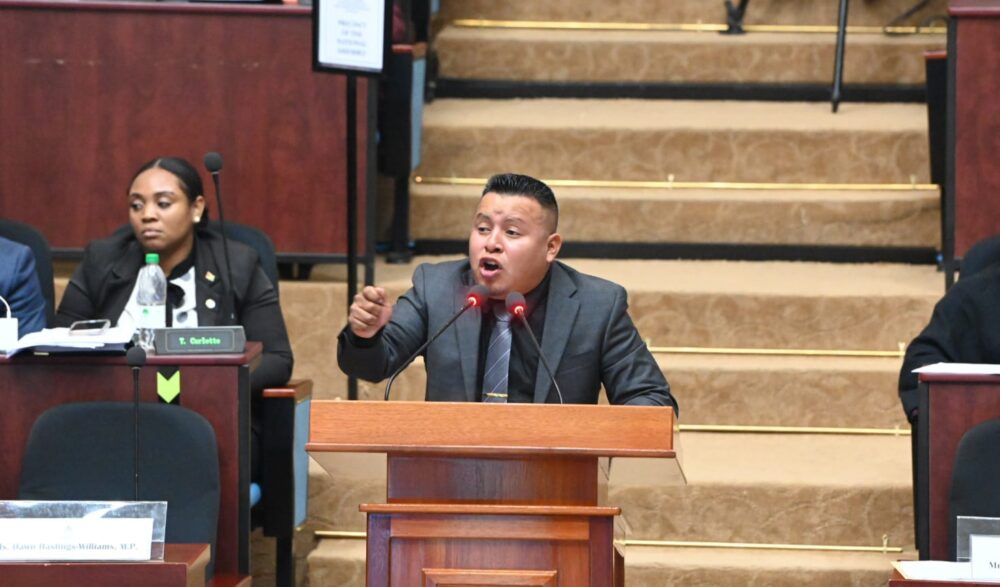
By Mark DaCosta- As the national budget debate concludes, a powerful and passionate critique has emerged from a Member of Parliament representing the Indigenous communities of Region One. Deon LaCruz, affiliated with the opposition, We Invest In Nationhood (WIN) party, did not hold back in expressing his profound disappointment in the proposed Budget 2026, which he argues fails to address the pressing challenges faced by the nation’s Indigenous populations. His speech has resonated with many, highlighting the stark discrepancies between government promises and the harsh realities experienced by communities in the hinterland.
LaCruz’s address came at a pivotal moment as the government unveiled its budget under the grand theme of “Putting People First.” However, he raised doubts about the sincerity of this theme, urging the government to provide tangible evidence of how this budget would genuinely benefit the people rather than the privileged few. He emphasised the need for an honest assessment of the budget’s impact on the marginalised, challenging its efficacy by questioning, “Does it lift the many, or does it further enrich the few?“
Focusing specifically on the challenges in Region One, LaCruz highlighted the soaring cost of living that has burdened residents, particularly in hinterland communities. With prices for essential goods and services significantly higher than in coastal areas, he demanded to know how the government could claim to prioritise its citizens’ welfare. “How, then, does Budget 2026 put people first in Region One?” he asked, an inquiry that resounded deeply among his constituents.
The healthcare system was a major focal point of his criticisms. LaCruz lamented the inadequacy of medical services in his region, referencing the dismal state of the Kumaka District Hospital, which, despite millions in government spending, lacks basic facilities. “Basic healthcare services remain inadequate,” he stated, urging that conditions for patients, especially in emergencies, are far from acceptable. As he pointed out, many residents must endure exhausting and perilous journeys to receive adequate medical attention, raising serious concerns about the functionality of the regional hospitals.
Moreover, LaCruz addressed public safety issues that plague Region One, expressing frustration over the treatment of police officers who contend with rising crime coupled with insufficient pay. He argued that it is unreasonable to expect effective policing while officers struggle to survive due to low wages. “We urgently need better pay, better conditions, and a modern, accountable police force,” he insisted, highlighting the urgent need for reform to ensure the safety and security of all citizens.
The financial management of carbon credits also drew LaCruz’s ire as he scrutinised the government’s fiscal transparency. He noted that of the $41 billion allocated for carbon credits in 2025, a mere $14 billion reached the Guyanese people. “The question is why?” he pressed, fearing more mismanagement as the government projected nearly $50 billion in carbon credit revenue for 2026 without clear plans for how this would benefit Indigenous communities. LaCruz argued for a substantial share of these funds to support Indigenous peoples, reminding the assembly that they are the guardians of the forests that underpin this carbon credit revenue.
Youth development is another critical area of concern for LaCruz, who lamented the neglect faced by young athletes in Region One. “Without safe and structured recreation, young people are left idle and vulnerable,” he cautioned, emphasising that the lack of proper sporting facilities contributes to wasted potential and exacerbates social challenges.
In a poignant moment, LaCruz called for justice and equity for Indigenous peoples, reflecting on the systemic issues that allow perpetrators of violence against Indigenous women to evade punishment, often due to political connections. “An individual can commit a crime, gets caught and sentenced to jail time, but, because of his political affiliation, can walk freely,” he stated, calling for urgent reforms to ensure that justice is served for all citizens, regardless of their background.
The issues do not stop at health and safety; LaCruz drew attention to the poor quality of education in Region One, where insufficient staffing has led to unhealthy school environments. He posed a troubling question about the government’s commitment to improving educational standards when even basic cleanliness in schools appears neglected.
LaCruz’s speech underscores a growing frustration with a government perceived to be out of touch with the realities faced by Indigenous and rural communities. He asserted that such neglect reflects a broader pattern where promises made by officials do not translate into meaningful progress on the ground. Highlighting the need for genuine representation and support for Indigenous leadership structures, he urged a reevaluation of policies to prioritise equity and dignity for all, remarking, “The protection of Indigenous peoples is not symbolic; it is constitutional.”
As the national debate continues, LaCruz’s impassioned advocacy serves as a loud call for change, echoing the sentiments of many Indigenous Guyanese who feel overlooked by a government that professes to prioritise the needs of its citizens. This budget, rather than being an opportunity for empowerment, has become an emblem of persistent disparities and unmet promises.
Ultimately, the crux of LaCruz’s address is clear: the future of our nation hinges on how effectively it supports and uplifts all its citizens, particularly those who have long been marginalised within its borders. The call for a budget that truly puts people first remains fervent and urgent, as the quest for justice and equity continues in the heart of our nation.