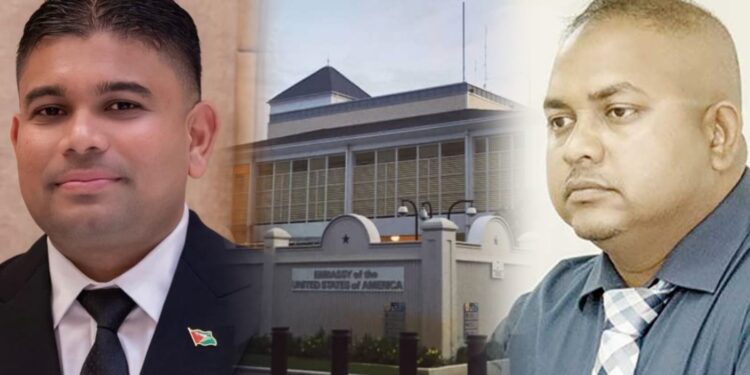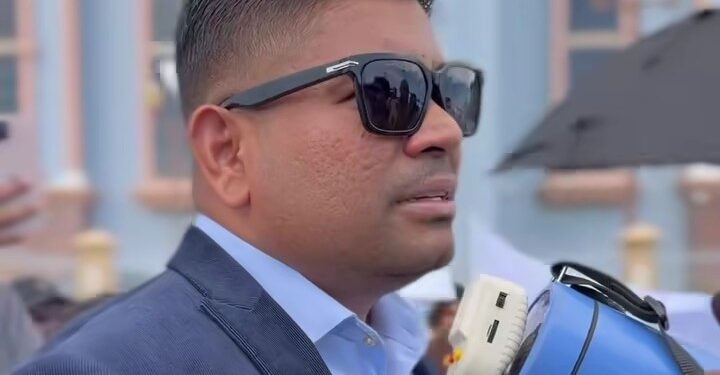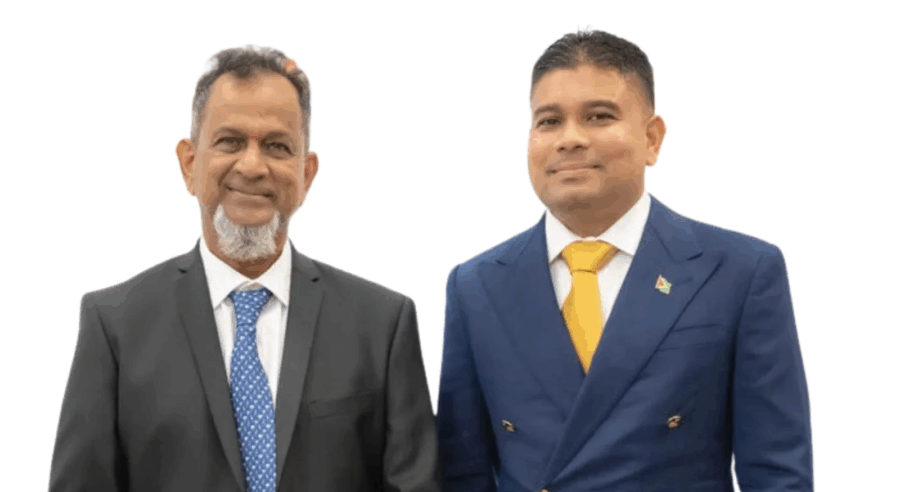
By Mark DaCosta- In a further pivotal legal battle, the extradition case against Nazir ‘Shell’ Mohamed and his son Azruddin Mohamed is set to unfold in the Magistrates’ Court on January 6, 2026. The father-son duo, facing serious allegations from the United States federal court, has mounted a challenge to halt the extradition process, citing constitutional concerns regarding the validity of the Fugitive Offenders Act, which they argue infringes upon their fundamental rights.
The case has stirred significant interest and concern among the populace, particularly given Azruddin Mohamed’s position as the presumptive leader of the opposition party, which he heads after winning 16 seats in the National Assembly. Many observers interpret the ongoing proceedings as politically motivated persecution rather than a straightforward legal issue.
The Mohameds have been implicated in a sweeping indictment unsealed on October 2, 2025, in Miami, Florida, accusing them of orchestrating a sophisticated scheme involving fraud, money laundering, and other financial crimes linked to gold exports and tax evasion. As this serious matter progresses, the political backdrop cannot be overlooked. With Azruddin emerging as the main opposition leader, the ramifications of these charges extend beyond the courtroom, placing additional pressure on the ruling party. The implications of the case are far-reaching, with concerns that it may impede the democratic processes within our nation.
During a recent hearing on December 30, presided over by acting Chief Justice Navindra Singh, the Mohameds’ legal representatives argued for a temporary stay of the extradition proceedings, requesting the court to allow a full review of the purported constitutional violations involving the Fugitive Offenders Act. Their defence, articulated by attorney, Senior Counsel Roysdale Forde, posits that the amendments to this Act are unconstitutional and pose a serious threat to their clients’ rights to a fair legal process.
Forde explained to the media, “The prejudice will be that these proceedings are pending in the High Court challenging the constitutionality of the very legislation under which the magistrate will have to act.” He further highlighted that it would not only compromise their clients’ freedom but could lead to imprisonment without bail if extradition moves forward, fundamentally altering their legal standing.
Despite the defence’s position, Attorney General Anil Nandlall SC countered, insisting that the legal framework surrounding extradition in our country is clear and has been established to avoid lengthy legal entanglements. He stated that the legislative procedures already in place are designed to ensure that extradition proceedings are efficient and just, emphasising, “Extradition process, by its very nature, is not intended to be embroiled in legal processes.” Nandlall described the defence’s application as an unconventional approach, potentially serving to delay the lawful extradition processes in place.
The disagreement stems not only from the accusations against the Mohameds but also from the suggested motivations behind these legal challenges. Observers have noted that the ruling People’s Progressive Party (PPP) government may be leveraging these legal proceedings to suppress political dissent, especially against a backdrop of mounting opposition support. The allegations of targeting the Mohameds for political reasons underscore the tensions within our political landscape, fueling perceptions of injustice and bias within the legal system.
As the scheduled proceedings approach, the atmosphere surrounding the case intensifies. Justice Singh is expected to deliver a ruling on January 5 regarding whether the extradition hearing will proceed as planned. This outcome is crucial as it will determine the immediate fate of the Mohameds and provide insight into the functioning of our judiciary. The Mohameds, through their legal team, have made it clear that they intend to exhaust all available avenues to contest what they see as an infringement on their constitutional rights.
The extradition case involving the Mohameds encapsulates the intersections of law, politics, and civil rights. The impending hearings will not only affect the lives of Nazir and Azruddin Mohamed but will also reflect the broader implications for political discourse and the legal framework in Guyana. Many in our society will undoubtedly view the proceedings as a litmus test for justice and equity under the current administration. As the world watches, the upcoming dates will be pivotal in shaping not only the fate of the Mohameds but also the future of our nation’s political landscape.