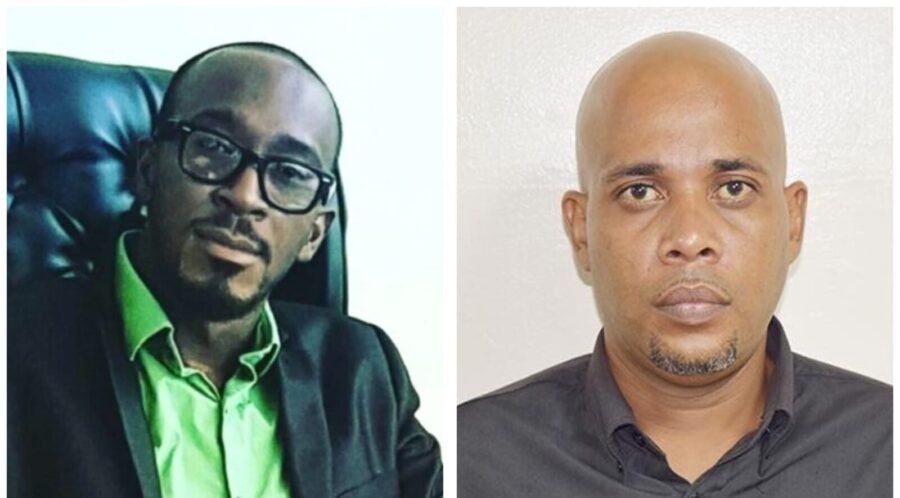
By Mark DaCosta- In an important turn of events for freedom of expression in our nation, the recent withdrawal of criminal defamation charges against two individuals marks a pivotal moment in the defence of constitutional rights. The Guyana Police Force has formally dismissed the charges against Dorwain Bess and Gary Eleazer, a decision directly influenced by a groundbreaking ruling from our judiciary that declared the criminal defamation law unconstitutional.

Earlier this month, the Honourable Chief Justice Roxane George delivered a momentous judgement on June 20, 2025, deeming the offence of criminal defamatory libel under Title Ten of the Criminal Law (Offences) Act unconstitutional. She asserted that this legislation contravened Article 146 of our Constitution, which enshrines the right to free expression.
The ruling aligns with our nation’s commitments to international human rights standards, reinforcing the notion that freedom of speech cannot be suppressed under the umbrella of defamation laws. As Chief Justice George articulated, “Freedom of expression is fundamental to democracy and cannot be criminalised.”
The case that led to this ruling was initiated when Mr. Rickford Burke was charged alongside Mr. Bess and Mr. Eleazer under the defamation statute. The legal challenge mounted by Mr. Burke eloquently illustrated the modern-day necessity for our laws to reflect democratic principles, rather than outdated statutes that infringe upon the rights of citizens. The ruling comes at a time when many progressive nations have already discarded similar laws. Countries such as Canada, the United Kingdom, and Australia have moved to decriminalise defamation, preferring civil avenues for redress concerning reputational harm.
Defamatory libel typically refers to a statement that falsely injures a person’s reputation, leading to potential criminal charges in jurisdictions where such laws exist. However, many legal experts argue that the notion is archaic, reflecting a time when literacy rates were low and the ability to engage in public discourse was limited to a select few. The reality is that an increasing number of nations are recognising that reputation and speech should not be conflated in the criminal arena — a position that resonates strongly with contemporary human rights frameworks.
At the heart of the ruling is the recognition that matters of public interest and individual reputation should be handled within civil courts, where damages can be sought for defamatory statements. Chief Justice George’s ruling underscored this principle, noting that “the chilling effect of criminalisation inhibits the engagement in discourse that is vital for a democratic society.” The judgement sends a vital message: our legal system is not a tool for intimidation or censorship but rather a protector of fundamental freedoms that allow debate, dissent, and discussion to thrive.
The legal representatives for Mr. Bess and Mr. Eleazer, Mrs. Dawn Cush and Dr. Dexter Todd, highlighted the implications of this ruling for every citizen in our country, arguing that “the criminalisation of speech through outdated statutes has no place in a constitutional democracy.” Their commitment to this case reflects a belief in a society where expression is free and citizens are not deterred by the fear of state retribution.
The withdrawal of the charges against Mr. Bess and Mr. Eleazer is a triumph for those advocating for freedom of speech and a testament to the resilience of democratic principles in our nation. This decision not only safeguards the rights of individuals but serves as a resounding affirmation that our justice system can adapt and respond to the evolving understanding of fundamental freedoms.