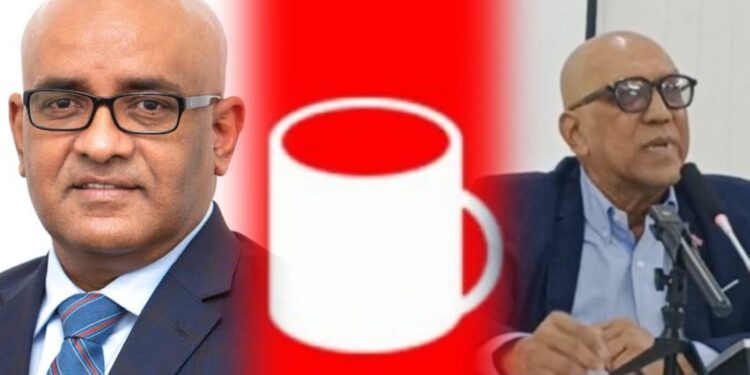
In an explosive and unfiltered address on the APNU campaign platform, retired Assistant Commissioner of Police Paul Williams delivered a thunderous indictment of the ruling PPP government, accusing it of dismantling the moral, institutional, and cultural fabric of Guyana’s democracy, law enforcement, and public services. Williams is now an APNU candidate and his words will carry political consequences far beyond the stage from which he spoke.
His blistering critique centered on what he described as the erosion of justice and the dangerous politicization of the Guyana Police Force. Using the controversial Adriana Young case as a flashpoint, Williams slammed the “disproportionate, unjustified, and unlawful” actions of the police, highlighting the judiciary’s own condemnation of the operation. “They acted without any arrest warrant,” Williams said, “and yet those responsible walk free.”
Williams did not mince words about what he views as the PPP’s deliberate dismantling of discipline and meritocracy within state institutions. “They have burned bridges with experienced senior officers, replacing them with puppets who can be controlled,” he thundered. “The Force has been reduced to a shadow of its former self.”
He accused the administration of destroying institutions such as the National Service and Community High Schools, asserting that these programs once provided structure, skills, and patriotism to young Guyanese. “Now, we have young people using thumbprints instead of signing their names,” he lamented. “That is what this government has reduced us to.”
His critique of the PPP’s alleged manipulation of the working class was equally scathing. “They give you a little bread, a little food, and call it help,” he said. “But that’s control. Real opportunity means being able to cook a pot of food and share it. Not begging for scraps.”
Turning his attention to the economic reality for youth and contractors under the current regime, Williams painted a bleak picture, small contractors trapped in unfavorable agreements, defaulting on payments, and turning to illegal means to survive. “You take a contract, get a car, then the contract ends. Now you’re a taxi driver trying to survive, and they push you into danger.”
The former police chief accused the PPP of bringing in foreign labor while neglecting local apprenticeships and training programs, a trend he believes is designed to keep citizens “at the lowest rung of the production chain.” He claimed that skilled Guyanese are being sidelined in favor of pliant, underqualified loyalists willing to “sing and dance” to the ruling party’s tune.
Williams saved his most fervent endorsement for APNU leader Aubrey Norton, whom he likened to biblical heroes like Moses and David. Describing Norton as “unblemished” and “a man of integrity,” Williams urged Guyanese to trust in his leadership as the only way out of what he called a “state-engineered collapse.”
“Wake up, Guyana,” Williams pleaded, echoing a refrain repeated throughout his fiery oratory. “You have seen enough. Vote APNU on September 1 and restore Guyana to the place it ought to be.”
The speech, rife with fire-and-brimstone rhetoric and populist appeals, is likely to send shockwaves through both political camps. For the PPP, it is a high-profile indictment from a charismatic former top cop, which is likely to swap many in the police fraternity. For the APNU, it is a rallying cry, a call to arms framed in spiritual, legal, and nationalist terms.
With just weeks before the national elections, Williams’ speech may prove to be one of the defining moments of the campaign, laying bare the stakes as both sides vie for the soul, and the future, of Guyana.