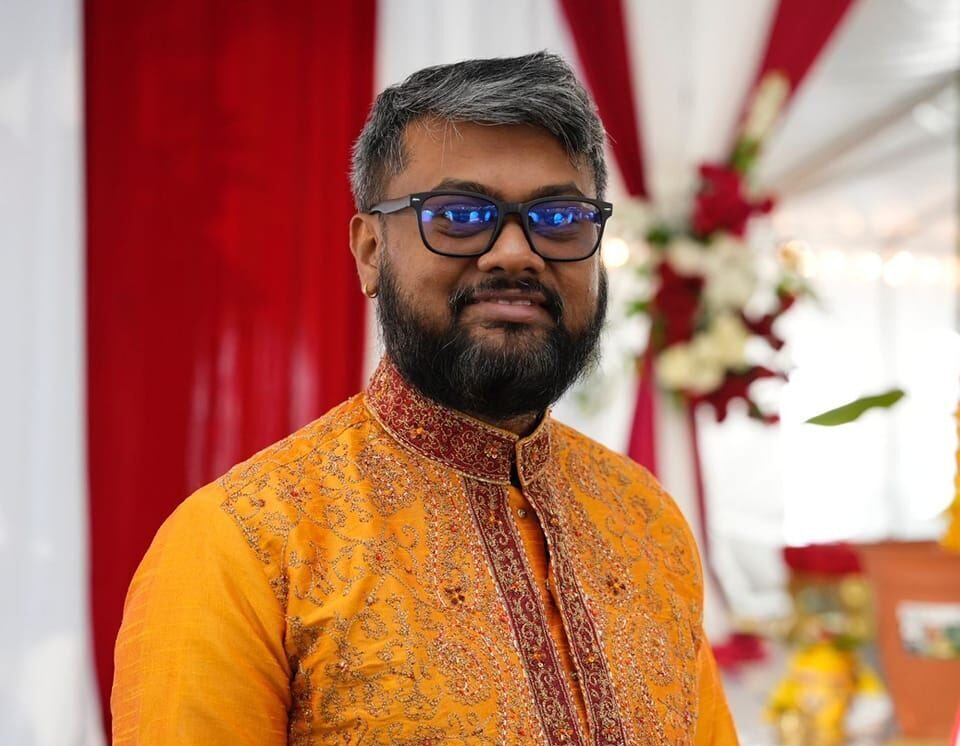
In a strongly worded open letter, former Georgetown Mayor Ubraj Narine, also a pandit and leading member of Guyana’s Hindu community, issued a blistering condemnation of the governing People’s Progressive Party (PPP) and its General Secretary Bharrat Jagdeo, accusing the administration of political manipulation, ethnic divisiveness, and authoritarianism.
“There comes a time in the life of every nation when its people must pause, reflect, and make a critical decision—not just for themselves, but for the generations yet to come,” Narine wrote, stating that he speaks not from “malice” but from “deep concern for the direction in which our beloved country is heading.”
Narine, a former Guyana Defence Force Staff Sergeant and Justice of the Peace, directed his appeal especially to Indo-Guyanese citizens, expressing disappointment in what he termed the lingering “coolie mentality”—a mindset he described as “narrow, caste-driven, divisive thinking” that prioritises “tribe over truth, face over fact, and political loyalty over moral clarity.”
“This must end,” he declared. “If we continue to close our eyes while the nation burns, we are no better than a blind kingdom being led by a one-eyed king—a fitting metaphor for the PPP regime.”
Central to Narine’s criticism is Vice President Bharrat Jagdeo, whom he accused of governing with “political bullying, unchecked ego, and contempt for the working class.” He denounced Jagdeo’s leadership as lacking in “transparency, ethics, and equality,” and claimed the PPP uses cultural identity “as a political pawn.”
In a particularly pointed remark, Narine said the PPP’s conduct is “beneath the dignity of any public servant—worse than what some would scornfully label ‘a chaamar,’” invoking a historically caste-based insult to underscore his rejection of political elitism.
“This is not an era to gamble with our country’s resources,” Narine wrote. “It is a moment that demands courage, wisdom, and unity. We must think—not as divided camps, but as one people.”
Narine concluded with a call to action, warning that silence in the face of corruption would leave future generations “a legacy of pain, poverty, and shame.”
“Let us not bow. Let us not be bought. Let us rise. Let our voices be forced to be heard—loud, proud, and unafraid. Because the soul of this country depends on it. I SAY TO YOU, I’M WITH YOU IN THIS FIGHT!!!”
As a religious leader and vocal public figure, Narine’s statements add fuel to the intensifying debate around ethnic politics, governance, and accountability in Guyana’s evolving political landscape.