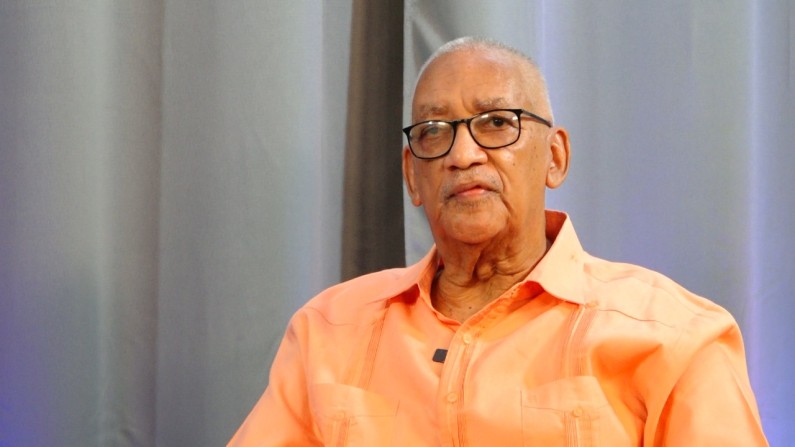
By Mark DaCosta- In light of escalating tensions with Venezuela, Dr. Mark Kirton, the Director of the Centre for International and Border Studies, has urged that an international military presence should be a vital part of our nation’s strategic preparations. This perspective, grounded in both historical context and practical diplomacy, was highlighted in a recent report from NEWS SOURCE GUYANA, a venerated local media outlet.
Dr. Kirton believes that while diplomacy has traditionally been the cornerstone of our defence strategy against territorial threats, the gravity of recent provocations necessitates a shift. With acts of aggression from our western neighbour, including incursions into our maritime territory and incidents involving our soldiers, he argues for a proactive stance. He envisions an international military mission that would serve as a deterrent, suggesting that collaborations within the Regional Security System (RSS) could be broadened to include the military forces of Trinidad and Jamaica, alongside contributions from nations like the United States and Brazil, under the auspices of the United Nations.
Over the past several months, our country has faced increasing hostility, with Venezuelan naval vessels reportedly violating our waters and a series of attacks against our soldiers in the Cuyuni River. Amidst these tensions, we continue to advocate our position at the International Court of Justice (ICJ), despite Venezuela dismissing the Court’s authority. Dr. Kirton expresses confidence that the ICJ will ultimately rule in favour of our homeland, but he cautions that compliance from Venezuela post-verdict may not be guaranteed.
The necessity for a multifaceted strategy is paramount, according to Dr. Kirton. He emphasises the importance of a “whole of country” approach that promotes consistent dialogue with both local communities and international allies. He advocates for the establishment of a core group of special envoys — representatives drawn not just from the Ministry of Foreign Affairs but from across various sectors — tasked with articulating our nation’s position to foreign governments and organisations. This initiative would help ensure that any future outcomes, likely favourable to us, are effectively communicated and understood, especially in light of potential compliance issues.
Education is also a focal point in Dr. Kirton’s recommendations. He asserts that the border controversy should be integrated into our educational system from nursery levels through to higher education. He points out that Venezuela has long instilled a narrative justifying its territorial claims within its own education system — something he believes our nation has neglected. By embedding these historical and political facts into our curriculum, we can better prepare our citizens to understand and advocate for our sovereignty.
Furthermore, Dr. Kirton strongly believes that initiatives should be established to incentivise local investors to develop businesses and industries within border communities. Such measures would not only bolster our economy but also reinforce the significance of our borders in the minds of our citizens.
Dr. Mark Kirton is a distinguished figure in our homeland, renowned for his extensive contributions to academia and public service, particularly in the realms of foreign policy and regional integration. With over forty years of experience, he has made a substantial impact on higher education and international relations in Guyana and the Caribbean. His academic pedigree is notable, having earned degrees from the University of Guyana, Georgetown University, and The University of Texas at Austin, where he specialised in political science with a focus on Latin America.
Throughout his illustrious career, he has held significant positions, including Dean of the Faculty of Social Sciences at the University of Guyana and Director of the Institute of International Relations at the University of the West Indies. His scholarly work has centred on vital issues such as regional integration and foreign policy, cementing his reputation as a leading intellectual voice in our nation.
In recognition of his contributions, Dr. Kirton was awarded The Golden Arrow of Achievement by the Government of Guyana in 2017. His insights remain crucial in navigating the current complexities surrounding the Guyana-Venezuela border controversy. As our nation continues to face challenges to its sovereignty, Dr. Kirton’s advice carries weight, underscoring the need for strong military readiness and international collaboration to safeguard our homeland’s interests.