A climate-smart pilot project at the Dora Secondary School, situated along the Soesdyke-Linden Highway, and led by the Food and Agriculture Organization of the United Nations (UNFAO) has proven quite beneficial, according to both students and educators, FAO said in a press release.
The beneficiaries laud the initiative as a practical learning solution for students, the organization noted. “What we learn in the classroom, we are able to see it happening in the school garden. For me, the school shade house garden is like my best Agriculture Science textbook,” one student is quoted by the FOA as saying.
Another noted that, “this project is very important to me at this time when I will be writing my CSEC exams in June 2021 and would like to pursue a career in Agribusiness. For me, agriculture is one of the most viable economic businesses to get into because people in Guyana and the Caribbean will always need healthy food.”
Implemented under the Assisting Small Island Developing States (SIDS) Programme, the school-based pilot project aims to contribute to enhancing food and nutrition security. Overall, the SIDS initiative supports livelihood and resilience to natural disasters linked to climate change, build resilience of domestic food production systems, and ensure food and nutrition security for the most vulnerable communities, including women and youths.
Nestled within the Kuru Kuru community in Region 4 is the Dora Secondary School is located approximately 50 kilometres South of Georgetown. This area is known for its white sandy soil, freshwater creeks, and forest coverage, which support livelihood activities like farming, logging and charcoal production. As such, agriculture is a key component of the school’s curriculum. However, hands-on practical training in agricultural production could not be done previously due to several underlying constraints, such as inadequate space, tools and equipment.
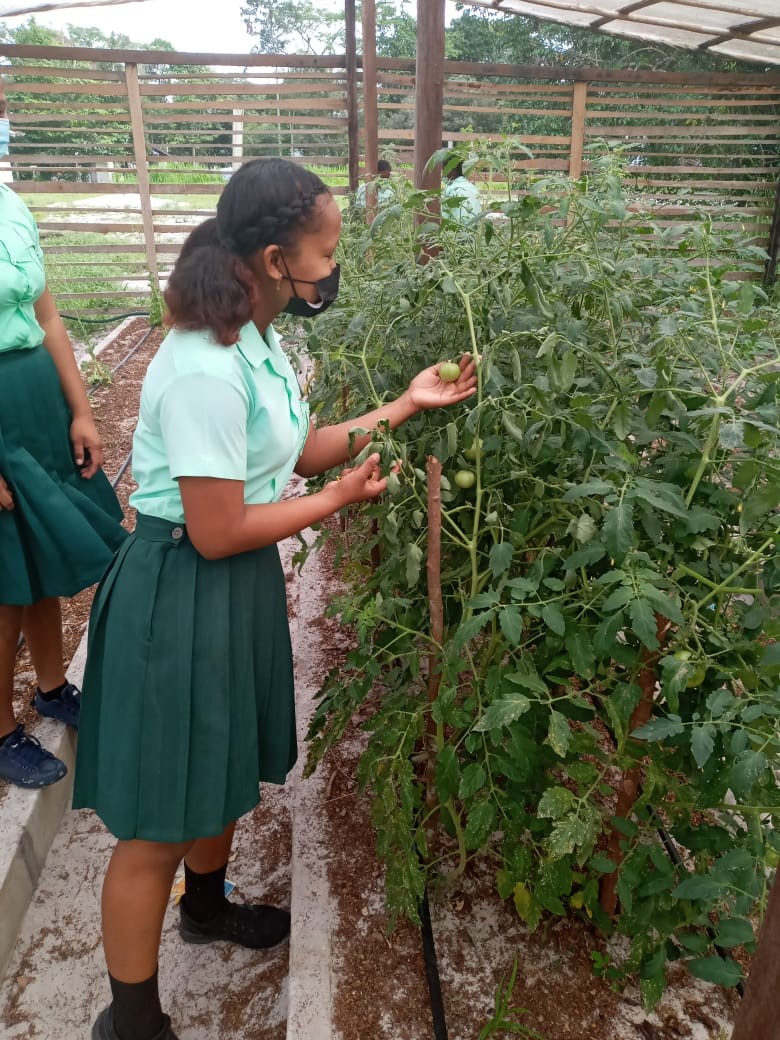
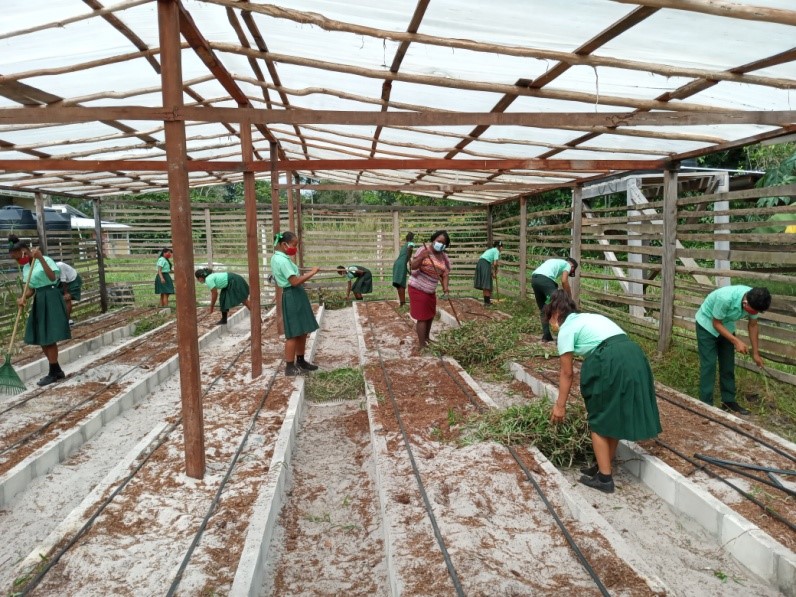
Under the UNFAO project, a shade-house and a poultry pen were built in the school compound. Measuring 1500 sq. ft., the shade-house was designed with a roof of gardening plastic and accommodated five concrete-raised beds in which the sandy soil was enhanced with reef sand, compost, and poultry pen manure. Drip irrigation system was also set up to ensure appropriate use and conservation of water and fertilizer.
Crops such as tomatoes, sweet pepper, cabbage, pak choi, lettuce, and celery were then cultivated. Shaded cultivation is a climate-smart agricultural practice that allows year-round production barring unpredictable weather patterns like long dry spells or heavy rainfall.
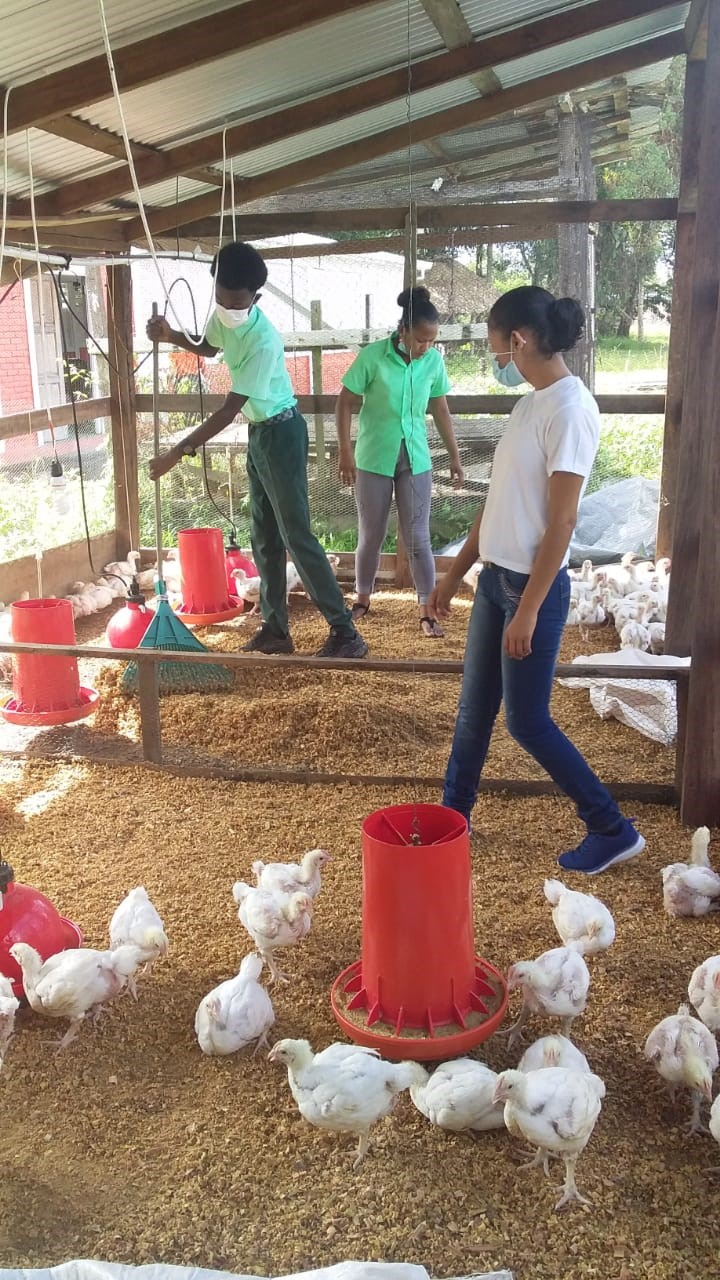
Meanwhile, the poultry pen, built with an area of 450 sq. ft. is divided into five sections; four used as ‘Grow Out’ and one as a ‘Brooding Area’ for chickens. Each section has capacity to accommodate 150 chickens for an eight-week production cycle.
PrincipalMrs. Ruth Lawrence alluded to the project’s positive impact and especially its linkage and contribution to the School Feeding Programme, which provides hot, healthy and nutritious meals. The school feeding programme is intended to reduce hunger and encourage increased attendance and academic performance.
Mrs. Lawrence also stressed the impact of the pilot-project in exposing students to business/entrepreneurial benefits of climate smart agriculture and poultry production. She related that several students stated their interest to do individual home gardening and poultry production initiatives. The Principal declared that the project excited teachers and students, brought new skills, techniques and structural support for continuous practical activities in agriculture production at the school and also in the community.
She welcomed the collaboration with UNFAO, and stated that “the Agriculture teaching and practical opportunities offered at Dora Secondary school could facilitate the building of an appropriate educational and socio-economic platform for students, enabling them to become successful entrepreneurs.”
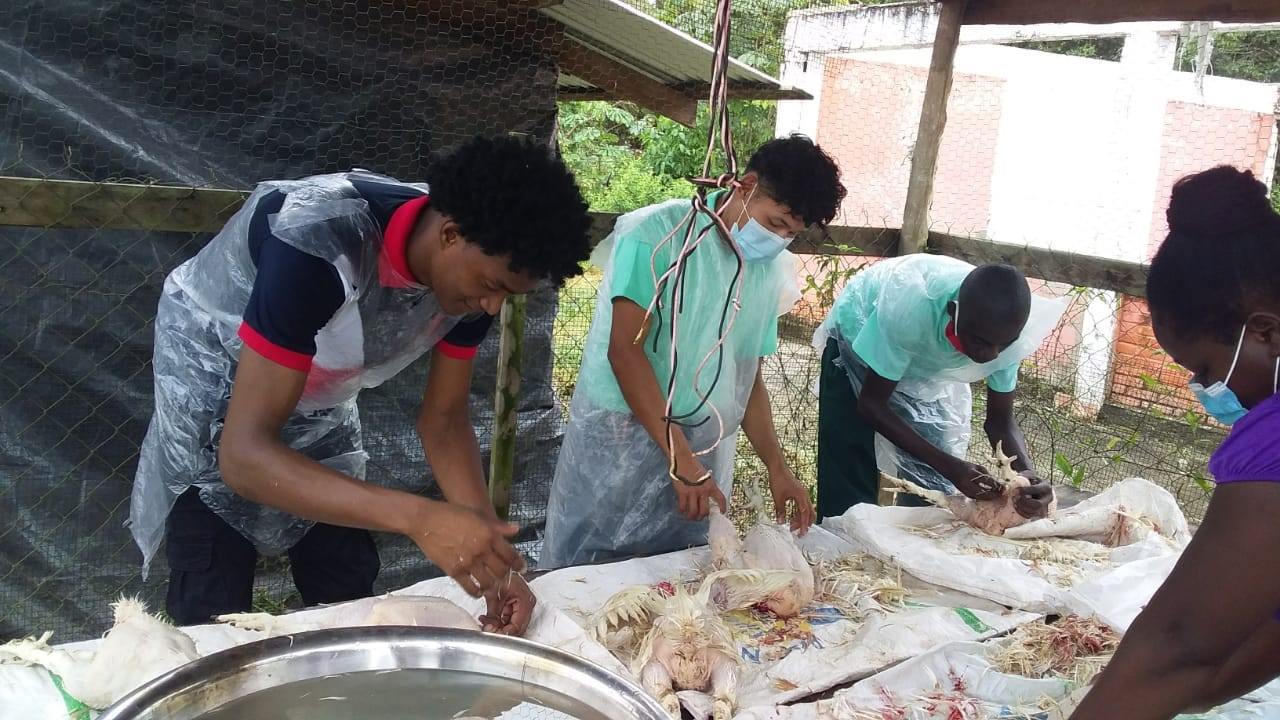
Due to the COVID-19 pandemic, which resulted in a prolonged closure of schools countrywide, the Dora Secondary School project suffered some delays. However, the partial re-opening of schools in September 2020 for Grades 10 and 11 students to prepare for CSEC examination enabled those pursuing Agricultural Science to participate and use the activity to complete their School Based Assessments (SBA) in both Crop and Animal production. Students used the opportunity to conduct investigations by applying practical experiences from hands-on learning. They planted seedlings and managed the crops while taking care of the chicks and managing the poultry pens. During the month of January 2021, the first batch of 135 chickens totaling 564 pounds were produced and utilized under the Dora Secondary School Feeding Programme. The crops cultivated in the shade house will be ready to harvest soon.
Agricultural Science Teacher Ms. Rachel Nobel said students and teachers were long awaiting such technical skills and facilities to support the practical component of CSEC Agricultural Science at their school. She also anticipated that students who benefited from the hands-on training would become involved in home-gardening enterprises, thereby creating more food and nutrition security in their communities. UNFAO Guyana Representative Dr. Gillian Smith extends her appreciation to the Principal, Staff and Students of Dora Secondary for supporting the successful implementation of this pilot project. Dr. Smith noted, “We are very pleased that the impact of this project extended beyond climate readiness for poultry and crop production, and that it was able to contribute to the School Feeding Programme, support the completion of the CSEC School Based Assessment and brought new skills and facilities to support future practical sessions and agriculture production. In this challenging time, we are extremely pleased with the participation and interest of our young people who found this learning-by-doing tool very rewarding.”