The Guyana Trades Union Congress (GTUC) on Sunday opened its 2026 Labour Week observances with its annual wreath-laying ceremony at the Parliament Buildings’ forecourt, paying tribute to generations of workers whose struggles secured labour rights, political enfranchisement and democratic participation in Guyana.
Held ahead of May Day celebrations, the observance forms part of this year’s Labour Week programme under the theme, “100 Years Fighting for One Man, One Vote (1926–2026) – Hubert Nathaniel Critchlow & Workers,” marking a century since the fight for universal adult suffrage and 121 years of organised labour in Guyana.
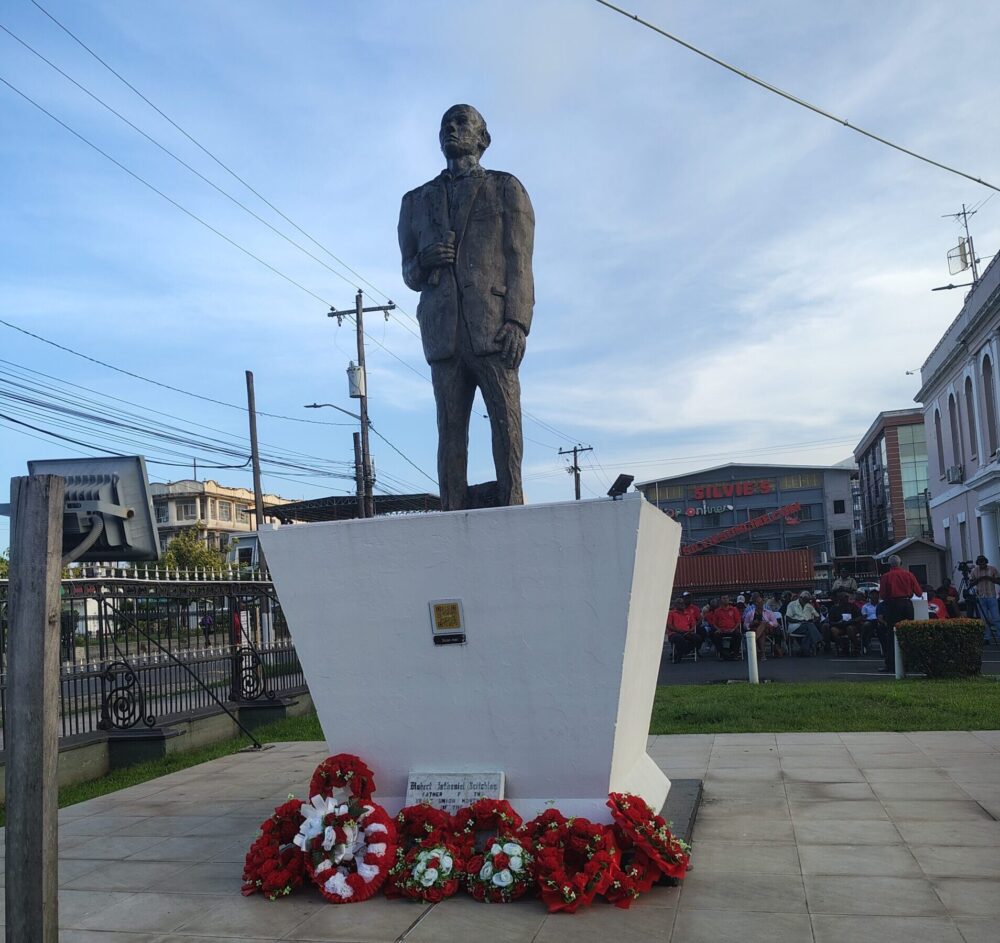
A key feature of Sunday’s ceremony was the laying of wreaths by representatives of 11 affiliated unions at the feet of the statue of Hubert Nathaniel Critchlow, symbolising labour’s collective remembrance of the sacrifices made in the struggle for workers’ rights, justice and political representation.
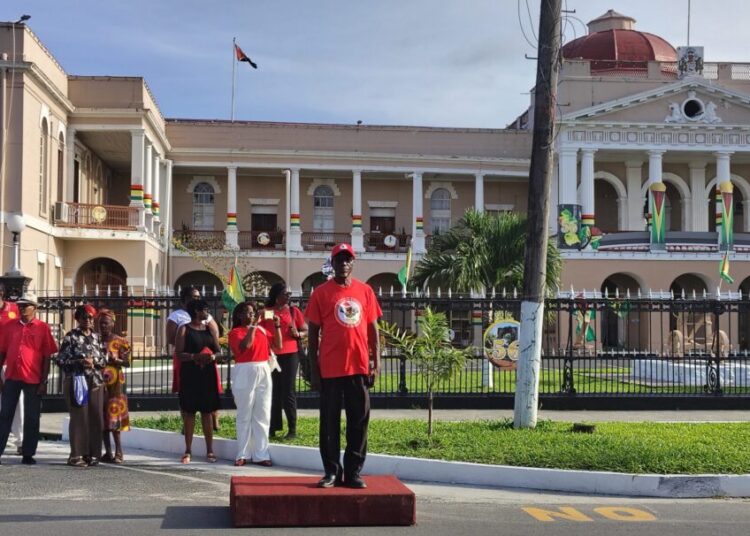
GTUC President Norris Witter inspected the ceremonial band at the opening of the observance, while trade union leaders Eon Andrews and Colin Miller addressed attendees, reflecting on the sacrifices of past generations and the urgent need to attract new membership to strengthen and sustain the trade union movement.
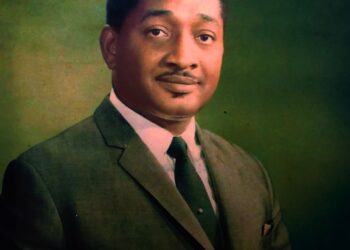
The ceremony honoured the enduring legacy of Critchlow, recognised as the Father of Trade Unionism in Guyana and the British Empire. His struggle for better wages, safer working conditions and political representation helped shape organised labour and laid the groundwork for broader democratic reforms in Guyana.
But beyond remembrance, this year’s observance unfolded against growing economic strain on workers, with the GTUC warning that Guyana’s oil-driven economic expansion has yet to deliver meaningful improvements in the lives of ordinary citizens.
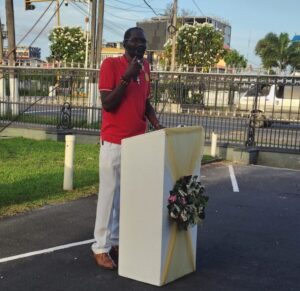
Addressing reporters, Witter called on the Government to introduce targeted subsidies to cushion the impact of rising living costs, arguing that global conflicts have disrupted supply chains and driven up fuel and commodity prices.
Witter said the wars in Ukraine and the Persian Gulf have worsened shortages and pushed up the cost of fuel and basic goods, placing heavier burdens on working-class families already struggling with stagnant wages and inflation.
“You have what can be referred to as the invisible hand of the State by applying what may be referred to as subsidies in certain areas and, through those subsidies, you can stabilise at least prices of some basic commodities,” Witter said.
His appeal comes as transportation operators, including buses, taxis and domestic airlines, have raised fares in response to higher fuel prices.
Witter argued that implementing subsidies would require political will and urged the government to become more responsive to the concerns of workers and the wider society, particularly as the cost-of-living crisis continues to deepen economic hardship.
The ceremonial march-past was led by the City Constabulary Band, while the Guyana Police Force Band provided music, bringing the observance to a dignified close.
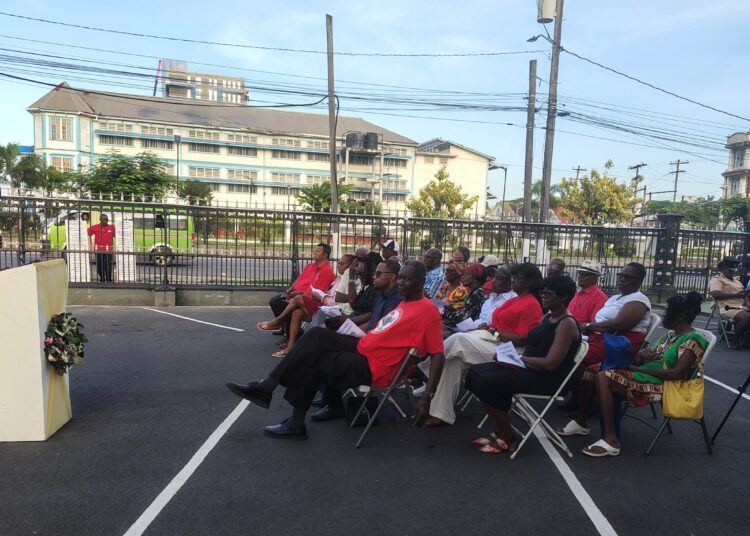
Sunday’s ceremony now sets the stage for the May Day march and rally on May 1, when workers and unions are expected to take to the streets in a renewed demonstration of solidarity.
The observance served as a powerful reminder that the rights, protections and democratic freedoms workers enjoy today were won through sacrifice, struggle and collective action — not concession. At a time of rising economic pressure, widening inequality and growing calls for inclusion in national decision-making, organised labour’s message was unmistakable: workers must remain united, vigilant and organised to defend hard-won gains and demand a fairer share of the wealth they help to create.