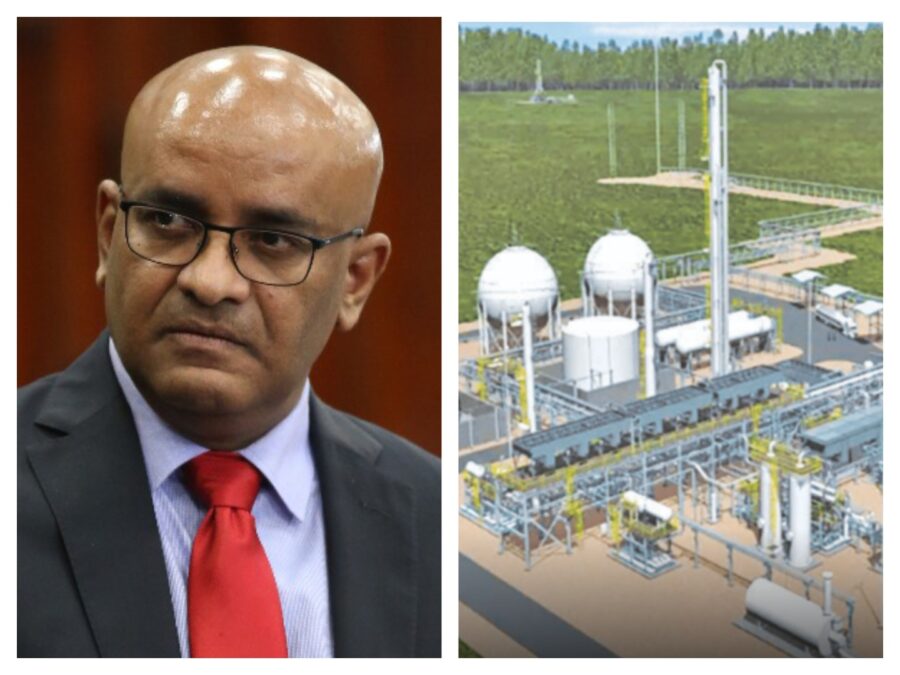
Vice President Bharrat Jagdeo is under mounting pressure over Guyana’s troubled Wales Gas-to-Energy (GTE) project, as ballooning costs, contractor disputes and growing public frustration revive memories of other major state-backed ventures under his stewardship that ended in controversy, failure and significant taxpayer losses.
In a hard-hitting op-ed, social commentator GHK Lall turned the spotlight squarely on Jagdeo, insisting that the Vice President — not President Irfaan Ali — must answer for the Wales project, which Jagdeo aggressively promoted as Guyana’s energy breakthrough.
Lall argues that Jagdeo was the political architect and chief salesman of the gas-to-energy initiative and cannot now retreat into the shadows as costs continue to rise and deadlines remain uncertain.
“There is the US$2 billion Wales gas project (GTE), and suddenly it is Ali’s baby. How come?” Lall wrote, questioning why President Ali is now left carrying the burden of defending a project Jagdeo publicly championed from the start.
When launched in 2021, the Wales Gas-to-Energy project was projected to cost approximately US$900 million. Today, that figure has surged to around US$1.3 billion, with broader associated works and financing costs expected to push the final bill closer to US$2 billion.
Lall also questioned the award of contracts, particularly to Lindsayca, and demanded transparency over how the company secured such a central role.
“Tell the Guyanese people about the Wales GTE project how a contractor with Lindsayca’s record snares that role (who arranged, who gave final approval)?” he wrote.
The Wales controversy has also revived scrutiny of Jagdeo’s history with large-scale national projects.
Under Jagdeo’s administration, the Guyana Sugar Corporation Skeldon Sugar Modernisation Project was launched at an estimated US$110 million, but ballooned to approximately US$200 million, becoming one of the country’s most costly industrial failures due to technical defects and operational collapse.
The Amaila Falls Hydropower Project, promoted as Guyana’s energy solution, carried an estimated cost of US$858 million but stalled amid political and financial disputes, leaving the project unrealised despite years of planning and expenditure.
For many Guyanese, the Wales project is beginning to mirror that pattern — major promises, swelling costs and uncertain outcomes.
“No one spoke more of the Wales GTE than Boss Bharrat. No one was allowed to seize centerstage,” Lall wrote, arguing that Jagdeo monopolised the public campaign for the project while sidelining senior officials, including Winston Brassington.
Now, as the project faces fresh demands for an additional US$250 million, Lall says Jagdeo must return to the forefront and explain the true cost and consequences for taxpayers.
“So, where is Jagdeo, and why has he abandoned his brainchild, his precious US$2 billion baby?” Lall asked.
The criticism comes as Guyanese continue to endure recurring blackouts and expensive temporary power solutions, despite repeated assurances that the gas-to-energy project would lower electricity costs and stabilise supply.
Lall accused Jagdeo of overselling the project and leaving the public with more uncertainty than relief.
“Bharrat Jagdeo sold the Wales GTE to Guyanese as the best thing since candles, and coal-pots. What has he delivered instead? Welcome to Guyana, the GPL, and Turkish powerboats,” he wrote.
For many Guyanese, Jagdeo’s record with mega-projects has become a troubling pattern. Where transformational promises were made, taxpayers have too often been left with inflated costs, unfinished works, and lingering questions of accountability.
Lall’s demand was direct. “The decent thing for him to do is say ‘I’m sorry. I failed,’” he wrote.
As costs climb and contractor claims mount, the Wales Gas-to-Energy project is no longer just an infrastructure issue. It has become a test of political accountability — and for many Guyanese, Jagdeo remains at the centre of that reckoning.