Thursday, July 30, 2026
Village Voice News
ADVERTISEMENT
  • Home
  • News
  • Sports
  • Editorial
  • Letters
  • Global
  • Columns
    • Eye On Guyana
    • Hindsight
    • Lincoln Lewis Speaks
    • Future Notes
    • Blackout
    • From The Desk of Roysdale Forde SC
    • Diplomatic Speak
    • Mark’s Take
    • In the village
    • Mind Your Business
    • Bad & Bold
    • The Voice of Labour
    • The Herbal Section
    • Politics 101 with Dr. David Hinds
    • Talking Dollars & Making Sense
    • Book Review 
  • Education & Technology
  • E-Paper
  • Contact Us
No Result
View All Result
  • Home
  • News
  • Sports
  • Editorial
  • Letters
  • Global
  • Columns
    • Eye On Guyana
    • Hindsight
    • Lincoln Lewis Speaks
    • Future Notes
    • Blackout
    • From The Desk of Roysdale Forde SC
    • Diplomatic Speak
    • Mark’s Take
    • In the village
    • Mind Your Business
    • Bad & Bold
    • The Voice of Labour
    • The Herbal Section
    • Politics 101 with Dr. David Hinds
    • Talking Dollars & Making Sense
    • Book Review 
  • Education & Technology
  • E-Paper
  • Contact Us
No Result
View All Result
Village Voice News
No Result
View All Result
Home Feature

The story behind International Day of the Family

Admin by Admin
May 15, 2023
in Feature
0
SHARES
0
VIEWS
Share on FacebookShare on Twitter

Background

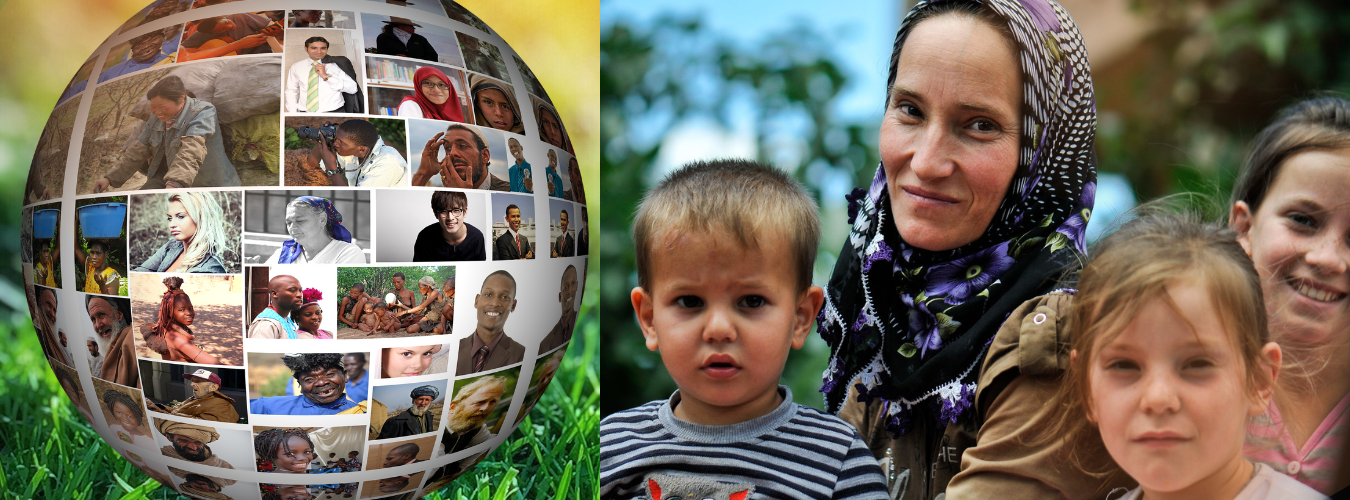
During the 1980’s, the United Nations began focusing attention on issues related to the family. In 1983, based on the recommendations of the Economic and Social Council, the Commission for Social Development in its resolution on the Role of the family in the development process (1983/23) requested the Secretary-General to enhance awareness among decision makers and the public of the problems and needs of the family, as well as of effective ways of meeting those needs.

READ ALSO

SIR GARFIELD SOBERS MADE THE ENTIRE CRICKET WORLD PROUD

From School Dropout to Supercomputing Pioneer: The Extraordinary Journey of Dr. Emeagwali

In its resolution 1985/29 of 29 May 1985, the Council invited the General Assembly to consider the possibility of including in the provisional agenda of its forty-first session an item entitled “Families in the development process”, with a view to consider a request to the Secretary-General to initiate a process of development of global awareness of the issues involved, directed towards Governments, intergovernmental and non-governmental organisations and public opinion.

Later, based on the recommendations of the Commission for Social Development, formulated in its 30th round of sessions, The Assembly invited all States to make their views known concerning the possible proclamation of an international year of the family and to offer their comments and proposals.

The Council also requested the Secretary-General to submit to the General Assembly at its forty-third session a comprehensive report, based on the comments and proposals of Member States on the possible proclamation of such a year and other ways and means to improve the position and well-being of the family and intensify international co-operation as part of global efforts to advance social progress and development.

In its resolution 44/82 of 9 December 1989, The General Assembly proclaimed The International Year of the Family.

In 1993, the General Assembly decided in a resolution (A/RES/47/237) that 15 May of every year should be observed as The International Day of Families. This day provides an opportunity to promote awareness of issues relating to families and to increase the knowledge of the social, economic and demographic processes affecting families.

On 25 September 2015, the 193 member states of the United Nations unanimously adopted the Sustainable Development Goals, a set of 17 goals aiming to eliminate poverty, discrimination, abuse and preventable deaths, address environmental destruction, and usher in an era of development for all people, everywhere. Families and family-oriented policies and programmes are vital for the achievement of many of these goals.

Did you know?

The global life expectancy at birth reached 72.8 years in 2019, an improvement of around 9 years since 1990.

By 2030 nearly 12 per cent of the world population will be 65 years of age or older. By 2050 an average longevity globally is to reach around 77.2 years of age.

Globally, over 23% of individuals, equating to over 1 billion people, live in slums in urban areas. Estimates show that growth of 1% in an urban population increases the incidence of slums by 5.3% in Asia and 2.3% in Africa.

An estimated 2% of the global population is homeless and an additional 20 per cent live in inadequate housing.

Could families be the key to achieving the SDGs?

Family policies are a mainstay of national public policies, and the most meaningful vehicle for governments to influence the living standards of upcoming generations. As part of achieving the global ambitions of the Sustainable Development Goals (SDGs), family policies play an important part in meeting targets across many of the goals. (United Nations).

ShareTweetSendShareSend

Related Posts

Albert Baldeo cherishes an unforgettable moment he shared with Sir Garry in 2002
Feature

SIR GARFIELD SOBERS MADE THE ENTIRE CRICKET WORLD PROUD

by Admin
July 20, 2026

Some cricketers become legends within cricket. Sir Garfield Sobers became the measure of cricketing greatness itself, not simply the greatest...

Read moreDetails
Dr. Philip Emeagwali
Feature

From School Dropout to Supercomputing Pioneer: The Extraordinary Journey of Dr. Emeagwali

by Admin
July 17, 2026

At a time when technology shapes nearly every aspect of modern life, few people realise that some of the ideas...

Read moreDetails
Alisha Koulen
Feature

Alisha Koulen: She Studied Without Electricity. Now She’s Ivy League Bound

by Admin
July 13, 2026

There was a time when Alisha Koulen pursued her education without one of the most basic necessities many students take...

Read moreDetails
Next Post
This aerial panoramic photo taken on May 12, 2023 shows a pumping station of South-to-North Water Diversion Project in Sihong County, east China's Jiangsu Province. The eastern and middle routes of China's South-to-North Water Diversion Project have benefited more than 150 million people, China South-to-North Water Diversion Co., Ltd. said Sunday.  The project has transferred 62 billion cubic meters of water to the drought-prone north via the eastern and middle routes, according to the company. (Photo by Fang Dongxu/Xinhua)

China's mega water diversion project benefits over 150 mln people


EDITOR'S PICK

Grounded by the CCJ: The AG’s Hasty Retreat from Judicial Bravado

March 30, 2026
Michelle Ann Joseph

Villages: Characteristics, Transformations, and Centralisation in Guyana

October 13, 2023

Education Ministry Hosts Stakeholders’ Engagement on Caribbean Certificate of Secondary Level Competence (CCSLC)

October 14, 2024

Govt extends public assistance to HIV, cancer patients

June 17, 2022

© 2024 Village Voice

No Result
View All Result
  • Home
  • News
  • Sports
  • Editorial
  • Letters
  • Global
  • Columns
    • Eye On Guyana
    • Hindsight
    • Lincoln Lewis Speaks
    • Future Notes
    • Blackout
    • From The Desk of Roysdale Forde SC
    • Diplomatic Speak
    • Mark’s Take
    • In the village
    • Mind Your Business
    • Bad & Bold
    • The Voice of Labour
    • The Herbal Section
    • Politics 101 with Dr. David Hinds
    • Talking Dollars & Making Sense
    • Book Review 
  • Education & Technology
  • E-Paper
  • Contact Us

© 2024 Village Voice