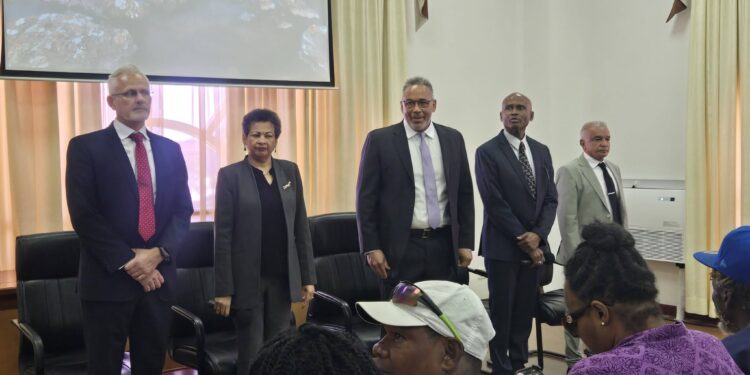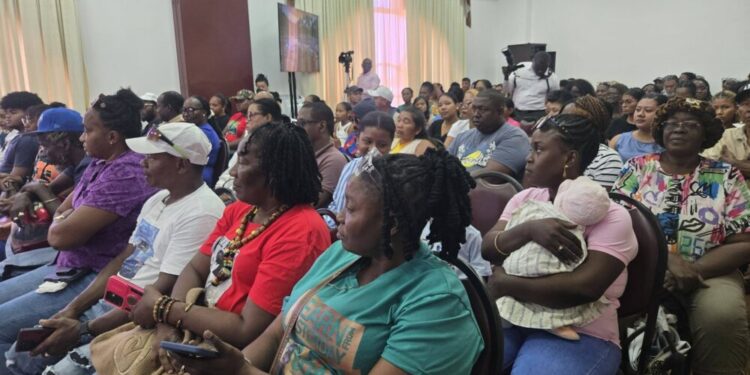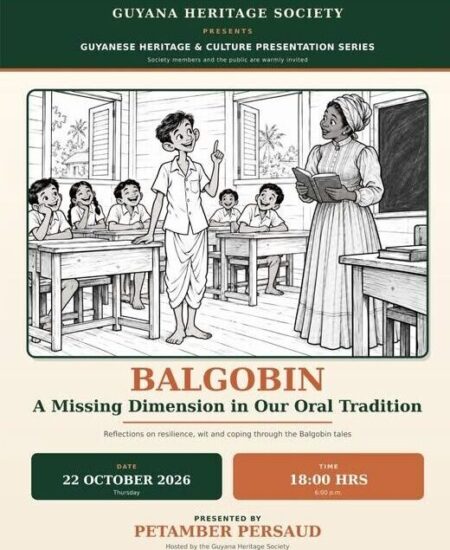
The Guyana Heritage Society is set to launch a new mixed-format presentation series on Guyanese heritage and culture, beginning with a focus on Balgobin tales and their place in the country’s oral tradition.
The inaugural presentation, titled “BALGOBIN: A Missing Dimension in Our Oral Tradition,” will be delivered by Society member Petamber Persaud on Thursday, October 22, 2026. The series is intended to provide a platform for members, researchers, practitioners and invited presenters to share knowledge and deepen appreciation of the people, traditions, places and stories that form Guyana’s diverse heritage.
Persaud’s presentation will examine the Balgobin tales as expressions of the resilience, wit and coping mechanisms of early Indian indentured immigrants as they confronted hardship, displacement and the challenges of adapting to a new society.
The decision to place Balgobin at the centre of the inaugural presentation is significant, given the importance of oral traditions in preserving the experiences of communities whose histories were not always adequately recorded in formal accounts of Guyana.
The Society says the presentation will also underscore the need to recognise and preserve such stories as part of Guyana’s wider oral and cultural heritage.
That initiative, however, also raises a broader question about how Guyana chooses to present its heritage in a society made up of different ethnic and cultural traditions.
Guyana is commonly described as a multi-ethnic nation comprising six major races—Indians, Africans, Amerindians, Portuguese, Chinese and Europeans. Each has contributed to the development of the country, while their experiences, traditions, struggles and achievements have helped shape Guyana’s national identity.
The hope is that the format being used to highlight Balgobin will also create space for the traditions and histories of the other races and communities, allowing their contributions to be presented with the same seriousness and respect.
Such an approach would be particularly important in a country where historical narratives can sometimes become politically or ethnically charged, with the achievements of one community elevated while those of another are minimised, questioned or denigrated.
A genuine national heritage programme should not become a competition over which community suffered more, contributed more or deserves greater recognition. Instead, it should provide room for the different strands of Guyana’s history to be examined honestly, including the hardships, achievements, cultural practices and contributions of each community.
The Balgobin presentation therefore has the potential to go beyond the preservation of a particular oral tradition. It can contribute to a broader understanding of how Guyanese society was formed and how stories passed from generation to generation helped communities survive and retain aspects of their identity.
The Heritage Society has not yet announced the time or arrangements for online participation. Further details are expected shortly.
The October 22 presentation will mark the beginning of what could become an important platform for documenting and discussing Guyana’s heritage—provided that the same principle of recognition is extended across the country’s diverse communities and that no race or its achievements are diminished in the process.