Sunday, September 13, 2026
Village Voice News
[adning id="37476"]
ADVERTISEMENT
  • Home
  • News
  • Sports
  • Editorial
  • Letters
  • Global
  • Columns
    • Eye On Guyana
    • Hindsight
    • Lincoln Lewis Speaks
    • Future Notes
    • Blackout
    • From The Desk of Roysdale Forde SC
    • Diplomatic Speak
    • Mark’s Take
    • In the village
    • Mind Your Business
    • Bad & Bold
    • The Voice of Labour
    • The Herbal Section
    • Politics 101 with Dr. David Hinds
    • Talking Dollars & Making Sense
    • Book Review 
  • Education & Technology
  • E-Paper
  • Contact Us
No Result
View All Result
  • Home
  • News
  • Sports
  • Editorial
  • Letters
  • Global
  • Columns
    • Eye On Guyana
    • Hindsight
    • Lincoln Lewis Speaks
    • Future Notes
    • Blackout
    • From The Desk of Roysdale Forde SC
    • Diplomatic Speak
    • Mark’s Take
    • In the village
    • Mind Your Business
    • Bad & Bold
    • The Voice of Labour
    • The Herbal Section
    • Politics 101 with Dr. David Hinds
    • Talking Dollars & Making Sense
    • Book Review 
  • Education & Technology
  • E-Paper
  • Contact Us
No Result
View All Result
Village Voice News
No Result
View All Result
Home Global

BRICS Expands Its Global Ambitions as Emerging Powers Challenge Western Dominance

Admin by Admin
September 12, 2026
in Global
BRICS 2026

BRICS 2026

0
SHARES
0
VIEWS
Share on FacebookShare on Twitter

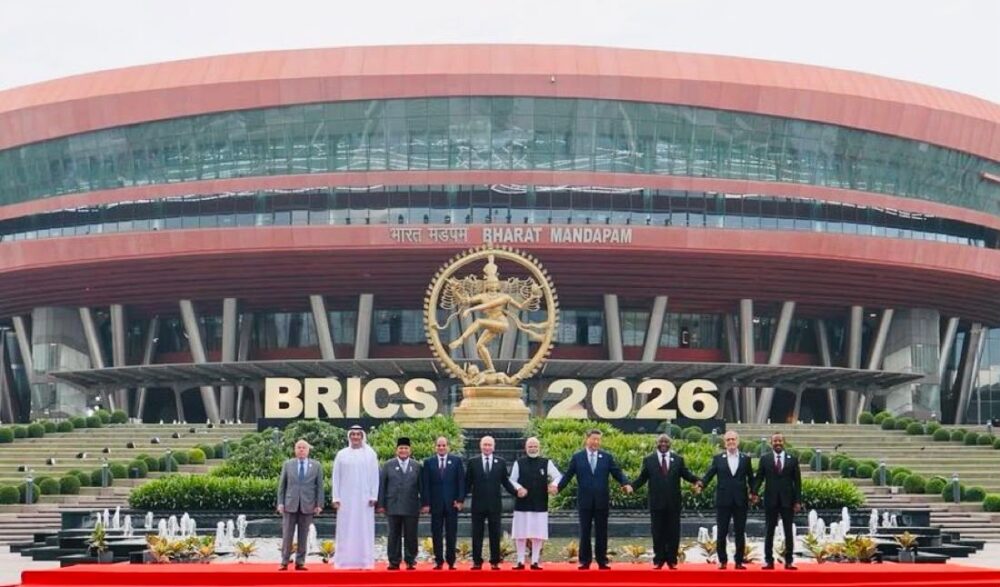
BRICS is seeking to turn its growing economic and political weight into greater influence over the international system, with leaders of the expanded grouping meeting in New Delhi this weekend amid wars, trade tensions and increasing demands from developing countries for a larger voice in global decision-making.

The 18th BRICS summit, hosted by Indian Prime Minister Narendra Modi on September 12–13, brings together an expanded group that now includes 11 full members: Brazil, China, Egypt, Ethiopia, India, Indonesia, Iran, Russia, Saudi Arabia, South Africa and the United Arab Emirates. Collectively, those countries account for about 49.5% of the world’s population, 40% of global GDP and 26% of global trade, according to India’s government.

READ ALSO

India-China Reset: Modi and Xi Seek to Move Beyond Border Confrontation

25 Years Later, September 11 Attacks Continue to Shape the World

That scale has transformed BRICS from a small economic grouping into an increasingly important platform for the Global South.

India’s 2026 presidency has placed resilience, innovation, cooperation and sustainability at the centre of the bloc’s agenda. Discussions are focusing on economic cooperation, trade and investment, energy and food security, public health, technology, disaster resilience and reform of international institutions.

But BRICS faces a fundamental question: Can such a diverse collection of countries develop a coherent alternative to the Western-led international order?

The bloc includes democracies, monarchies and authoritarian governments. Its members have sharply different foreign-policy interests and, in some cases, direct geopolitical disagreements.

India and China are strategic competitors. Iran and the United States remain locked in confrontation. Russia is confronting Western sanctions over its war in Ukraine. Saudi Arabia and the UAE maintain important economic and security relationships with Western powers.

Those differences make a unified political agenda difficult.

Yet BRICS has continued to expand because its members share a broad concern that global institutions do not adequately reflect the economic and political weight of emerging countries.

The bloc has increasingly called for reform of the United Nations, greater representation for developing countries in international financial institutions and a more balanced global trading system. Modi used the summit to argue that reforms to global governance can no longer be indefinitely postponed.

The New Delhi Declaration adopted Saturday placed particular emphasis on strengthening the voice of the Global South, reforming global governance and expanding cooperation among emerging and developing economies.

Economic cooperation is another major priority.

BRICS countries have discussed increasing trade in local currencies, developing alternative payment mechanisms and reducing vulnerability to sanctions and disruptions in the global financial system. Such proposals have attracted particular attention as the United States continues to exercise enormous influence over global finance through the dollar-based system.

But there is no consensus within BRICS on replacing the dollar or turning the organisation into an explicitly anti-American alliance.

India, in particular, has resisted efforts to define BRICS simply as an opposing bloc to the West. New Delhi maintains strong strategic ties with Washington while simultaneously maintaining relationships with Moscow and Beijing.

That balancing strategy may ultimately determine BRICS’ future.

The organisation has the economic scale to become a major force in global governance. But its success will depend on whether members can convert that collective weight into practical cooperation rather than allowing geopolitical rivalries to paralyse the group.

For now, BRICS is sending a clear message: the countries of the Global South want a greater role in determining the rules governing the global economy and international politics.

Whether BRICS can transform that demand into lasting institutional power remains the bigger question.
ShareTweetSendShareSend

Related Posts

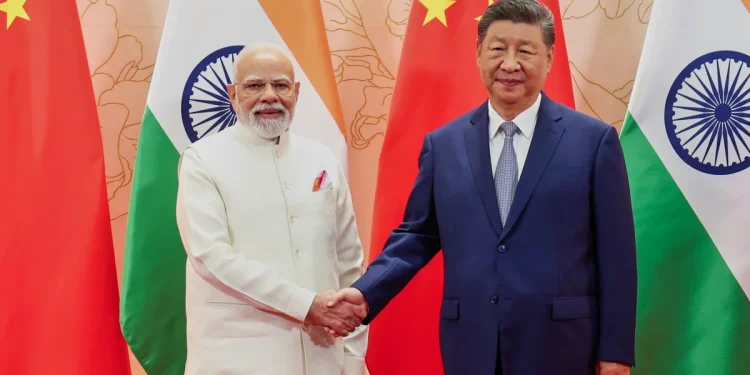
In this photo provided by Indian Prime Minister's Office, Indian Prime Minister Narendra Modi, left, and Chinese President Xi Jinping shake hands before their meeting on the sidelines of the Shanghai Cooperation Organization (SCO) summit in Tianjin, China Sunday, Aug. 31, 2025.

Indian Prime Minister's Office/AP
Global

India-China Reset: Modi and Xi Seek to Move Beyond Border Confrontation

by Admin
September 12, 2026

India and China are attempting to put their most serious confrontation in years behind them, with Prime Minister Narendra Modi...

Read moreDetails
Atlanta Council Photo
Global

25 Years Later, September 11 Attacks Continue to Shape the World

by Admin
September 11, 2026

The United States is marking 25 years since the September 11, 2001 terrorist attacks, with ceremonies being held Friday to...

Read moreDetails
L-R President Ali and President Lula
Global

Guyana Courts LuLu Investment, Qatar Airways Link as Ali Deepens Gulf Outreach

by Admin
September 11, 2026

President Irfaan Ali’s state visit to Qatar has produced fresh interest in Guyana from major Gulf businesses, with retail giant...

Read moreDetails
Next Post
Guyana Amazon Warriors Women's Cricket

Guyana Warriors Women Face Undefeated Trinbago in WCPL Battle


EDITOR'S PICK

Shameful Exploitation! Why are School Being Children Paraded at Political Rally in Babu Jaan?

March 23, 2025
A U.S. Air Force B-52H Stratofortress bomber assigned to the 2nd Bomb Wing, integrates with a U.S. Marine Corps F-35B Lightning II aircraft assigned to the Marine Fighter Attack Squadron 225, in the U.S. Southern Command area.  (U.S. Air Force)

US military buildup in Caribbean sees bombers, Marines and warships converge near Venezuela

October 21, 2025

Guyana’s Petro-State Reality Demands Political Reform

June 6, 2026
L-R Minister Juan Edghill and former Minister David  Patterson (Google photo)

Patterson slams New Demerara River Bridge completion date, says it’s impossible

January 6, 2025

© 2024 Village Voice

No Result
View All Result
  • Home
  • News
  • Sports
  • Editorial
  • Letters
  • Global
  • Columns
    • Eye On Guyana
    • Hindsight
    • Lincoln Lewis Speaks
    • Future Notes
    • Blackout
    • From The Desk of Roysdale Forde SC
    • Diplomatic Speak
    • Mark’s Take
    • In the village
    • Mind Your Business
    • Bad & Bold
    • The Voice of Labour
    • The Herbal Section
    • Politics 101 with Dr. David Hinds
    • Talking Dollars & Making Sense
    • Book Review 
  • Education & Technology
  • E-Paper
  • Contact Us

© 2024 Village Voice