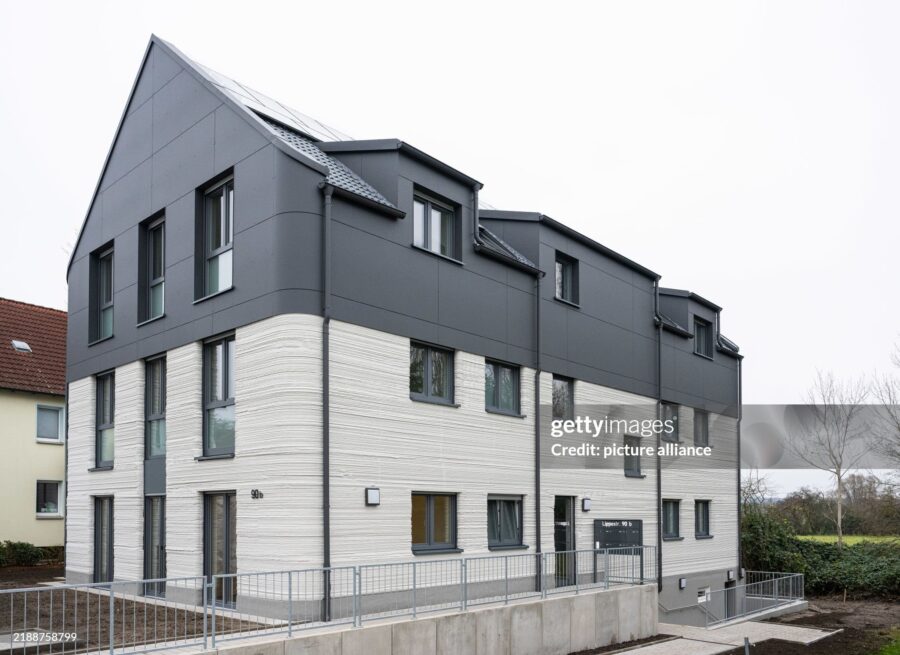
STARR Computer Inc. is proposing the use of industrial-scale 3D printing technology to help tackle Guyana’s growing housing shortage, arguing that the country can dramatically reduce construction time and costs while positioning itself as a regional leader in housing innovation.
The proposal was unveiled during an educational engagement at the company’s Georgetown Innovation Center, where more than 100 students and customers were introduced to emerging technologies such as artificial intelligence (AI), robotics, automation and industrial 3D printing as part of STARR Computer’s monthly technology outreach programme.
The centrepiece of the event was a presentation by STARR Computer President Mike Mohan titled “3D Printing of Homes in Guyana 2026–2028,” which outlined a phased plan to introduce robotic construction technology to Guyana’s housing sector.
The proposal comes as Guyana continues to grapple with an expanding demand for affordable housing. The government has distributed tens of thousands of house lots over the past several years, but the pace of construction has struggled to keep up with demand amid rising material costs, shortages of skilled labour and rapid economic growth fuelled by the country’s oil industry.
Addressing participants, Mohan described industrial 3D-printed housing as part of “the next Industrial Revolution” and said Guyana has a rare opportunity to harness emerging technologies to address some of its most pressing development challenges.
He identified housing demand, labour shortages and climate resilience among the issues that could be addressed through large-scale 3D construction technology.
According to Mohan, Guyana currently faces a demand for more than 40,000 affordable homes, while conventional construction methods can take as long as a year to complete because of labour constraints.
He said industrial 3D construction printers are capable of constructing a home’s structural shell within 24 to 72 hours, with fully finished homes ready for occupancy in two to four weeks.
Projections presented during the session indicate the technology could reduce construction costs by as much as 60 per cent, while significantly lowering material waste and reducing reliance on manual labour.
Mohan outlined a three-phase implementation strategy beginning in 2026 with the importation of two industrial 3D construction printers and the construction of 50 pilot homes in communities including Sophia and Eccles.
The initiative would then expand in 2027 before reaching full production by 2028, when a fleet of 20 industrial printers could produce more than 2,000 homes annually.
He said adopting the technology would enable Guyana to leapfrog conventional construction methods while establishing itself as a leader in modern housing development across the Caribbean.
The presentation formed part of STARR Computer’s broader effort to expose young people and the wider public to technologies expected to transform industries worldwide.
The company said the engagement demonstrated how advances in artificial intelligence, robotics, automation and industrial 3D printing can be applied not only to the workplace of the future but also to solving real-world national challenges, including affordable housing, labour shortages and sustainable development.