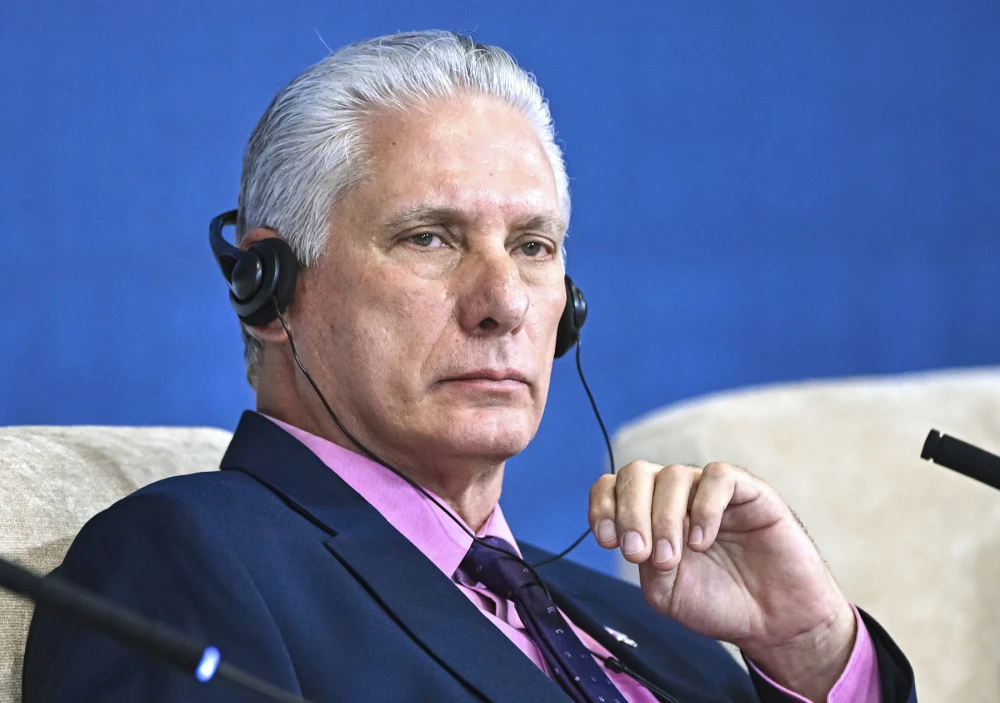
(NBC News)— Cuban President Miguel Díaz-Canel confirmed talks between the United States and Cuba during a speech Friday, the first time Havana has publicly acknowledged the meetings.
“These conversations are focused on finding solutions to bilateral differences we have between the two nations through dialogue,” he said.
Díaz-Canel added there are “international factors that have facilitated these exchanges.”
He said the purpose of these conversations is first to identify bilateral problems that need a solution according to their level of gravity and to “find solutions to those problems that have been identified.”
Díaz-Canel emphasized they are in the initial phase of the talks.
“These are processes that are done with great discretion, they are long processes,” he said. “You have to first establish contact .. there needs to be willingness for dialogue and all of that takes time. And after that, agendas are built, you enter negotiations and conversations, and you reach an agreement. These are things we are still far from.”
The confirmation of the meetings between the two countries follows comments from President Donald Trump and other top officials about the communist country. Over the past several weeks, Trump has repeatedly stated the U.S. and Cuba are holding high-level conversations, and he has also said that Cuba is going to “fall.”
Visible during Díaz-Canel’s remarks was Raúl Castro’s grandson, Raúl Guillermo Rodríguez Castro, who was sitting prominently next to the country’s deputy prime minister. Though the younger Castro doesn’t have an official role in the government, it has been reported that he’s been in talks with Secretary of State Marco Rubio. He’s believed to be very close to his grandfather, who at 94 and still the most powerful figure in Cuba.
Díaz-Canel said Cuba has been willing to have these conversations “on the basis of equality and respect for both countries’ political systems, sovereignty and self-determination of our governments.”
Díaz-Canel spoke about the dire situation in his country due to fuel shortages, saying fuel shipments have not arrived in the island in three months. He acknowledged that there have been areas of the country that have had electricity blackouts for more than 30 hours, affecting water pumping and impacting all economic and social activities. He said that there are tens of thousands of people, including children, whose surgeries have been delayed because of a lack of electricity.